What Usage-Based Insurance Actually Is
Usage-based insurance (UBI) - also called telematics insurance - replaces some traditional rating factors with real-time driving data. Instead of pricing your policy primarily on age, ZIP code, and vehicle type, a UBI program monitors how, when, and how far you actually drive.
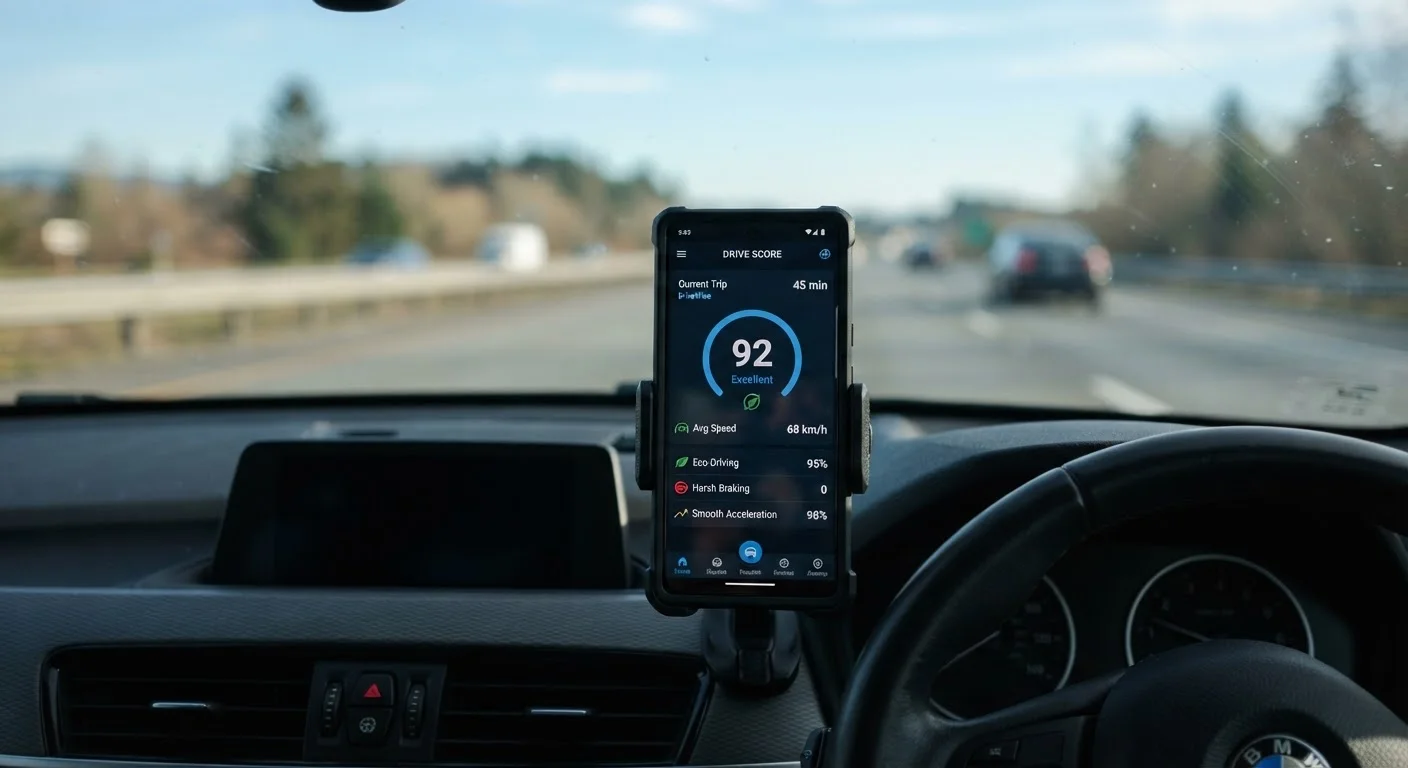
Data is collected in two main ways: a small OBD-II plug-in device that connects under your dashboard, or a smartphone app that uses your phone's sensors. Depending on the program, the insurer may track speed, braking intensity, cornering, time of day, trip length, and total mileage.
Most major U.S. auto insurers now offer some form of UBI. Programs typically run for a trial period - often 90 days to six months - after which your driving score influences your renewal premium. Some programs monitor you continuously throughout the policy term. For a broader view of how these programs fit into your overall insurance strategy, see the complete guide to auto insurance.
This article is general educational information about how usage-based insurance programs work. It is not personalized insurance or financial advice. Terms, coverage, and pricing vary by insurer and individual circumstance. Consult a licensed insurance agent for guidance specific to your situation.
The Genuine Advantages
Low-mileage drivers can see real premium savings
Drivers who travel well below average annual mileage often receive the most meaningful discounts, since mileage is a direct input to risk calculations. Pay-per-mile variants can make this benefit even more precise.
Behavioral data can offset unfavorable demographic ratings
If traditional factors like ZIP code or credit-based insurance scores work against you, a strong driving record captured through telematics may partially counterbalance those inputs, depending on the insurer and state rules.
Enrollment discount available at many programs
Many insurers offer a modest premium reduction simply for signing up and completing the trial period, regardless of your final score - providing at least some upside for most participants.
May support fuel-efficient, smoother driving habits
Awareness of being monitored on braking, acceleration, and speed prompts some drivers to adopt steadier habits that incidentally reduce fuel costs and brake wear over time.
Useful option for drivers rebuilding their insurance profile
Newer drivers or those returning after a lapse can use a strong telematics score to demonstrate safe behavior, potentially reducing the surcharges typically applied during the early years of a driving history.
The most direct benefit is cost: if your data confirms safe, low-mileage driving, many insurers will discount your premium beyond what standard criteria would produce. Drivers who work from home, use transit for commuting, or simply don't clock many miles annually are often well-positioned to benefit.
There's also an equity argument. Traditional rating factors like ZIP code and credit score can penalize drivers for circumstances outside their control. A telematics program at least adds behavioral data to the mix, giving a careful driver more control over how they're rated.
For newer drivers building an insurance history, a strong telematics score can help offset the premium surcharges typically applied to inexperienced motorists - though results vary by insurer and state regulations.
UBI also has a secondary effect: some drivers report that awareness of being monitored encourages smoother braking and steadier speeds, which can reduce fuel consumption and wear. This pairs naturally with other car costs and savings strategies that reduce overall vehicle ownership expenses.
The Real Drawbacks
Detailed location and behavior data is collected continuously
Telematics programs record granular trip-level data including routes, timestamps, and speed profiles. Privacy policy terms differ widely on data retention, third-party sharing, and deletion rights - risks that are easy to overlook during enrollment.
Rates can increase, not just decrease
Programs that use telematics to reprice at renewal - rather than only offering discounts - can raise your premium if your driving score falls short of the insurer's benchmarks, leaving some drivers paying more than under standard rating.
Score metrics may not reflect real-world driving complexity
Hard braking triggered by a road hazard or an abrupt stop by another driver may register negatively in an algorithm that cannot distinguish context. This can penalize drivers for appropriate reactions in challenging conditions.
Monitoring may create driving anxiety or distraction
Some drivers report stress about maintaining scores, particularly in unfamiliar areas or poor weather. Focusing on telematics performance rather than the driving environment itself carries its own safety implications.
Data handling at insurer transitions is often unclear
Most programs do not clearly specify what happens to collected data if you cancel or switch insurers. In the absence of strong contractual deletion rights, historical trip data may remain on third-party servers indefinitely.
Program terms and discount caps vary significantly
The maximum possible discount, the scoring methodology, and whether the program affects only one policy term or carries forward are all program-specific - making direct comparisons between insurers difficult without careful review.
The most significant concern is data privacy. Telematics programs collect detailed location and behavioral records - where you went, when, how fast, how hard you stopped. Insurer privacy policies differ on how long data is stored, whether it can be shared with third parties such as data brokers or law enforcement, and what happens if you switch carriers. Reading the program's full data-use disclosure before enrolling is not optional - it's necessary.
Rates can go the wrong way. Most programs are marketed on their discount potential, but programs that reprice at renewal based on your score can increase your premium if your driving data reveals habits the insurer considers risky - hard braking, late-night driving, or high mileage. Not every program penalizes; some only offer upside. Confirm which type you're enrolling in.
The program itself may influence behavior in stressful ways. Drivers have noted anxiety about scores during normal situations like emergency braking, navigating unfamiliar roads, or driving in adverse weather. Optimizing for a telematics score rather than genuine safety situational awareness is a real risk.
~20%
Typical maximum UBI discount ceiling
Many U.S. telematics programs cap their premium discount at around 20-30%, though actual savings depend on driving behavior, mileage, and the specific insurer's scoring model.
1 in 5
U.S. drivers enrolled in a UBI program
Industry estimates suggest telematics adoption among U.S. auto insurance customers has grown steadily, with participation accelerating as smartphone-based programs lowered enrollment friction.
How to Evaluate Whether It Makes Sense for You
Start with your mileage. Pay-per-mile and low-mileage-rewarding programs offer the clearest benefit if you drive under roughly 7,500-10,000 miles per year - though exact thresholds vary by insurer. Higher-mileage commuters may see smaller gains.
Review the specific program terms: Does the insurer only offer discounts, or can your rate increase? What data is collected and how long is it retained? Is participation voluntary at renewal, or does opting out itself trigger a rate adjustment?
Check Whether Your State Restricts UBI Pricing
A small number of U.S. states have regulations that limit or govern how insurers may use telematics data in pricing. California, for example, has had restrictions on certain data inputs in auto rating. The rules in your state can affect both what data is collected and what discounts or surcharges are permissible. Check your state's department of insurance website or ask a licensed agent about applicable rules before enrolling.
UBI is one tool among several. If your goal is reducing premiums, it's worth comparing it alongside other approaches - adjusting your deductible, reviewing your coverage levels, and confirming all eligible discounts are applied. The full range of ways to lower auto insurance costs is worth reviewing before settling on any single strategy.
When comparing auto insurance policies, also factor in what happens to your telematics data if you leave the insurer - data portability and deletion rights are rarely highlighted in marketing materials but matter for your long-term privacy.