How Your Brakes Actually Work
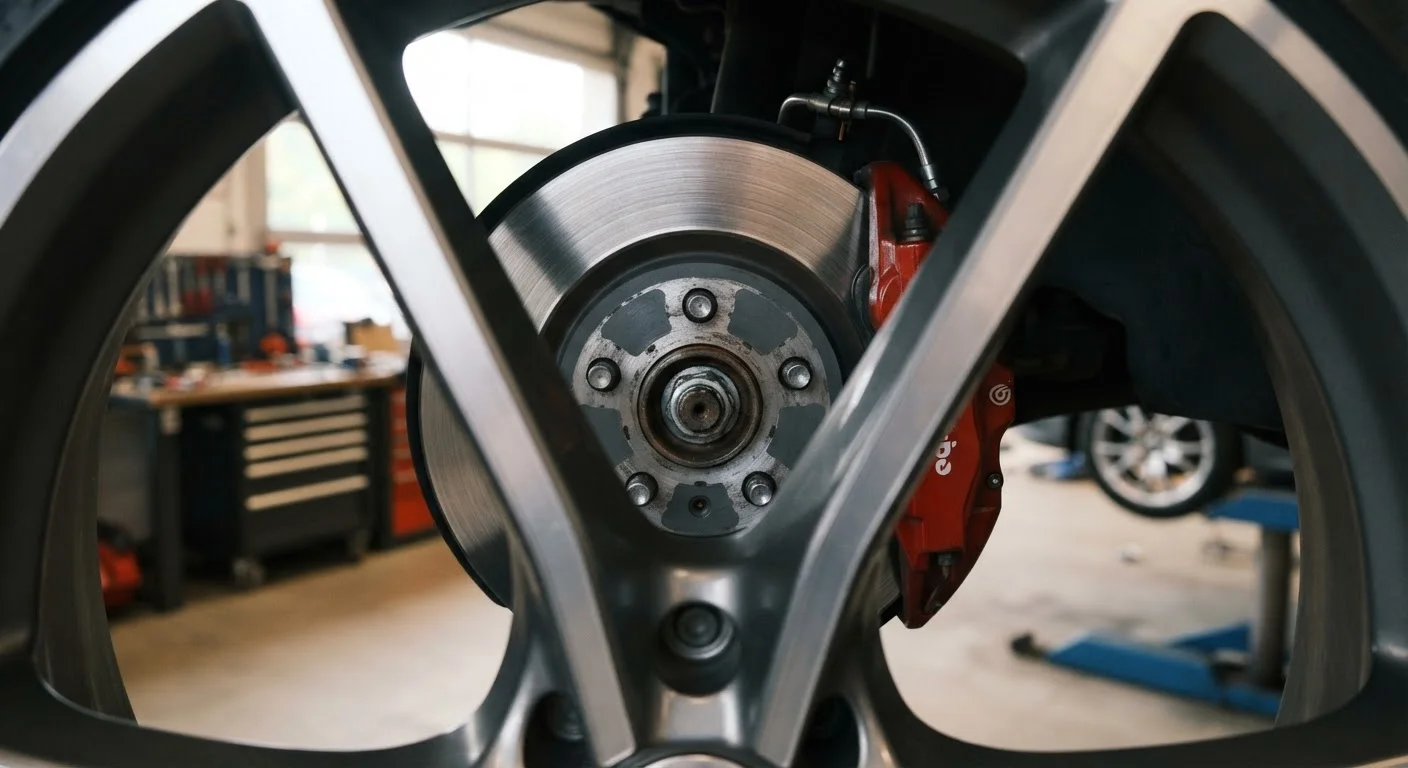
Most modern passenger vehicles use disc brakes on at least the front axle - and often all four corners. When you press the brake pedal, hydraulic fluid transmits that force through brake lines to a caliper at each wheel. The caliper squeezes two brake pads against a spinning metal disc called a rotor. Friction converts the vehicle's kinetic energy into heat, slowing the car.
Some older or lower-cost vehicles still use drum brakes on the rear axle. Inside a drum, curved brake shoes press outward against a rotating drum instead of squeezing a disc. The principle is the same: friction creates stopping force.
Brake pad
A friction material mounted in the caliper that presses against the rotor to slow the vehicle. It is the component that wears down with use and requires periodic replacement.
Rotor
A metal disc that rotates with the wheel. Brake pads clamp against it to create the friction needed to slow or stop the car.
Caliper
A hydraulic clamp that squeezes the brake pads against the rotor when you press the pedal. It houses the pistons that convert fluid pressure into clamping force.
Brake fluid
A hydraulic fluid that transmits the force of your foot pressing the pedal through the brake lines to the calipers at each wheel.
Wear indicator
A small metal tab built into brake pads that contacts the rotor and produces a squealing sound when the pad material has worn to a low threshold.
Drum brake
An older brake design using curved shoes that press outward against the inside of a rotating drum, rather than pads clamping a disc. Still common on rear axles of some vehicles.
Understanding this basic sequence - pedal pressure → hydraulic fluid → caliper → pads squeeze rotor - makes the warning signs in the next section much easier to interpret.
Warning Signs You Shouldn't Ignore
Your brakes communicate through sound, feel, and feedback. Learning to read these signals early can prevent a straightforward pad replacement from becoming a far more expensive rotor or caliper job.
- Squealing or squeaking: A small metal tab called a wear indicator is built into most brake pads specifically to create this noise when the pad material gets thin. Persistent squealing during normal stops is a reliable cue to schedule service.
- Grinding: Metal-on-metal grinding means the pad material is gone. The caliper or backing plate is now contacting the rotor directly. This causes immediate rotor damage and is a safety issue - seek service the same day.
- Vibration or pulsing through the pedal: Often caused by uneven rotor wear (sometimes called rotor warp). Rotors that have developed thickness variation create a pulsing sensation as the pads pass over the uneven surface during braking.
- Soft or spongy pedal: If the pedal travels further than usual before resistance builds, hydraulic pressure is compromised. This can indicate air in the lines, a fluid leak, or a failing master cylinder - any of which require prompt professional attention.
- Vehicle pulling to one side when braking: Uneven brake force - often caused by a sticking caliper or uneven pad wear - can cause the car to drift during stops.
See what dashboard warning lights mean for context on the brake warning light specifically.
Use Your Senses as a Baseline
Pay attention to how your brakes feel, sound, and respond during normal driving so you can notice changes early. A quick mental check after each commute costs nothing and gives you the baseline needed to catch a developing problem before it becomes expensive.
What a Mechanic Checks During a Brake Inspection
A thorough brake inspection goes well beyond a quick glance at the pads. Here is what a qualified technician should be evaluating:
- Pad thickness: Measured with a gauge, typically against a minimum threshold (commonly 2-3 mm, though this varies by vehicle). Both inner and outer pads are checked because they can wear at different rates.
- Rotor condition: Rotors are measured for thickness and checked for surface grooves, scoring, and any variation in thickness across the disc. A rotor worn below its minimum discard thickness must be replaced, not resurfaced.
- Caliper function: Calipers are inspected for fluid leaks, corrosion, and freedom of movement. A seized or sticky caliper causes uneven pad wear and generates excess heat.
- Brake fluid level and condition: Low fluid can indicate a leak or heavily worn pads pushing fluid back into the reservoir. Fluid that has turned dark or shows moisture contamination may warrant a flush.
- Brake hoses and lines: Rubber brake hoses can crack or swell internally with age; steel lines can corrode. Technicians look for leaks, bulging, and damage.
- Hardware and hardware lubrication: Slide pins, pad abutment clips, and other hardware are checked for corrosion and proper lubrication - neglected hardware is a common cause of premature pad wear.
For broader context on what gets checked at routine service intervals, your vehicle's maintenance schedule explained covers the full picture.
How Often Should Brakes Be Serviced?
There is no universal mileage interval for brake replacement because wear depends heavily on driving habits, vehicle type, and environment. However, a practical baseline most mechanics recommend is a visual brake inspection at every tire rotation - approximately every 5,000 to 7,500 miles for most drivers. This keeps wear progression visible without waiting for warning signs to appear.
Your vehicle's owner's manual may specify inspection intervals. When it does, that guidance takes priority over general estimates.
Drivers who should expect faster-than-average wear include those who:
- Commute primarily in stop-and-go city traffic
- Frequently drive on steep hills or mountain roads
- Tow trailers or carry heavy loads regularly
- Have a habit of late, hard braking rather than gradual slowing
A seasonal vehicle check is also a natural moment to include a visual brake assessment, particularly before winter when road conditions increase braking demands.
When to Act Immediately vs. Schedule an Appointment
Not every brake symptom demands you pull over immediately - but some do. Here is a straightforward way to categorize urgency:
| Symptom | Urgency |
|---|---|
| Persistent squealing during normal stops | Schedule service within the next 1-2 weeks |
| Grinding noise when braking | Same-day service - avoid unnecessary driving |
| Spongy or soft pedal | Same-day service - hydraulic issue |
| Pedal pulsation or vibration | Schedule service soon; monitor closely |
| Vehicle pulling when braking | Schedule service within the week |
| Brake warning light illuminated | Check fluid level first; if normal, seek diagnosis promptly |
Brake maintenance is one area where delaying service to save money in the short term routinely results in higher costs - and genuine safety risk. If you are uncertain whether a repair is within your skill set, understand where DIY makes sense and where it doesn't before attempting brake work yourself.
This article is for general informational and educational purposes only. Brake system repairs involve safety-critical components. Always consult a qualified, licensed mechanic for diagnosis and service of your specific vehicle.