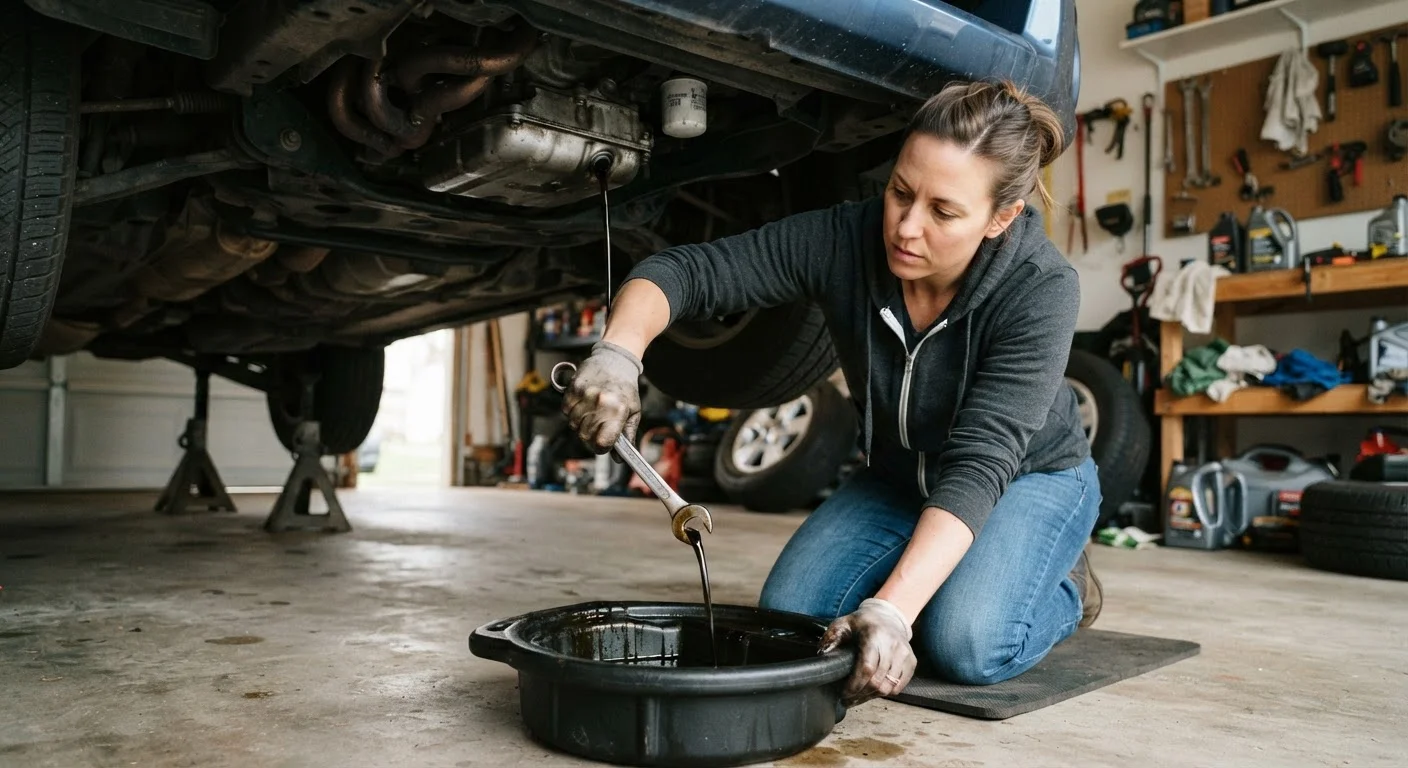
Why DIY Maintenance Is Worth Considering
Labor costs account for a large share of most shop bills. According to industry data, the average hourly labor rate at US auto repair shops ranges from roughly $80 to $150 depending on region and shop type - sometimes higher at dealerships. For tasks that take 30 minutes and require only basic tools, paying that rate is hard to justify if you're capable of doing the work yourself.
Beyond the dollars, doing your own maintenance builds familiarity with your vehicle. Drivers who regularly inspect their own fluid levels, filters, and tire condition tend to catch developing problems earlier. That translates to fewer surprise repairs and better long-term reliability.
For a broader view of what your vehicle needs at each mileage milestone, see our car maintenance schedule guide.
Reduces routine labor costs significantly
Labor charges make up a large portion of most service bills. Handling straightforward tasks yourself - oil changes, filter replacements, wiper swaps - eliminates that charge entirely for work that often takes under an hour.
Builds mechanical familiarity with your vehicle
Regular hands-on inspection helps drivers notice changes in fluid condition, filter cleanliness, and component wear before they become costly problems.
Flexible timing - no appointment needed
DIY work fits your schedule rather than a shop's availability, which matters for time-sensitive items like a burned-out bulb or a low-fluid warning.
Potentially better parts selection control
Sourcing your own parts lets you choose between OEM (original equipment manufacturer) and quality aftermarket options rather than accepting whatever a shop stocks at its markup.
Tasks That Are Genuinely DIY-Friendly
Several maintenance items are well-suited to home completion: engine air filter replacement, cabin air filter swaps, wiper blade changes, battery terminal cleaning, tire pressure checks, and top-offs of washer fluid, coolant, and power steering fluid. Oil and filter changes are also within reach for most drivers, though they require proper disposal of used oil and attention to the correct oil specification for your engine.
Tire maintenance habits like checking pressure and inspecting tread depth cost nothing but a few minutes and a gauge. Similarly, understanding tyre pressure and tread depth thresholds is knowledge any driver can apply at home.
These tasks share a common trait: they don't involve safety-critical systems, the consequences of a minor error are low, and clear manufacturer guidance exists in every owner's manual.
Always Check Your Owner's Manual First
Manufacturer specifications for oil viscosity, filter type, fluid capacity, and torque settings vary significantly by model and model year. Using the wrong specification - even on a routine task - can cause premature wear or void a warranty. The owner's manual is the authoritative source for your specific vehicle, not generic online guides.
Where DIY Becomes Risky
Brake work is the clearest example of a task where the risk-to-reward ratio shifts against the DIY approach. While pad replacement is sometimes presented as approachable, errors in caliper reinstallation, brake line handling, or bleeding can result in brake failure. Our guide to brake maintenance explains what a mechanic is actually checking - and why the margin for error is narrow.
Other high-risk areas include suspension components, timing belt or chain replacement, fuel system work, airbag-adjacent repairs, and anything involving the vehicle's emissions control systems. In many states, tampering with emissions equipment is also a legal violation, not just a mechanical risk.
Advanced electrical diagnostics fall into a similar category. Modern vehicles rely on controller area network (CAN) bus systems - interconnected modules that communicate across dozens of sensors. Without a professional-grade scan tool and the training to interpret results, misdiagnosis is likely and potentially expensive.
Safety risk on critical systems is real
Brake, suspension, and airbag work involves components where a small error can have serious consequences. These tasks require precision, specific tools, and the expertise to verify results.
Tool investment can offset short-term savings
A quality floor jack, jack stands, torque wrench, and oil drain equipment add up quickly. For infrequent tasks, the upfront cost may not be recouped over a typical ownership period.
Mistakes can be more expensive than professional service
A stripped drain plug, incorrect fluid type, or improperly reinstalled component can generate repair costs that far exceed what a shop would have charged originally.
May complicate warranty or insurance claims
Undocumented or incorrectly performed maintenance can create complications when making warranty or insurance claims, particularly if a problem is traced back to a DIY service interval.
Modern vehicles require specialized diagnostic tools
Advanced electrical and emissions systems often can't be properly diagnosed or reset without professional-grade scan tools, making DIY troubleshooting incomplete or misleading.
The Hidden Costs of Getting It Wrong
A common miscalculation is comparing only the labor cost saved against the cost of tools and parts - without accounting for the cost of a mistake. A stripped drain plug, an improperly seated air filter, or a misrouted vacuum line can each generate repair bills that dwarf what a professional service would have cost. Deferred or botched repairs have a well-documented tendency to cascade into larger failures.
There's also a warranty consideration. If your vehicle is still under a manufacturer or extended warranty, DIY maintenance must generally be documented and performed to manufacturer specifications. Using incorrect fluids or skipping required steps can complicate warranty claims. Keep a vehicle service log with receipts and dates regardless of who performs the work.
$80-$150
Typical hourly labor rate at US repair shops
Industry surveys consistently place the average shop labor rate in this range, with dealership rates often at the higher end of the scale.
$25-$75
Typical DIY cost for an oil and filter change
Parts-only cost for most passenger vehicles using conventional or synthetic blend oil, compared to $60-$150 or more at a shop depending on oil type and location.
Making the Call: A Practical Framework
Before starting any task, ask three questions: Do I have the correct tools and a clean, safe workspace? Do I understand every step, including how to verify the result? And if something goes wrong, can I safely stop and seek professional help without putting the vehicle - or myself - at risk?
If the answer to any of those is uncertain, the job likely belongs in a shop. There's no shame in that assessment; it's exactly the same calculation a professional makes about the limits of their own expertise. The DIY vs. professional maintenance decision framework can help you apply this thinking across specific tasks.
For drivers deciding between dealership and independent shop service, our dealership vs. independent mechanic comparison breaks down cost, warranty implications, and specialization. And for a longer view of managing ownership costs over a vehicle's full life, see our comprehensive car maintenance guide.
This article provides general educational information about vehicle maintenance and is not a substitute for professional mechanical advice. Always follow your vehicle manufacturer's guidelines and consult a qualified mechanic for repairs involving safety-critical systems.