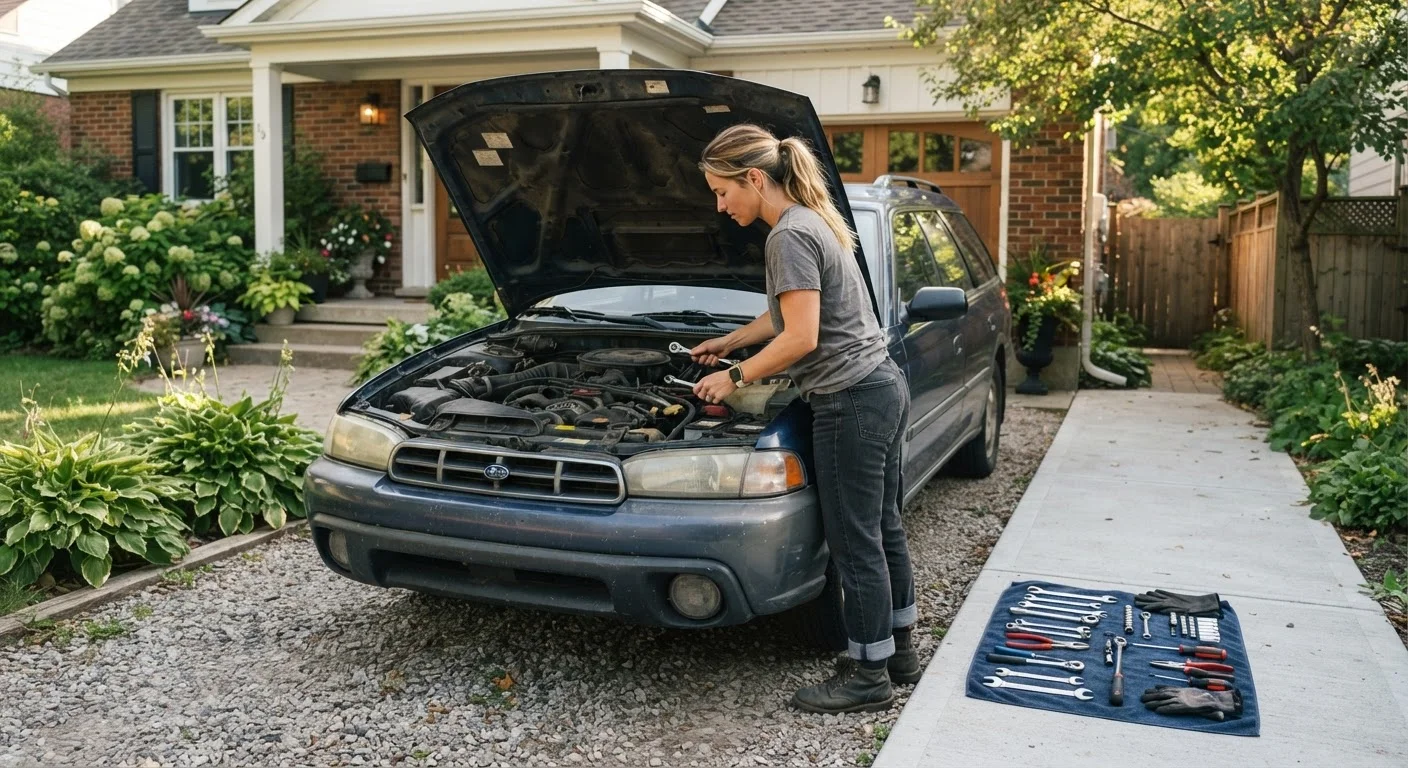
Why This Question Matters for Your Wallet
The average American household spends roughly $500-$1,000 per year on vehicle maintenance and repairs, according to data from the Bureau of Labor Statistics Consumer Expenditure Survey. DIY maintenance is one of the few genuine levers drivers can pull to reduce that figure - but only when the right tasks are chosen and performed correctly.
The key variable isn't confidence; it's consequence. A mistake replacing a cabin air filter costs you a few dollars and a few minutes. A mistake on brake lines or a suspension component can cost far more - in repairs, failed inspections, or worse, a road incident. Understanding that spectrum is the starting point for any sensible DIY decision.
For a broader view of what your vehicle actually requires at each interval, see your car's maintenance schedule explained. And if you're deciding how much to invest in an aging vehicle, keeping a high-mileage car on the road without overspending offers a practical cost framework.
Tasks That Are Reasonable for Careful Owners
Several routine maintenance items require minimal specialized tools, carry low risk if done incorrectly, and are well-documented in most owner's manuals. These are the jobs where DIY typically makes sense:
- Engine air filter replacement: Usually a matter of unclipping a housing, swapping the filter, and refastening. No special tools required; takes under 15 minutes on most vehicles.
- Cabin air filter replacement: Accessible behind the glove box on many models. Requires no tools and directly improves HVAC performance and air quality.
- Wiper blade replacement: Straightforward on virtually every vehicle. Blade kits include instructions, and errors are immediately visible and easily corrected.
- Fluid top-offs: Windshield washer fluid, coolant reservoir top-ups (not full flushes), and power steering fluid checks are low-risk tasks. Always use the fluid type specified in your owner's manual - see what happens when coolant levels drop for context on why specification matters.
- Oil changes: Manageable for mechanically inclined owners with ramps or jack stands, the correct drain pan, and the right oil specification. That said, using the wrong oil grade or over-tightening the drain plug creates real problems. Check synthetic vs. conventional engine oil before making your choice.
Reduces labor costs on straightforward, recurring tasks
Labor typically accounts for 50-80% of a shop invoice for simple jobs. Handling air filters, wiper blades, and fluid top-offs yourself eliminates that markup entirely.
Builds genuine understanding of your vehicle
Owners who perform basic maintenance often spot developing problems earlier - an unusual smell, a loose component, abnormal wear - before they become expensive failures.
Schedule flexibility on low-urgency tasks
Replacing a cabin filter or topping off washer fluid doesn't require a shop appointment, waiting time, or potentially upsold services you didn't ask for.
Immediate verification of parts quality
When you source and install your own parts, you know exactly what went in - useful if you prefer a specific oil grade or filter brand specified in your owner's manual.
Tasks That Carry Genuine Risk
Some jobs look approachable but involve systems where errors have serious consequences - for vehicle safety, emissions compliance, or structural integrity. These are generally best left to a qualified mechanic:
- Brake pad and rotor replacement: While brake pads are sold as DIY-friendly, improper installation - uneven torque, incorrect pad seating, or disturbed brake lines - can cause brake fade or failure. How brakes work and what mechanics check gives useful context on the system's complexity.
- Suspension and steering components: Replacing ball joints, tie rods, or control arms requires precise torque specs and typically a professional alignment afterward. Errors here affect handling and tire wear.
- Airbag system work: Any work near airbag components - including clock springs or steering column components - risks accidental deployment. This is a strict no-DIY zone.
- Electrical diagnostics beyond basic fuses: Modern vehicles use complex CAN bus systems. Probing wiring without proper diagnostic tools can cause module damage or introduce faults that are expensive to trace.
- Timing belt or chain service: Incorrect timing will cause engine damage at startup. This job requires specialized tools and precise procedure adherence - a clear case for professional service.
Errors on safety systems can have serious consequences
Mistakes involving brakes, steering, or suspension don't just damage the car - they can compromise vehicle control at highway speeds. The margin for error on these systems is narrow.
Upfront tool investment can erode savings
A floor jack, jack stands, torque wrench, and oil drain pan represent real upfront costs. For infrequent tasks, renting or paying a shop may cost less overall.
Incorrect specs can cause immediate engine damage
Using the wrong oil viscosity, over-torquing a drain plug, or using an incompatible fluid can cause damage that costs significantly more to repair than the original service would have.
May complicate warranty claims on newer vehicles
While the Magnuson-Moss Warranty Act generally protects owners who perform their own maintenance, deviating from manufacturer-specified parts or procedures can create complications when filing a claim.
Diagnostic work requires specialized equipment
A dashboard warning light needs an OBD-II scanner to read properly, and deeper electrical faults require professional diagnostic tools. Guessing at causes wastes parts and time.
Skipping repairs on any of these systems rarely pays off. Why deferred maintenance almost always costs more explains the mechanical chain reaction in detail.
The Hidden Costs of Getting It Wrong
Beyond the immediate repair cost, DIY errors can trigger secondary expenses that undercut any savings:
Check Your Owner's Manual First
Your vehicle's owner's manual specifies fluid types, torque values, filter part numbers, and service intervals tailored to your exact make and model. It's the most reliable guide available - more so than generic online tutorials that may not account for your vehicle's specific requirements. If your manual is missing, most manufacturers make digital versions available on their official websites.
- Warranty implications: On newer vehicles, improperly performed maintenance - or using non-specified parts - can complicate warranty claims. Review your warranty terms before taking on any non-trivial work.
- Inspection failures: In states with vehicle safety or emissions inspections, DIY work that doesn't meet spec can result in a failed inspection and mandatory re-repair at a shop.
- Insurance considerations: While a DIY oil change won't affect your coverage, a poorly repaired safety system that contributes to an incident could raise questions during a claim. General guidance on how coverage works is available through auto insurance resources.
The decision to DIY isn't just about today's labor cost - it's about the total-cost picture across the vehicle's life. For a complete framework on that, car maintenance from purchase to high mileage is a useful reference. And if you're comparing whether a shop visit makes more sense overall, dealership service center vs. independent mechanic walks through the trade-offs.