What a Maintenance Schedule Actually Is
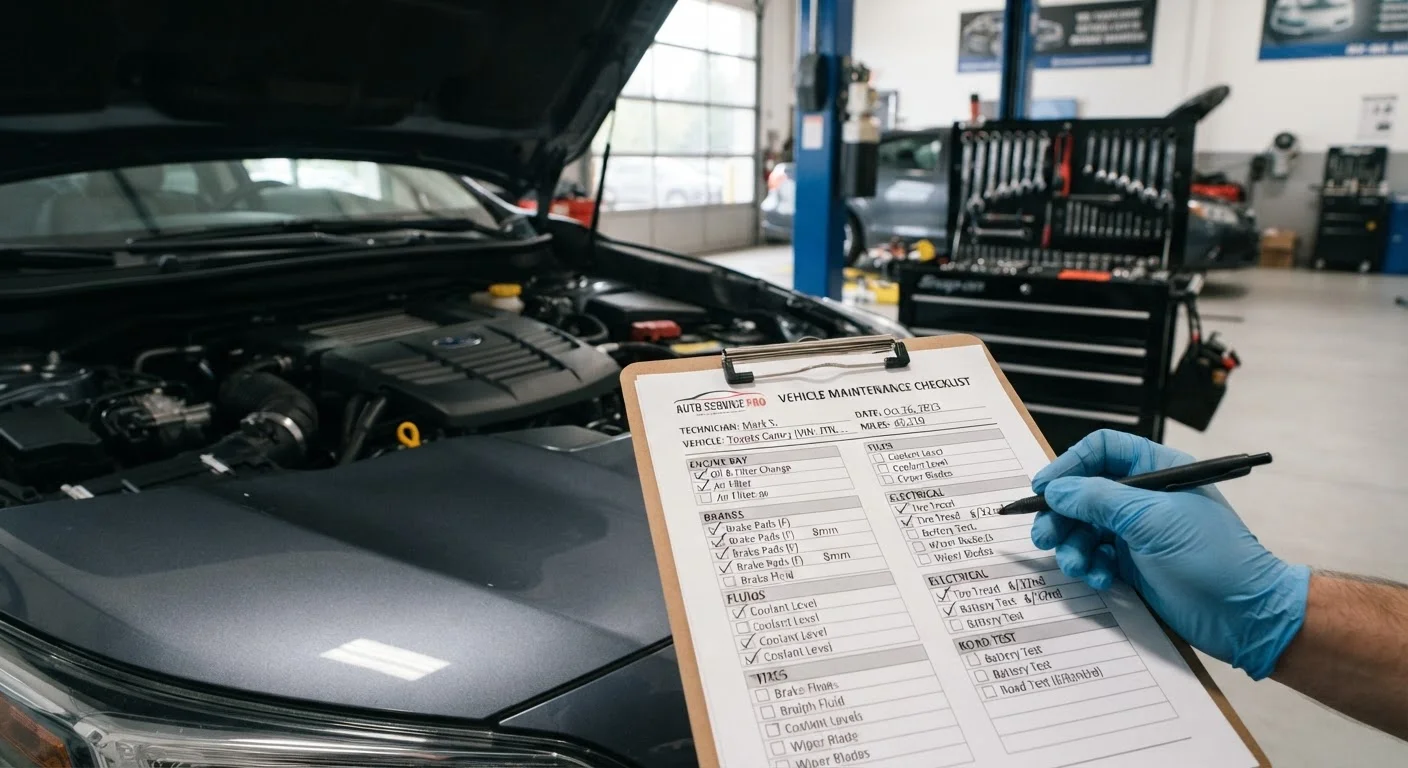
Every vehicle leaves the factory with a manufacturer-written maintenance schedule - a structured list of service tasks paired with specific mileage and time triggers. These aren't arbitrary suggestions. Engineers design them around the tolerances of your engine, transmission, brakes, and cooling system to maximize lifespan under normal operating conditions.
The schedule is typically organized in tiers. Lighter tasks like oil changes and tire rotations recur frequently - often every 5,000 to 10,000 miles depending on the vehicle and oil type. Deeper inspections - spark plugs, timing belts, coolant flushes - are spaced across longer intervals, sometimes 30,000, 60,000, or 100,000 miles. The rule that governs all of them: service is due at the mileage milestone or the time interval, whichever arrives first. A car that sits mostly idle still needs oil changes by calendar date.
For a broader look at how maintenance fits across a vehicle's entire lifespan, see Car Maintenance From Purchase to High Mileage.
~$1,200
Average annual vehicle maintenance cost for US drivers
AAA estimates average maintenance and repair costs for passenger vehicles in the US at approximately $1,200 per year, varying by vehicle age, type, and driving conditions.
35%
Share of vehicle breakdowns linked to deferred maintenance
Industry estimates from roadside assistance organizations suggest a substantial share of non-accident breakdowns are tied to maintenance that was due but not performed.
5,000-10,000 mi
Typical oil change interval for synthetic oil
Most modern vehicles using full synthetic oil carry manufacturer-recommended intervals of 5,000 to 10,000 miles, though the exact figure depends on the vehicle and driving conditions.
The Key Milestones and What They Cover
While schedules vary by make and model, certain service milestones are common across most passenger vehicles:
- Every 5,000-10,000 miles: Oil and filter change, tire rotation, visual inspection of lights and fluids. Synthetic oil generally extends this interval compared to conventional oil - your manual will specify which applies.
- Every 15,000-30,000 miles: Air filter replacement, cabin air filter, brake inspection, battery check, tire pressure and tread assessment. Tyre pressure and tread depth both affect handling and fuel economy more than most drivers realize.
- Every 30,000-60,000 miles: Transmission fluid, coolant flush, spark plug replacement (on many models), serpentine belt inspection. Brake fluid is also commonly replaced in this window - brake system health depends on uncontaminated fluid maintaining proper hydraulic pressure.
- Every 60,000-100,000+ miles: Timing belt or chain inspection (interference engines require strict adherence here - a snapped timing belt can destroy an engine), differential fluid, power steering fluid, and a comprehensive inspection of suspension and steering components.
If your dashboard illuminates during any of these intervals, don't assume it can wait for the next scheduled service. Dashboard warning lights often signal issues that preempt the regular schedule.
Normal vs. Severe Driving: Why It Changes Everything
The standard schedule assumes average driving conditions: moderate temperatures, highway-heavy miles, and limited towing. Most American drivers don't fit that profile. Urban commuters, people in climates with extreme winters or summers, or anyone who regularly tows or hauls cargo typically qualify for the severe-duty schedule - which shortens most service intervals by 20-50%.
Manufacturer definitions of 'severe' conditions commonly include: trips under five miles in normal temperatures, trips under ten miles in freezing temperatures, sustained idling (delivery drivers, rideshare operators), trailer or heavy load towing, and operation in dusty or mountainous terrain. Check your owner's manual - it will explicitly list the qualifying conditions for your vehicle.
Check Your Conditions Before Choosing a Schedule
Before assuming the standard schedule applies, run through your actual driving profile: average trip length, local climate, whether you tow, and how much of your driving is city versus highway. If two or more severe-condition factors apply to you, default to the severe schedule. When in doubt, your owner's manual lists the criteria explicitly - it takes less than five minutes to verify.
It's worth reviewing common maintenance myths alongside this, since misunderstandings about oil change frequency and warm-up routines are especially common among drivers making the normal-vs-severe judgment call.
How to Actually Stay on Track
Knowing the schedule is only half the equation - tracking it reliably is the other half. A few practical approaches:
- Use your owner's manual as the reference, not shop recommendations. Service providers sometimes recommend intervals shorter than the manufacturer specifies. Cross-check before approving any work. See also what different service tiers actually cover to understand what you're paying for.
- Log every service. Whether you use a paper log in the glove box or a phone app, recording the date, mileage, and tasks completed at each visit keeps you accurate and protects resale value. Keeping a vehicle service log is one of the lowest-effort habits with the highest long-term return.
- Know what you can handle yourself. Some tasks - checking tire pressure, inspecting wiper blades, topping off washer fluid - are straightforward for most owners. Others carry genuine risk if done incorrectly. DIY car maintenance covers that line clearly.
Routine maintenance is also a direct input to ownership cost. Deferred services don't disappear - they compound. For high-mileage vehicles especially, staying disciplined with the schedule is often what determines whether a car remains reliable or becomes a financial liability. Keeping a high-mileage car road-worthy explores that calculation in detail.