What a Service Log Actually Contains
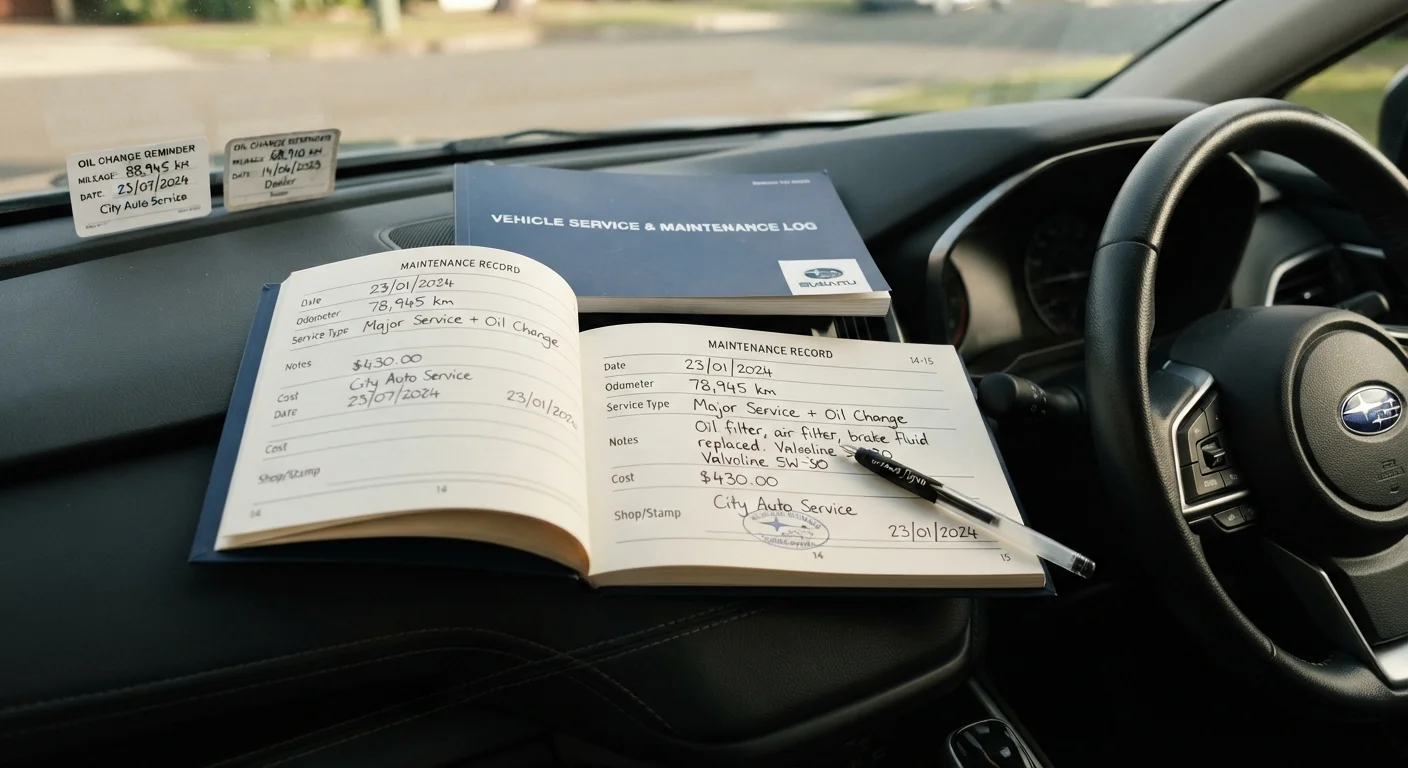
A vehicle service log is a running record of every maintenance and repair event performed on a car. At minimum, each entry should capture the date, the odometer reading, a description of the work performed, parts used or replaced, and who did the work - a shop, dealer, or the owner themselves.
A complete log goes further: receipts, inspection reports, recall completion notices, and any technician notes about items to watch. Think of it as a medical chart for your car. The more detailed the record, the more useful it becomes over time.
Format is flexible. A spiral notebook kept in the glove box works. So does a shared spreadsheet or a smartphone app. What matters is that entries are made consistently - ideally within a day or two of each service event - and never left to memory alone.
How a Log Protects Your Resale Value
When a private buyer or dealer evaluates a used vehicle, documented service history is one of the strongest trust signals available. A car with verifiable, consistent maintenance records is demonstrably lower-risk than one with a vague verbal assurance that "it's been well taken care of."
Up to 20%
Potential resale value uplift with full service history
Industry estimates from used-vehicle appraisers consistently suggest that documented maintenance history can command a meaningful premium over comparable cars without records.
1 in 3
Extended warranty claims subject to documentation scrutiny
Consumer advocacy organizations have noted that a substantial share of extended warranty disputes involve challenges to whether required maintenance was performed and documented.
Buyers may be willing to pay a premium for a car with a full service history because it shifts uncertainty in their favor. Conversely, a gap in records - even if the maintenance actually happened - can create doubt that depresses offers. The Car Costs & Savings section covers additional ways to protect your vehicle investment over time.
For high-mileage vehicles in particular, a log that shows regular oil changes, fluid top-offs, and proactive part replacements can meaningfully offset the hesitation buyers often feel about odometer numbers.
Warranty Claims and Dispute Resolution
Manufacturer and extended warranties typically require that the vehicle be maintained according to the schedule outlined in the owner's manual. Without documented proof, a warranty claim can be disputed - or denied - on the grounds that required maintenance wasn't completed.
A service log creates the paper trail that supports your position. If a powertrain component fails and the manufacturer questions whether oil changes were performed at appropriate intervals, receipts and log entries are your evidence. This is especially relevant for higher-mileage warranty products, where the insurer's incentive to look for exclusions is stronger.
For a deeper look at how servicing choices affect warranty standing, see the comparison of dealership service versus independent mechanics.
Keep a Digital Backup of Every Receipt
Paper receipts fade and can be lost in a vehicle that changes hands. Photographing each receipt immediately after a service visit and storing it in a cloud folder takes less than a minute and ensures your records survive the life of the car. If you ever need to support a warranty claim, those images can be retrieved from any device.
Helping Mechanics Diagnose Problems Faster
Diagnostic time is billed time. When a technician can review a clear service history - knowing when the last brake fluid flush occurred, whether the transmission fluid has ever been changed, or that a similar noise was investigated two years ago - they can narrow their focus immediately instead of starting from scratch.
Recurring issues are easier to spot in a log. If a car repeatedly throws the same fault code after certain conditions, that pattern becomes visible across entries in a way it never would from memory alone. This is part of the broader discipline covered in comprehensive car maintenance from purchase to high mileage.
Owners who bring a log to appointments often report that shops appreciate the thoroughness - and it signals that the owner is engaged, which can set a more collaborative tone for the service relationship.
Best Practices for Maintaining the Log
Log every service event within 48 hours of completion.
Memory fades quickly, and details like exact mileage or the specific part number replaced are easy to confuse after a week. Timely entries ensure accuracy and prevent gaps from forming unintentionally.
Include DIY maintenance in the same record as shop work.
A log that only captures dealer visits creates a misleading picture of the vehicle's actual maintenance. Home-performed tasks like air filter swaps or wiper replacements are legitimate service events and belong in the record.
Store receipts and inspection reports alongside the log entries.
Log entries alone are self-reported; receipts and shop documentation provide third-party corroboration. During a warranty dispute or private sale, supporting documents carry more weight than handwritten notes.
Note technician observations, not just completed work.
When a mechanic flags something to monitor - a brake pad that's getting thin, a small oil seep - capturing that note creates a baseline for future visits and prevents the observation from being forgotten.
Back up digital logs to a second location.
A log stored only on one device is vulnerable to loss if that device fails, is lost, or is replaced. A single backup - cloud storage, email, or even a printed copy - protects years of records.
Pairing your service log with a seasonal inspection habit keeps the record active and useful. The seasonal car check every driver should run provides a structured checklist that pairs naturally with log-keeping. And if you handle some maintenance yourself, DIY car maintenance guidance explains which tasks are realistic for home mechanics and which carry genuine risk.
One last note: a service log is only as honest as the person keeping it. Record what actually happened, not what you intended to do. Gaps are far less damaging than inaccuracies - especially if the log ends up scrutinized during a warranty claim or a sale.