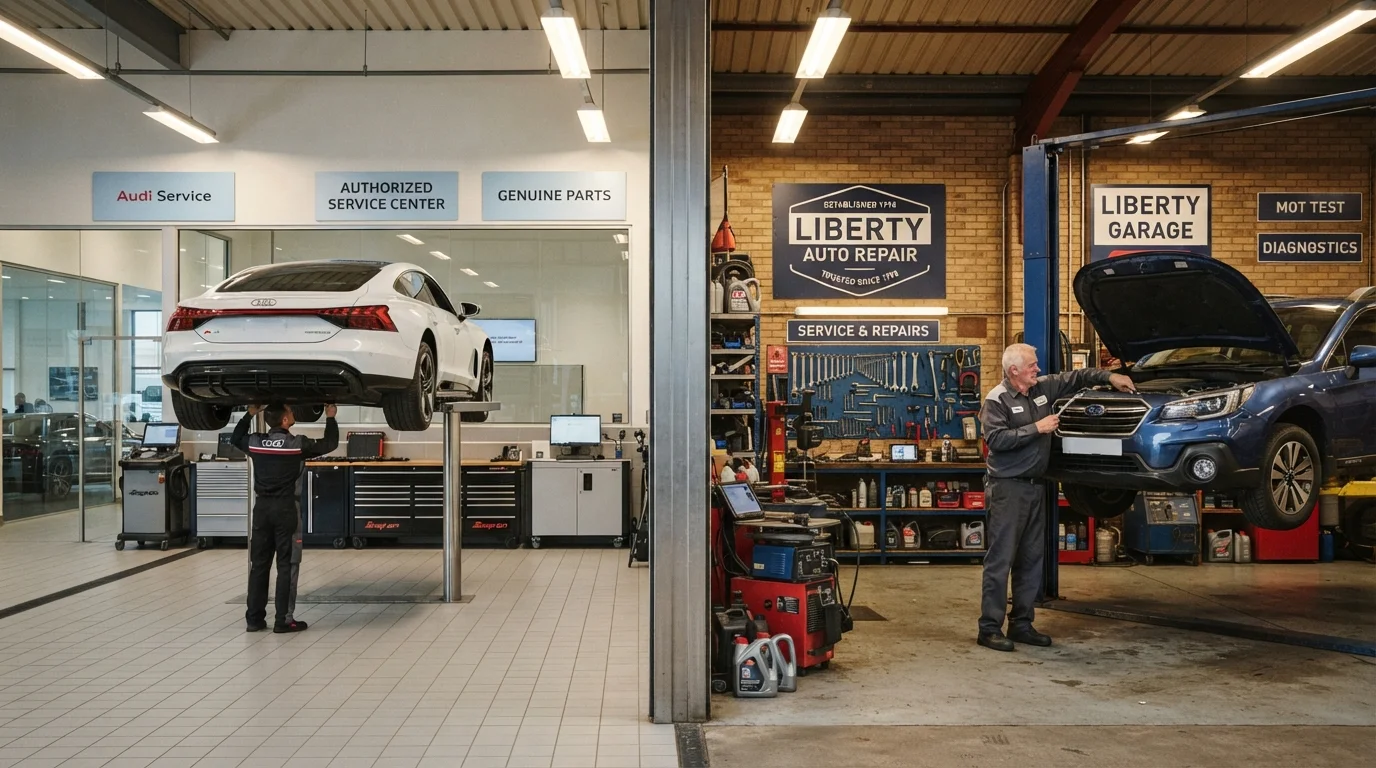
The Core Difference: What You're Actually Paying For
When you take your car to a dealership service centre, you're paying for factory-trained technicians, manufacturer-approved parts, and access to proprietary diagnostic software. Independent mechanics operate outside that structure - and that difference has real implications for cost, convenience, and coverage.
Dealerships employ technicians certified specifically for their brand, which means deeper familiarity with known issues, technical service bulletins, and model-specific quirks. Independent shops typically carry ASE (Automotive Service Excellence) certification and service multiple makes and models, giving them broad mechanical experience.
Understanding what each setting genuinely offers - rather than relying on assumptions - is what helps drivers make a financially sound decision. See our Car Costs & Savings hub for more practical ways to reduce total ownership expenses.
Cost: Where the Gap Is Largest
Labor rates at dealerships are consistently higher than at independent shops. Dealers often charge $120-$200+ per hour depending on region and brand; independent mechanics typically range from $75-$130 per hour for comparable work. On a straightforward oil-and-filter service, that gap may be modest. On a brake job or timing chain replacement, the difference can run into hundreds of dollars.
Parts pricing also diverges. Dealerships source OEM (original equipment manufacturer) parts, which meet factory specifications but carry a premium. Many independent shops offer both OEM and reputable aftermarket alternatives, giving customers a choice. Aftermarket parts from established suppliers can perform comparably on most non-critical components, though it's worth discussing options with your mechanic before agreeing to any job.
~40%
Average labor cost difference
Industry data consistently shows independent mechanics charge roughly 30-40% less per hour than franchised dealerships for equivalent work.
1975
Year Magnuson-Moss Act passed
The Magnuson-Moss Warranty Act prohibits US manufacturers from voiding warranties solely because an independent shop performed maintenance, provided work is documented.
To understand exactly what each service tier actually covers - and what you're comparing prices on - see what full, interim, and major services actually include.
Warranty Implications: A Common Misconception
Many drivers assume that using an independent mechanic during the warranty period automatically voids their manufacturer warranty. This is largely a myth in the United States. The Magnuson-Moss Warranty Act of 1975 prohibits manufacturers from conditioning warranty coverage on the use of their own service centres, provided the independent shop uses parts meeting OEM specifications and the work is properly documented.
Don't Rely on Word of Mouth Alone
Even with legal protections in place, some manufacturers have disputed warranty claims tied to independent servicing when documentation was incomplete or parts didn't meet OEM specifications. Always obtain itemised invoices, save parts receipts, and confirm the shop uses parts that meet manufacturer requirements. Verbal assurances aren't sufficient if a claim is challenged.
The practical caveat: you need to keep receipts and records. If a warranty claim is disputed, documented service history is your evidence. Whether you use a dealer or independent shop, maintaining a thorough vehicle service log protects your position on both warranty claims and resale value.
Specialisation, Diagnostics, and Complex Repairs
For some jobs, dealerships hold a genuine advantage. Modern vehicles rely heavily on proprietary software for engine management, transmission control, and advanced driver-assistance systems (ADAS). Dealers have manufacturer-level diagnostic tools that independent shops may not be able to replicate fully, particularly for software updates, module programming, and recall-related work.
Recalls must be handled by an authorised dealership - no independent shop can perform recall repairs or claim the associated reimbursement. If your vehicle has an open recall, the dealer is your only option, and the work is completed at no cost to you.
For routine maintenance - oil changes, brake pad replacements, tyre rotations, air filters, and similar tasks - brand-specific expertise rarely changes the outcome. These jobs are well within the competency of any qualified independent mechanic, and the full lifecycle of car maintenance is largely achievable without dealership involvement.
| Dealership Service Centre | Independent Mechanic | |
|---|---|---|
| Typical labor rate (per hour) | $120-$200+ | $75-$130 |
| Parts used | OEM factory parts | OEM or quality aftermarket |
| Technician specialisation | Brand-specific factory training | Multi-make ASE certification |
| Proprietary diagnostic tools | Full manufacturer access | Limited or third-party tools |
| Recall repairs | Yes - required and free | Not available |
| Scheduling flexibility | Often less flexible | Generally more flexible |
| Warranty work | Directly covered | Possible with documentation |
Making the Right Call for Your Situation
A practical framework: use the dealership for recall work, warranty-covered repairs, and complex brand-specific diagnostics. For everything else on a well-maintained vehicle, an independent mechanic with verifiable credentials and good local reviews is a sound alternative that can meaningfully reduce your annual maintenance costs.
Before choosing a shop, verify ASE certification, ask about parts sourcing policies, and confirm they'll provide written estimates and itemised invoices. If you're weighing which tasks you might handle yourself versus what genuinely needs a professional, our guide to DIY car maintenance risks and limits sets out a clear framework for that decision.
This article provides general information about vehicle servicing options and is not a substitute for advice from a qualified automotive professional. Warranty terms vary by manufacturer and vehicle; consult your warranty documentation and a licensed technician for guidance specific to your situation.