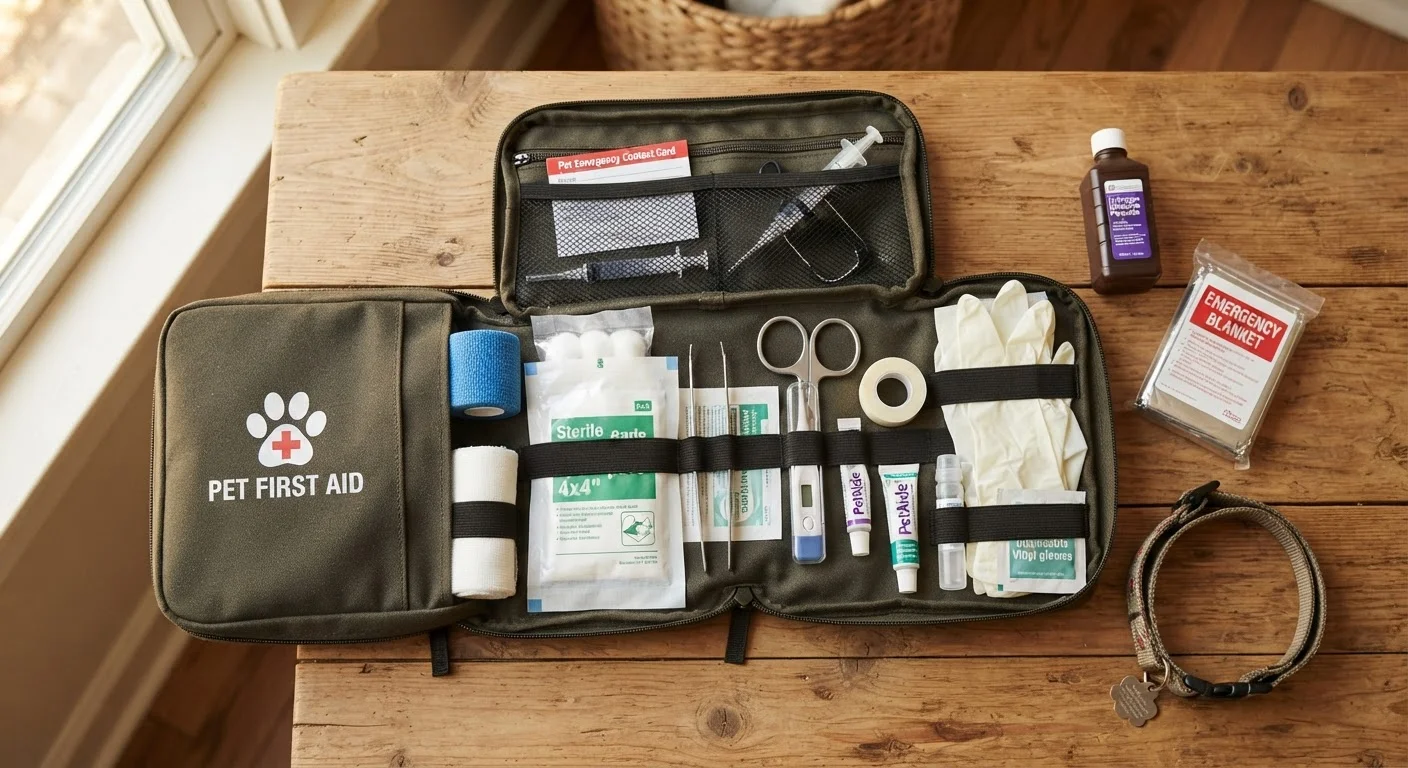
Why Every Pet Household Needs a First Aid Kit
Accidents don't wait for convenient moments. A dog can slice a paw pad on broken glass during an evening walk, or a cat can ingest something irritating on a Sunday night when your regular vet is closed. Having a dedicated pet first aid kit means you're prepared to manage minor injuries calmly and safely while you arrange professional care.
This isn't about replacing your veterinarian - it's about bridging the gap. First aid for pets, much like first aid for people, is designed to stabilize a situation, not treat it. As part of a broader commitment to proactive pet health, a well-stocked kit fits naturally alongside preventive care habits that can reduce the likelihood of costly emergencies over time.
The checklist below covers the supplies most commonly recommended by veterinary professionals for dogs and cats. If you share your home with birds, reptiles, or small mammals, consult your exotic animal vet for species-specific additions.
First Aid Is Not a Substitute for Veterinary Care
Even when a pet appears to recover after a first aid intervention, a veterinary evaluation is strongly advised. Internal injuries, infections, and toxic ingestion can present with a delay. If your pet has ingested a potentially toxic substance, do not induce vomiting unless a veterinarian or poison control specialist explicitly instructs you to do so - some toxins cause additional damage on the way back up.
What to Include: The Full Checklist
Organize your kit into the groups below, ideally in a clearly labeled, waterproof container stored somewhere accessible to adults but out of reach of children and pets. Before assembling, review the common pet health myths that sometimes lead owners to use the wrong remedy in a crisis.
Wound Care Essentials
Monitoring and Assessment
Restraint and Safety
Tools and Instruments
Reference and Records
Once assembled, walk through each item so you understand its purpose. Owning a muzzle is only useful if you know how to put it on safely - practice before you need it.
Tools and Supplies You'll Need
Beyond the consumable supplies in your checklist, a few reusable tools form the backbone of any effective kit. Below are the key items, along with a note on whether each is essential or optional.
Waterproof storage container or dedicated kit bag
Keeps all supplies organized, dry, and portable - critical when you need to grab the kit quickly.
Digital rectal thermometer
Accurately measures your pet's body temperature to detect fever or hypothermia during assessment.
Blunt-tipped bandage scissors
Safely cuts gauze, bandaging wrap, and tape without risking injury to your pet's skin.
Fine-tipped tweezers
Used to remove ticks, splinters, or visible foreign objects from the skin or paw pads.
Soft muzzle (sized for your pet)
Protects handlers from bites when a pet is frightened or in pain during first aid.
Plastic oral syringe
Allows controlled delivery of fluids or liquid medications when directed by a veterinarian.
Penlight or small flashlight
Illuminates the mouth, ears, or wound site during examination in dim environments.
Keeping Your Kit Ready and Effective
Assembling the kit is only the first step. Set a recurring reminder every six months to audit the contents: check expiration dates on hydrogen peroxide, saline solution, and any medications your vet has prescribed for emergency use. Replace anything that's been used or has expired.
Tape your veterinarian's phone number, the nearest 24-hour emergency veterinary clinic's address, and the ASPCA Animal Poison Control Center number (a dedicated hotline with a consultation fee) to the inside lid of your kit. In a stressful moment, having those numbers visible saves precious time.
If you travel regularly with your pet - whether road trips or outdoor adventures - consider assembling a compact travel version of the kit. Keep it in your vehicle alongside any essentials from your first vet visit preparation documents, such as vaccination records.
Finally, consider taking a pet first aid course. Several veterinary schools and humane societies offer in-person or online courses that teach hands-on skills - how to apply a pressure bandage, recognize shock, or perform the Heimlich maneuver for dogs - that no supply list alone can teach.
This article is for general informational purposes only and does not constitute veterinary or medical advice. Always consult a licensed veterinarian for guidance on your pet's specific health needs or in any emergency situation.