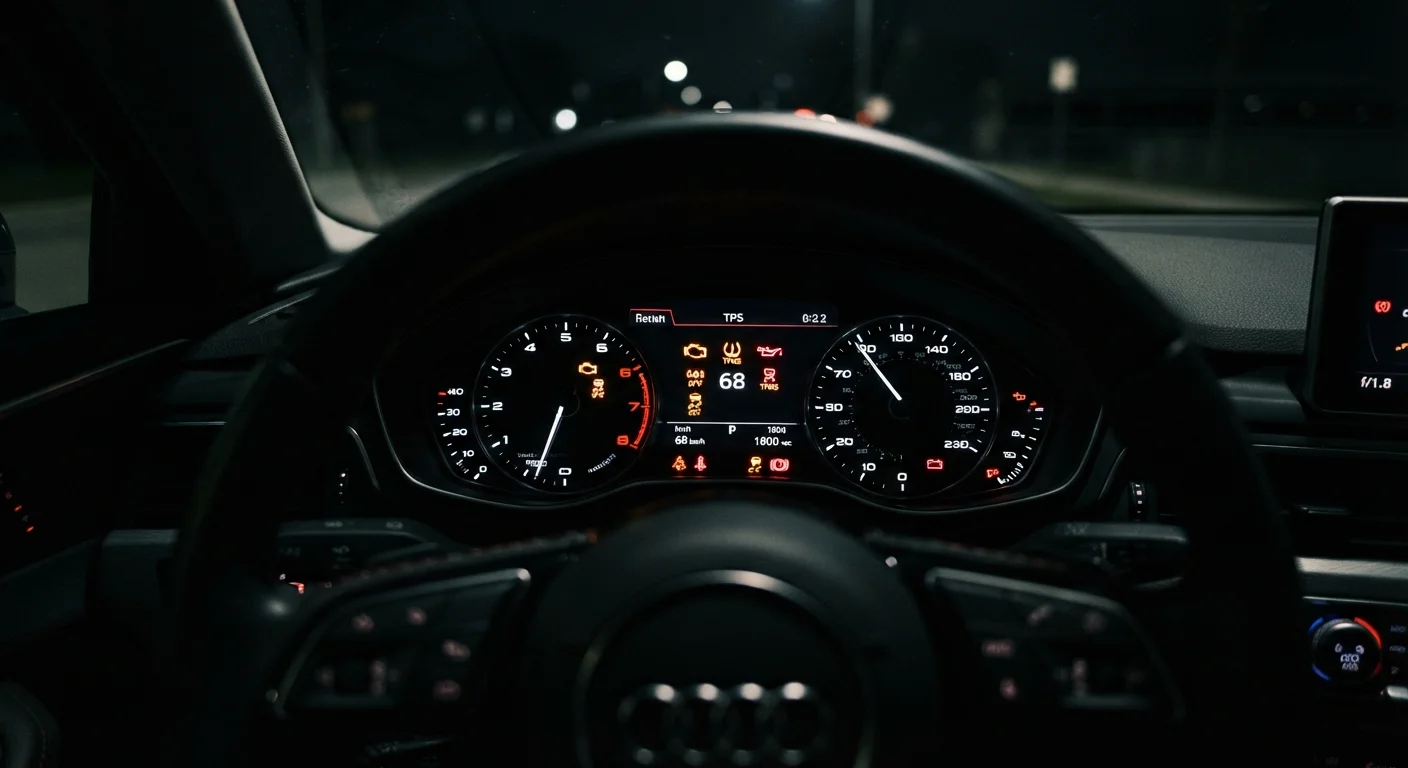
How the Warning Light System Is Designed
Your dashboard warning lights follow a color-coded logic that mirrors traffic signals: red means stop or act immediately, amber/yellow means investigate soon, and green or blue simply confirms a system is active (headlights, cruise control). Understanding that hierarchy alone eliminates most of the panic drivers feel when a light appears.
Manufacturers largely standardize symbols through international standards, so a battery icon or oil can looks similar across most makes. Your owner's manual remains the definitive reference for your specific vehicle - keep a digital copy on your phone if the printed one is buried in the glove box.
See our seasonal car check guide for a broader look at preventive inspections that can catch problems before lights ever appear.
| Red light action | Stop driving as soon as safely possible |
| Amber light action | Schedule service within a few days |
| Flashing check engine light | Reduce speed; seek service same day |
| OBD-II scanner cost | Free at many auto parts retailers; basic units from ~$20 |
| TPMS trigger threshold | Typically 25% below recommended PSI (federally mandated in U.S. vehicles since 2008) (NHTSA TPMS Final Rule) |
| Owner's manual location | Glove box or manufacturer's app/website (free PDF download) |
Red Lights: Treat These as Urgent
Red warning lights signal that something needs attention now - continuing to drive risks damage to the vehicle or, in some cases, safety. The three most common ones every driver should recognize:
- Oil Pressure (oil can icon): Low oil pressure can destroy an engine within minutes. Pull over safely, shut off the engine, and check the oil level before driving further. Do not ignore this light even briefly.
- Engine Temperature (thermometer in liquid): Your engine is overheating. Pull over, turn off the engine, and let it cool. Driving while overheated can warp cylinder heads - a repair that can cost thousands of dollars.
- Battery / Charging System: The vehicle's electrical system isn't charging properly. You may have limited time before the car stalls. Minimize electrical loads (A/C, radio) and head to a mechanic or auto parts store for a battery test.
- Brake System Warning: If this appears alongside a low, spongy pedal feel, stop driving immediately. It may indicate a brake fluid leak or brake failure. If the light appears only when the parking brake is engaged, simply release it and confirm the light clears. For more context on brake warning signs, see our brake maintenance guide.
Amber Lights: Schedule Attention Within Days
Amber lights don't require you to pull over immediately, but they shouldn't be ignored for weeks. The most common:
- Check Engine (engine outline): This is the most misunderstood light on any dashboard. It can indicate anything from a loose gas cap to a misfiring cylinder. A steady amber check engine light means schedule a diagnostic scan soon. A flashing check engine light signals an active misfire that can damage your catalytic converter - reduce speed and get it checked the same day.
- TPMS (tire with exclamation point): One or more tires are significantly under- or over-inflated. Check pressures at your earliest convenience - driving on underinflated tires reduces fuel economy and accelerates tread wear. Our tire pressure guide explains the correct procedure.
- Low Fuel: Self-explanatory, but consistently running on fumes can stress your fuel pump over time.
- Transmission Temperature: Your transmission is running hot, often from towing or stop-and-go traffic. Reduce load where possible and have transmission fluid levels checked.
OBD-II
On-Board Diagnostics II - a standardized system in U.S. vehicles sold after 1996 that stores fault codes when a sensor detects a problem. A compatible scanner plugs into a port usually located under the dashboard near the steering column.
TPMS
Tire Pressure Monitoring System - a sensor-based system that alerts drivers when tire pressure drops significantly below the recommended level. Required on all new U.S. passenger vehicles since 2008.
Fault Code (DTC)
Diagnostic Trouble Code - an alphanumeric code (e.g., P0301) stored by the vehicle's computer when a sensor reading falls outside expected parameters. Codes indicate a system and type of fault, not always a specific failed part.
Catalytic Converter
An emissions-control device in the exhaust system that converts harmful gases into less harmful ones. A misfiring engine can overheat and permanently damage the converter, making prompt attention to a flashing check engine light important.
Oil Pressure
The force at which engine oil circulates through the lubrication system. Low oil pressure - distinct from low oil level - means oil isn't reaching critical engine components and damage can occur very quickly.
Getting a Diagnostic Code Read
When the check engine light appears, an OBD-II scanner reads the stored fault code and points you toward the problem. Many auto parts retailers offer free code scans. The code itself (e.g., P0420 for catalyst efficiency) is a starting point, not a final diagnosis - a mechanic interprets it alongside real-world symptoms.
If you're comfortable with basic vehicle diagnostics, our DIY car maintenance guide outlines which tasks are realistic for careful owners versus when a professional is the right call.
Staying current with scheduled service is the single most reliable way to reduce unexpected warning lights. Our maintenance schedule explainer breaks down what each service interval actually covers and why timing matters for engine longevity.
This article provides general vehicle information for educational purposes. Always consult a qualified mechanic for diagnosis and repair of your specific vehicle.