What the Numbers Mean
Two measurements define whether your tyres are roadworthy: inflation pressure and tread depth. They are independent - a tyre can hold perfect pressure but have dangerously worn tread, or vice versa. Understanding each on its own terms is the starting point.
Tyre pressure is measured in PSI (pounds per square inch) in the US. The correct range for your vehicle is printed on a sticker inside the driver's door jamb - not on the tyre sidewall, which shows only the maximum allowable pressure. Most passenger cars fall between 30 and 35 PSI; many SUVs and trucks run higher. Always use the door-jamb figure as your target.
Tread depth is measured in 32nds of an inch. New tyres typically start at 10/32" to 11/32". US federal law sets the minimum legal limit at 2/32", but safety research consistently identifies 4/32" as the point where wet-weather stopping distances begin to increase significantly. Think of 4/32" as your practical action threshold, not just 2/32".
How to Check Both at Home
Neither check requires a mechanic visit. A quality dial or digital tyre gauge costs under $15 at most auto parts retailers and pays for itself quickly.
Checking Pressure
- Check tyres when cold - before driving or after sitting for at least three hours. Heat from driving temporarily raises pressure readings.
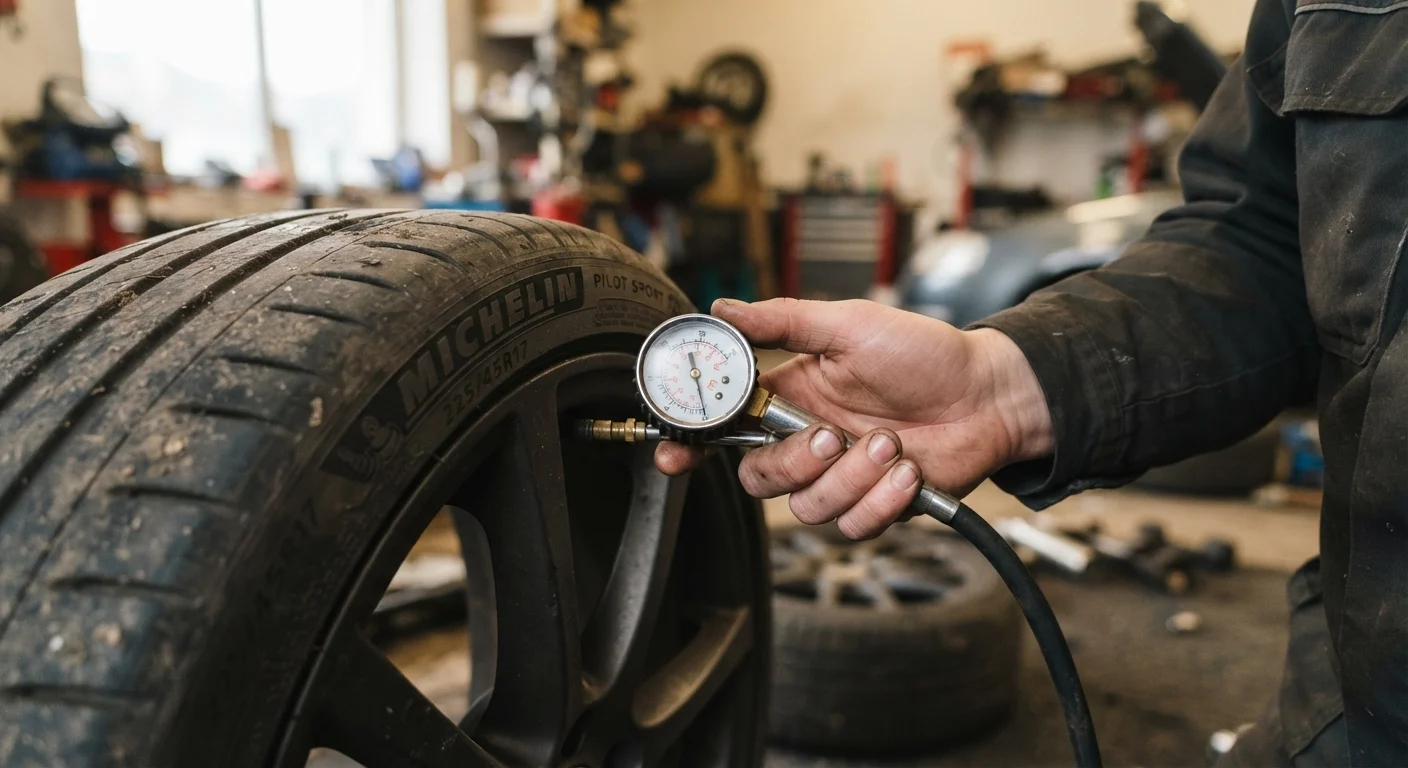
- Remove the valve cap and press the gauge firmly onto the valve stem.
- Read the PSI on the gauge and compare it to the door-jamb specification.
- Add air at a gas station air pump or home compressor if below spec; release small amounts using the gauge's bleeder pin if over spec.
- Replace the valve cap.
Checking Tread Depth
- Quarter test: Insert a US quarter into a tread groove with Washington's head pointing down. If you can see the top of his head, you're at approximately 4/32" or below - time to plan replacement.
- Penny test: Same method with a penny. If Lincoln's entire head is visible, you're at or below 2/32" - legally worn out in most US states.
- Tread wear indicators: Moulded bars running across the groove at 2/32" become flush with the tread surface at that limit. Visible indicators mean the tyre is at its legal end of life.
For a broader look at what these checks fit into, see our seasonal car check guide, which covers additional safety items to review at each season change.
When Each Measurement Actually Matters
Not every deviation is an emergency, but knowing the stakes helps you prioritize correctly.
Tyre Pressure: Daily and Seasonal Impact
Pressure drops roughly 1 PSI for every 10°F decrease in ambient temperature. A tyre that was correctly inflated in September can be 5-6 PSI low by January without any leak. Running underinflated increases rolling resistance, reducing fuel economy. Running overinflated reduces the tyre's contact patch, shortening the tread life in the centre and reducing wet grip. Check pressure monthly and after significant temperature swings.
TPMS Is a Last Resort, Not a Monitor
The Tyre Pressure Monitoring System required on US vehicles since 2008 only triggers a warning when pressure is roughly 25% below the recommended level. At that point, the tyre is already significantly underinflated. Manual monthly checks catch problems long before the TPMS light comes on, making them a worthwhile habit regardless of what your dashboard shows.
Tread Depth: The Wet-Road Threshold
Tread depth matters most in rain. Grooves channel water away from the contact patch; as they shallow out, the tyre rides on a film of water rather than road surface - a condition called hydroplaning. At 4/32" remaining, wet stopping distances are noticeably longer than at new-tyre depth. At 2/32", wet performance is severely compromised. Dry stopping distances, by contrast, change less dramatically, which is why some drivers underestimate worn tread until they encounter rain.
Proper inflation also extends tread life by ensuring even wear across the tyre's width. The two metrics are more connected than they appear - for more on that relationship, see tyre maintenance habits that protect safety and your wallet.
Integrating These Checks Into a Realistic Routine
The most effective approach is building both checks into existing habits rather than treating them as separate tasks. A practical cadence:
- Monthly: Check all four tyre pressures (and the spare, if applicable) when cold.
- Every fuel fill-up: Do a quick visual walk-around. Sidewall bulges, visible cracking, or obvious flats warrant immediate attention.
- Every oil change: Use a gauge or the quarter test to verify tread depth on each tyre.
- Before any long trip: Check both pressure and tread, especially if the vehicle has been sitting.
If your vehicle has a TPMS (Tyre Pressure Monitoring System) dashboard light, understand that it typically illuminates only when pressure drops 25% or more below the placard spec - that's a significant shortfall, not a mild one. Don't rely on the TPMS light alone as your monthly check. For other dashboard indicators and what they signal, our dashboard warning lights guide breaks each one down in plain language.
These checks fit naturally within the broader servicing milestones outlined in your car's maintenance schedule explained. Two minutes per month and a $15 gauge are all it takes to stay ahead of two of the most common and preventable tyre-related problems on the road.