Why Tires Are a Budget Issue, Not Just a Safety One
Tires are among the most frequently replaced wear items on any vehicle, and a full set can run anywhere from a few hundred to well over a thousand dollars depending on the vehicle. Yet many drivers lose significant tire life through entirely preventable neglect. Skipping basic maintenance doesn't just raise safety risk - it pulls money directly out of your pocket through faster wear, reduced fuel efficiency, and premature replacement cycles.
This article covers the tire maintenance practices with the strongest evidence behind them, grounded in guidance from the National Highway Traffic Safety Administration (NHTSA) and engineering principles used by tire manufacturers. For a broader view of keeping vehicle costs in check, see the Car Maintenance hub or the comprehensive guide covering maintenance from purchase to high mileage.
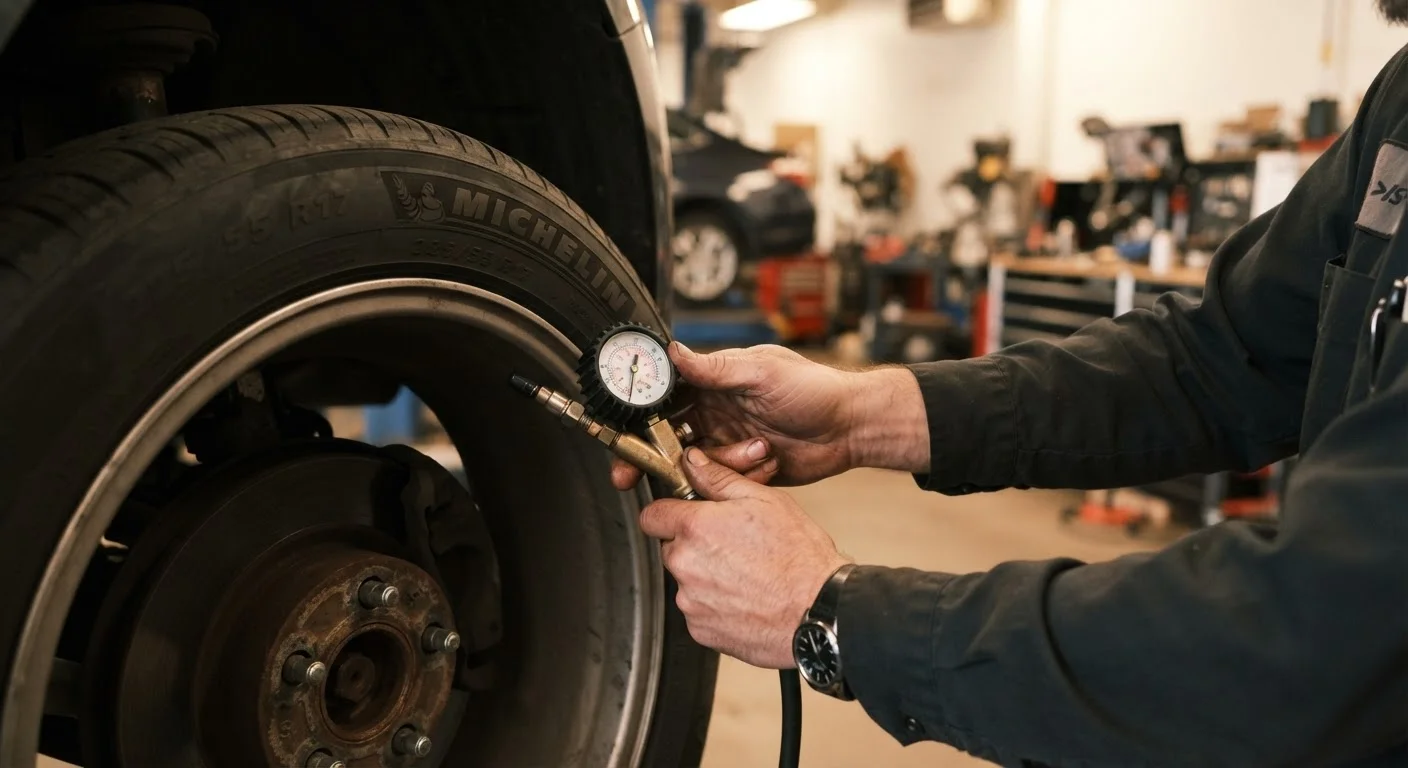
Check tire pressure monthly and before long trips using a reliable gauge.
Tires lose about 1 PSI per month naturally, and temperature swings can accelerate that loss. Under-inflated tires flex more, generate heat, wear faster on their outer edges, and reduce fuel economy. Over-inflation causes center-tread wear and reduces the tire's contact patch with the road.
Use your vehicle's recommended PSI from the door jamb sticker - not the maximum listed on the tire sidewall.
The number molded into the tire sidewall is the maximum the tire can safely hold, not the correct operating pressure for your specific vehicle and load. Automakers calculate the door-jamb spec to balance handling, wear, and ride quality for that vehicle's weight distribution.
Rotate tires every 5,000 to 7,500 miles, or per your owner's manual.
Front tires wear faster on front-wheel-drive vehicles due to steering and acceleration forces. Without rotation, you'll replace the fronts while the rears still have useful life - essentially buying tires in mismatched pairs and disrupting optimal handling balance.
Have wheel alignment checked annually or whenever you notice pulling, uneven wear, or after a significant impact.
Misalignment causes tires to scrub sideways slightly as the vehicle moves, accelerating wear on specific areas of the tread. It also forces the engine to work harder against the vehicle's tendency to drift, reducing fuel economy. Alignment drift can happen gradually from normal road use.
Inspect tread depth monthly using a penny or quarter, or a tread depth gauge.
Tread channels move water away from the contact patch. As tread wears down below 4/32 inch, wet-road stopping distances increase significantly. At 2/32 inch (the legal minimum in most U.S. states), traction in rain or light snow is seriously compromised.
Have tires balanced whenever vibration appears or new tires are mounted.
Wheel imbalance causes high-speed vibration that translates into cupping and uneven wear patterns on the tire, shortened bearing life, and driver fatigue. It's a low-cost service that prevents expensive downstream damage.
Quick Actions You Can Take This Week
Most tire maintenance requires no special tools and less than 15 minutes per month. Starting with the highest-impact habits - pressure and visual tread checks - costs nothing and delivers measurable returns. If you're already doing those, adding a rotation schedule and periodic alignment checks rounds out a complete tire care routine.
For a closer look at what pressure readings and tread depth numbers actually mean in practice, see our guide to tire pressure and tread depth. And if you're weighing which of these tasks to handle yourself versus handing to a shop, DIY car maintenance - where it makes sense and where it doesn't offers a balanced breakdown.
Putting It in Context: Tires and Long-Term Ownership Costs
Tire maintenance doesn't exist in isolation - it's one piece of the broader puzzle of keeping a vehicle affordable over time. Drivers who maintain their tires well typically also see downstream benefits: better fuel economy improves the cost-per-mile calculation, and consistent care can delay the need for major drivetrain repairs that are sometimes triggered by irregular handling or vibration caused by unbalanced or misaligned wheels.
Up to 3%
Fuel economy improvement from correct tire inflation
The U.S. Department of Energy estimates properly inflated tires can improve gas mileage by up to 3%, adding up to meaningful savings over a year of driving.
11,000+
Tire-related crashes annually in the U.S.
NHTSA data consistently identifies tire failure and degradation as a contributing factor in thousands of crashes each year, underscoring that maintenance is a genuine safety issue.
$600-$1,200
Typical cost of a full tire replacement set
Costs vary widely by vehicle type and tire category; poor maintenance practices that cut tire life by even 20% represent a real dollar loss across a vehicle's lifetime.
If you're running an older vehicle and wondering whether tire upkeep is worth the ongoing investment, keeping a high-mileage car on the road without overspending walks through how to evaluate that decision honestly. Proper tire care is almost always worth it - but the overall math depends on your vehicle's condition and remaining value.
“Tires are the only part of the car that actually touches the road. Everything else - the brakes, the suspension, the steering - ultimately depends on that small contact patch performing correctly.”
— NHTSA Consumer Tire Guide, National Highway Traffic Safety Administration public safety resource