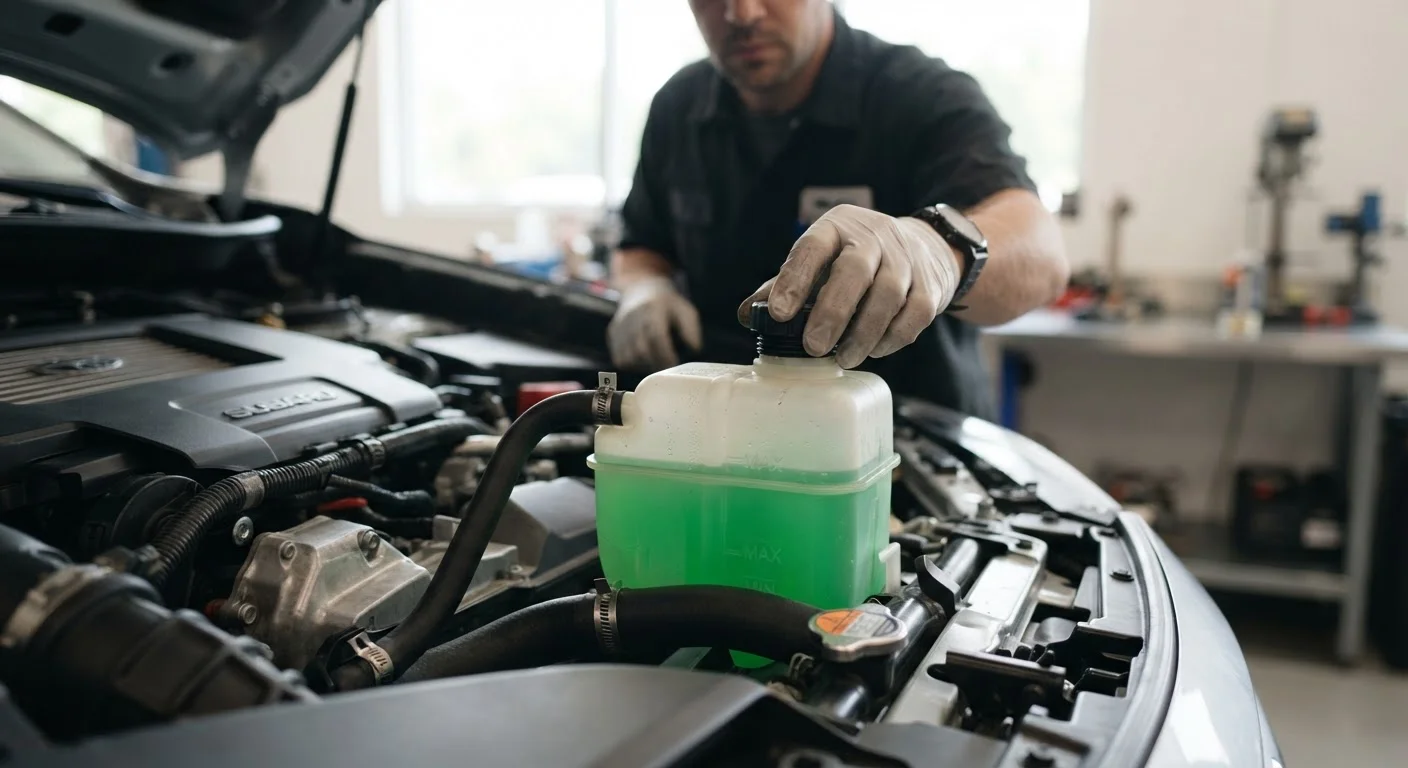
What Coolant Actually Does
Your engine generates an enormous amount of heat through combustion - temperatures inside the cylinders can exceed 4,500°F. Left unmanaged, that heat would destroy engine components within minutes. Coolant's job is to absorb that heat from the engine block, carry it through hoses to the radiator, and dissipate it into the air before cycling back to do it again.
But temperature regulation goes both ways. In winter, the glycol in coolant prevents the water in the system from freezing and cracking your engine block - a failure that can total a vehicle. In summer, the elevated boiling point of the coolant-water mixture prevents the coolant itself from vaporizing under pressure.
Coolant also contains corrosion inhibitors that protect the metal surfaces inside your cooling system - aluminum components, copper radiators, and iron engine blocks all need different types of protection. This is why coolant degrades over time and requires periodic replacement. See which other fluids drivers routinely overlook for a broader picture of what needs regular attention.
$3,000-$10,000+
Typical cost to replace a seized engine
Engine replacement costs vary widely by vehicle make, model, and labor rates - overheating-related failures are among the most expensive preventable repairs a driver can face.
30,000-50,000 mi
Standard coolant flush interval
Most vehicle manufacturers recommend a coolant flush within this range, though some long-life coolants extend intervals further - always consult your owner's manual.
265°F
Boiling point of pressurized 50/50 coolant mix
A proper antifreeze-to-water ratio raises the coolant's boiling point significantly above that of plain water, providing a wider margin of protection under demanding driving conditions.
Signs Your Coolant Level Is Too Low
A low coolant level doesn't always announce itself dramatically. Often the earliest signs are subtle, which is why regular checks matter more than waiting for a dashboard light.
- Temperature gauge creeping high: If the needle moves noticeably toward the red zone - especially in stop-and-go traffic - that's a cooling system problem until proven otherwise.
- Sweet smell inside the cabin: Ethylene glycol has a distinctive sweet odor. If you smell it through your vents, coolant may be leaking near the heater core.
- White exhaust smoke: Thick white smoke from the tailpipe, especially when the engine is warm, can indicate coolant burning in the combustion chamber - a potential sign of a head gasket leak.
- Visible puddles under the car: A brightly colored or sweet-smelling puddle under a parked car often indicates a coolant leak. Note that air conditioning condensation is clear and odorless - coolant is not.
- Low reservoir level: Check the translucent plastic coolant reservoir under the hood when the engine is cold. It should sit between the MIN and MAX markings.
Always check the reservoir when the engine is cold. Opening a hot radiator cap can cause pressurized coolant to spray and cause serious burns - this is a task best left to a qualified mechanic if you're uncertain.
Build Coolant Checks Into Your Routine
Add a coolant reservoir check to your monthly oil check - both take under a minute and can catch developing problems before they escalate. Make sure the engine is cold before you open the hood, and never remove the radiator cap when the engine is warm. If the level drops between checks, don't just top it off - find out why.
What Happens When the Engine Overheats
Engine overheating is one of the most expensive mechanical failures a driver can face. When coolant levels drop low enough that the system can't manage heat properly, temperatures rise quickly. The consequences follow a predictable and costly sequence.
First, the engine oil breaks down faster at elevated temperatures, reducing lubrication. Next, metal components begin to expand beyond their design tolerances - cylinder heads can warp, causing compression loss and the need for machining or replacement. If overheating persists, a head gasket failure often follows, allowing coolant and engine oil to mix. That contamination damages bearings and other internal components rapidly.
In severe cases, a seized engine - one where internal components have fused due to extreme heat - is the result. Replacing or rebuilding a seized engine can cost anywhere from $3,000 to $10,000 or more, depending on the vehicle.
This is why the temperature gauge should never be ignored. If it climbs into the red, the correct response is to turn off the air conditioning, turn on the heater (which draws heat away from the engine), pull over safely when possible, and let the engine cool completely before investigating further. Do not attempt to remove the radiator cap while the engine is hot.
Understanding when a cooling system issue is something you can inspect yourself versus when it requires professional diagnosis is important. Our guide on DIY car maintenance versus tasks for a licensed mechanic can help you make that call confidently.
Keeping Your Cooling System Healthy
Most cooling system problems are preventable with a consistent maintenance routine. A few habits go a long way toward avoiding the failures described above.
Check the reservoir monthly. It takes 30 seconds and gives you early warning of a developing leak before it becomes an engine problem. Include it as part of your seasonal vehicle check.
Flush coolant on schedule. Degraded coolant becomes acidic and corrodes the system from the inside out. Follow the interval in your owner's manual - typically every 30,000 to 50,000 miles - and use the coolant type specified for your vehicle. This is part of the broader maintenance picture covered in your car's full maintenance schedule.
Inspect hoses and clamps visually. Hoses that feel brittle, spongy, or show cracking near clamps are at risk of failure. These are inexpensive to replace before they fail, and very costly to ignore once they do.
Never mix coolant types without flushing the system first. And when topping off, always use a pre-mixed formulation or mix with distilled water - not tap water - to avoid mineral buildup.