The Fluids Most Drivers Ignore
Ask most drivers when they last checked their engine oil and you'll get a reasonable answer. Ask about brake fluid or differential fluid and you'll get a blank stare. That gap in attention is where expensive surprises are born.
Modern vehicles rely on six or more distinct fluid systems to operate safely, and most of them degrade or deplete without any dashboard warning until the damage is already underway. Adding a structured fluid check to your routine - not just at oil-change time - is one of the lowest-effort, highest-return habits in vehicle ownership. The checks below focus on the fluids that are routinely skipped, along with what to look for and why it matters.
For a broader view of annual vehicle maintenance, see the annual car cost audit - it puts fluid checks into the wider context of keeping ownership costs predictable.
Brake Fluid
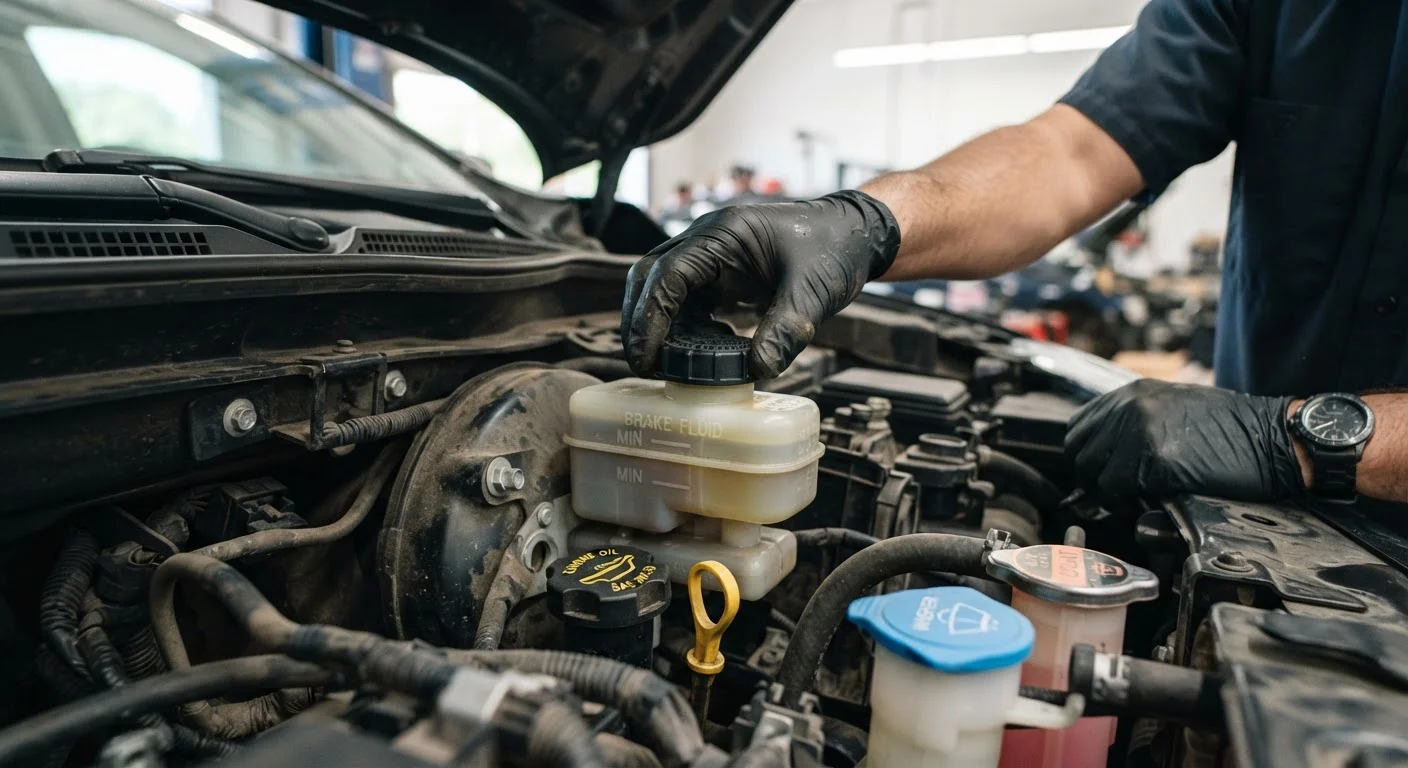
Brake fluid is hygroscopic - meaning it absorbs moisture from the air over time. As water content rises, the fluid's boiling point drops, which can cause brake fade under hard stopping. Most manufacturers recommend inspecting it every two years regardless of mileage.
Check the reservoir under the hood; the fluid should be clear to light amber. Dark or murky fluid has absorbed too much moisture and should be flushed by a qualified mechanic. Never top off with a different specification than what's listed on the reservoir cap or in your owner's manual - mixing types can compromise braking performance.
As brake fluid absorbs moisture, its boiling point drops - increasing the risk of brake fade.
Transmission Fluid
Automatic transmission fluid lubricates, cools, and hydraulically actuates your gearbox simultaneously. Degraded fluid is one of the leading contributors to premature transmission wear - and transmission rebuilds are among the most expensive repairs a driver can face.
On vehicles with a dipstick (many modern cars have sealed transmissions requiring a shop check), the fluid should be pink to red and smell slightly sweet. Brown fluid with a burnt odor is overdue for service. Check your owner's manual for the interval; many manufacturers specify 30,000 to 60,000 miles, though driving patterns affect this significantly.
Burnt-smelling, brown transmission fluid is a warning sign that's easy to catch before it becomes a costly repair.
Coolant (Antifreeze)
Most drivers know coolant prevents freezing in winter, but its more important year-round job is preventing engine corrosion and maintaining a consistent operating temperature. The corrosion inhibitors in coolant break down over time even if the level looks fine on the reservoir.
Check the level at the translucent overflow reservoir when the engine is cold - never open the radiator cap on a hot engine. Coolant color varies by type (green, orange, pink, blue), but regardless of color, it should be clear, not murky or rusty. A simple test strip from an auto parts store can measure inhibitor strength and freeze-point protection.
Coolant level can look normal while the fluid's corrosion inhibitors are already exhausted.
Power Steering Fluid
Vehicles with hydraulic power steering (rather than electric) use pressurized fluid to reduce steering effort. Low or degraded fluid causes whining noises, stiff steering, and accelerated pump wear. Many drivers only notice when steering becomes noticeably heavy - by which point some damage is often already done.
The reservoir is typically near the engine firewall with a steering wheel icon on the cap. Check the level against the min/max markings on the reservoir or dipstick, and note the color. Foamy or very dark fluid signals contamination or aeration and warrants a professional inspection.
Whining when turning is often the first sign of power steering fluid that's already too low or too degraded.
Differential and Transfer Case Fluid
All-wheel-drive and four-wheel-drive vehicles have front and rear differentials - and often a transfer case - each containing gear oil that needs periodic replacement. On two-wheel-drive vehicles, the rear differential still requires attention. These fluids break down under heat and pressure, and running low can cause gear damage that is expensive to repair.
Unlike engine oil, there's no dipstick for most differentials; checking typically involves removing a fill plug. This is a task worth including in a scheduled service visit rather than a solo driveway job, particularly if you're unfamiliar with the process. Intervals generally range from 30,000 to 60,000 miles depending on the vehicle and driving conditions.
Differential fluid has no dipstick and no warning light - it's the easiest maintenance item to forget entirely.
Windshield Washer Fluid
Washer fluid is the one item here that poses no mechanical risk if neglected, but it's a genuine safety issue. Running out in winter - when road salt and grime reduce visibility - or in summer bug season is a hazard most drivers underestimate until it happens.
Use a purpose-formulated washer fluid rather than plain water. Water can freeze in lines and nozzles in cold weather, and it doesn't clean as effectively. Some formulations include de-icing agents suited to winter driving. Keep a spare jug in the trunk if you drive frequently in dirty or icy conditions.
Running out of washer fluid at highway speed in winter is a visibility hazard that costs nothing to prevent.
Building These Checks Into Your Routine
None of the checks above require a lift, a scanner, or a shop visit. Most take two to five minutes with the engine cool and a clean rag. A practical approach: tie each check to an existing habit - fuel fill-ups, seasonal changes, or tire pressure checks. The seasonal car check guide offers a structured checklist that pairs well with these fluid inspections.
Use Your Owner's Manual as the Final Word
Fluid specifications vary significantly between makes, models, and model years. Using the wrong coolant type or transmission fluid can cause compatibility problems that void warranties or accelerate wear. Your owner's manual - or the manufacturer's online database - lists the correct specification for every fluid in your vehicle. When in doubt, ask a mechanic before adding anything.
If you find a fluid that looks wrong - dark, milky, or low without an obvious cause - that's a signal to consult a qualified mechanic before driving further. Some contamination patterns indicate a more serious underlying problem. For guidance on which tasks are reasonable to handle yourself versus when to hand things over, the DIY car maintenance guide lays out a clear framework.
Fluid management is also covered in depth in the full car maintenance guide, which walks through every major system from purchase to high mileage.
This article provides general vehicle maintenance information for educational purposes. Always consult your vehicle's owner's manual and a qualified mechanic for guidance specific to your make and model.