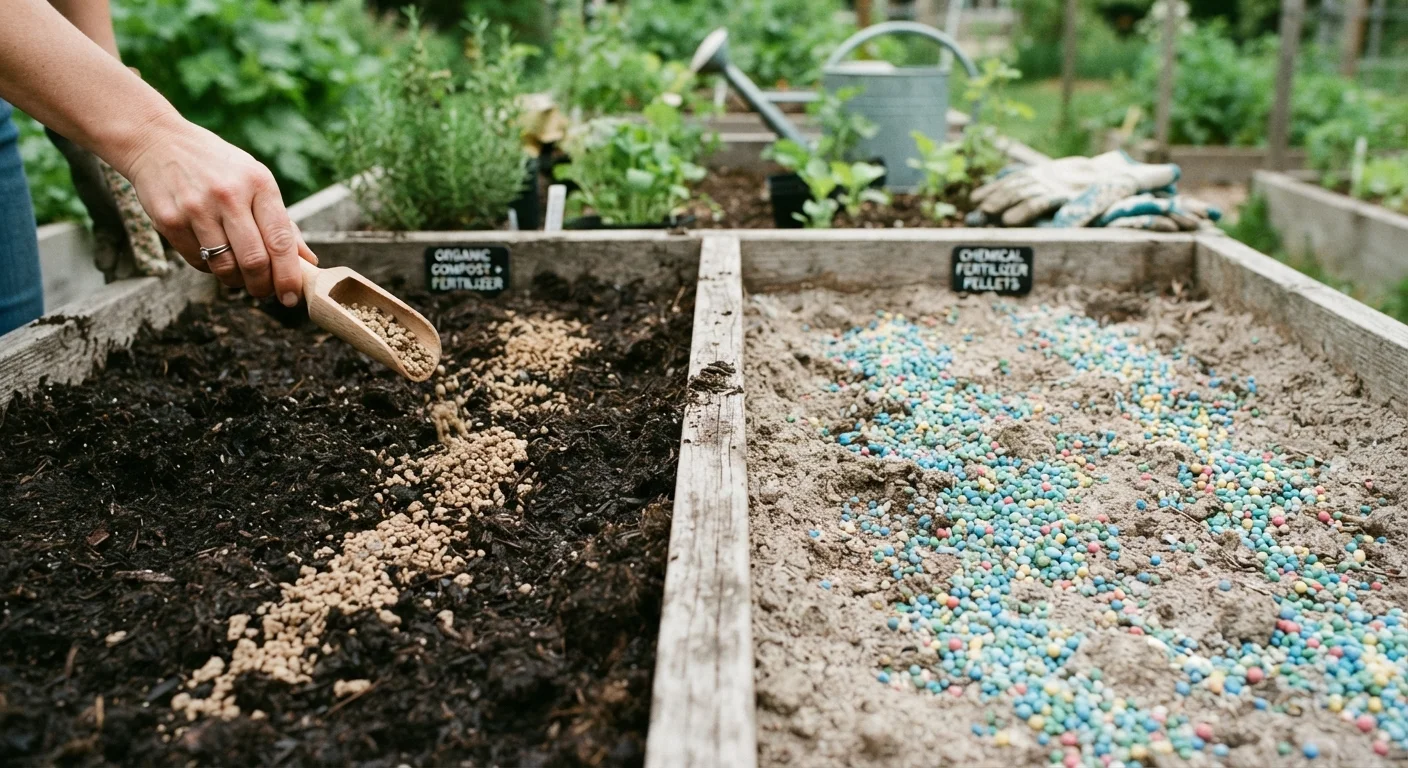
What Sets Them Apart at a Basic Level
Fertilisers supply plants with nutrients - primarily nitrogen (N), phosphorus (P), and potassium (K), often called NPK - but organic and synthetic fertilisers get those nutrients to roots in fundamentally different ways.
Organic fertilisers are derived from plant, animal, or mineral sources: compost, bone meal, blood meal, fish emulsion, and kelp are common examples. Their nutrients are bound in organic compounds that soil microbes must first break down before plants can absorb them.
Synthetic fertilisers are manufactured through industrial processes and formulated to deliver specific nutrient ratios in water-soluble form. Because the nutrients are already in a form plants can take up directly, they work much faster than organic alternatives.
For a broader look at how different soil inputs interact, see our guide to soil amendments, which covers how fertilisers fit alongside compost, lime, and other products.
| Organic Fertilisers | Synthetic Fertilisers | |
|---|---|---|
| Nutrient release speed | Slow (weeks to months) | Fast (days) |
| Soil biology impact | Feeds soil microbes | Minimal microbial benefit |
| Typical upfront cost | Variable; often higher per nutrient | Generally lower per nutrient |
| Precision of nutrient ratios | Lower; varies by source | High; formulated exactly |
| Runoff risk | Lower in most cases | Higher if overapplied |
| Application timing flexibility | Season ahead; less flexible | Apply close to need |
| Long-term soil structure | Improves over time | Little structural improvement |
Soil Health and Long-Term Impact
One of the most meaningful distinctions between these two categories is what they do - or don't do - for your soil over time.
Organic fertilisers feed soil microorganisms as they decompose. This microbial activity improves soil structure, increases water retention, and gradually builds a more resilient growing environment. Gardeners who apply compost or manure regularly often report progressively easier-to-work soil over several seasons.
Synthetic fertilisers, by contrast, target plants directly and have little effect on microbial communities. Repeated heavy applications of high-salt synthetic products can, over time, suppress beneficial soil organisms and compact soil structure - though this typically results from overuse rather than careful, label-directed application.
Combine Both Approaches Strategically
A hybrid approach can give you the best of both worlds. Apply compost or organic matter each autumn to build soil biology, and use a targeted synthetic application mid-season if plants show signs of a specific deficiency. This strategy tends to reduce overall fertiliser costs while maintaining healthy, productive soil.
Neither approach is inherently harmful when used responsibly. Many experienced gardeners use a combination: synthetics to address an immediate deficiency and organics to maintain long-term soil ecology.
Cost, Availability, and Practical Application
Organic fertilisers vary considerably in cost. Homemade compost is essentially free if you maintain a compost bin, while packaged organic products such as pelleted poultry manure or fish-based fertilisers typically cost more per pound of actual nutrient than synthetic equivalents. However, because organics improve soil over time, the ongoing inputs required may decrease as soil health improves.
Synthetic fertilisers are generally less expensive upfront and widely available. They come in granular, liquid, and slow-release forms and can be applied precisely - particularly useful for lawns and container gardens where specific nutrient ratios matter.
Application timing differs too. Organics are often applied in autumn or early spring to give microbes time to break them down before the growing season. Synthetics can be applied closer to when plants actually need feeding and work within days. Overapplication of synthetics, however, can lead to nutrient runoff, which may affect nearby waterways - a consideration worth taking seriously, especially near drainage areas.
How to Think About Your Own Garden
Choosing between organic and synthetic fertilisers is less about which is universally better and more about what your garden needs right now and what you want it to look like in five years.
- Start with a soil test. Many cooperative extension services offer low-cost tests that reveal your soil's current nutrient levels and pH. This removes guesswork and prevents overfertilising.
- Consider your time horizon. If you're building a new garden bed for the long term, organics offer compounding benefits. If you need to green up a lawn before a summer gathering, a synthetic quick-release product may be more practical.
- Think about runoff risk. Gardens near streams or storm drains warrant extra caution with soluble synthetic products.
- Factor in your composting habits. If you already compost kitchen and yard waste, you have a free organic input that reduces your need for purchased products of either type.
Whatever approach you take, always follow product label rates. More fertiliser is not better - excess nutrients stress plants and can cause environmental harm regardless of whether the source is organic or synthetic.