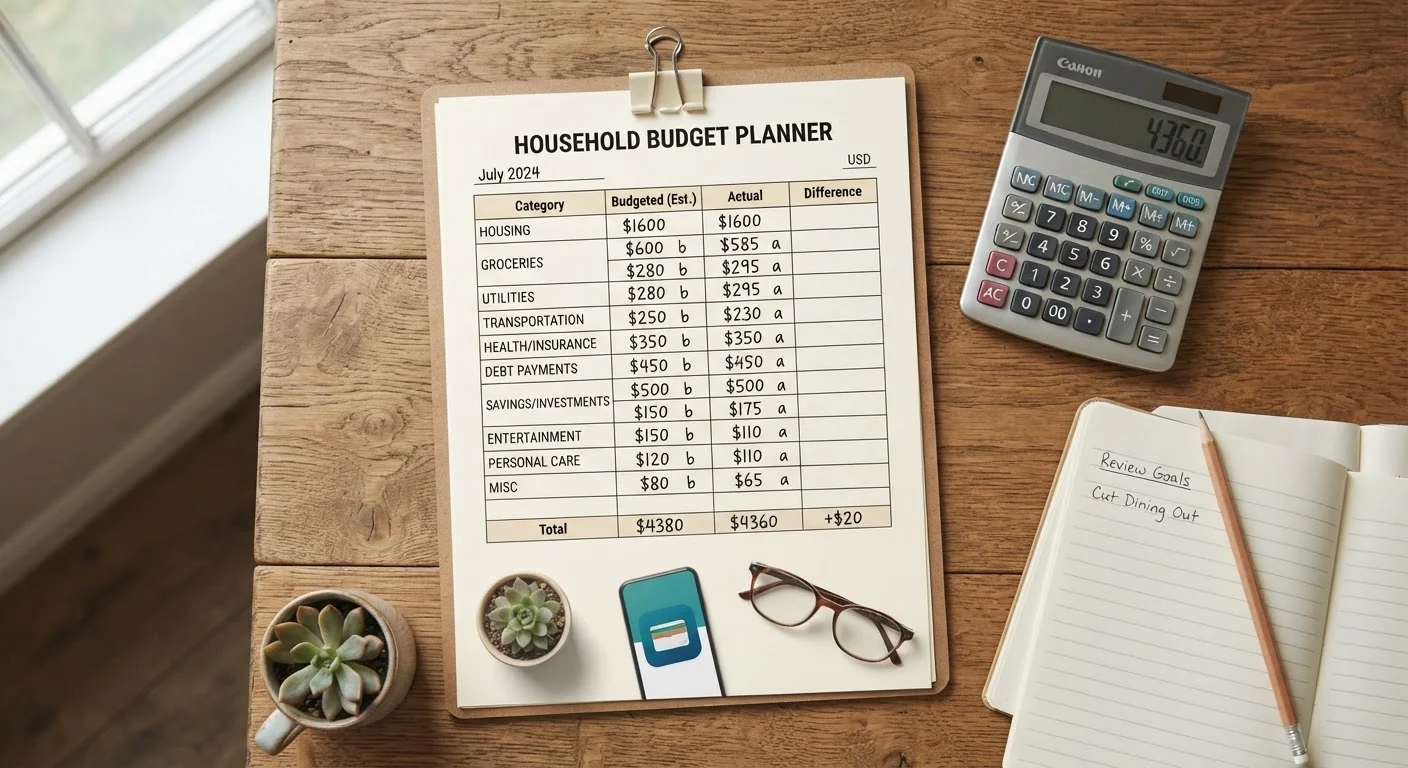
Why These Three Categories Matter
When you sit down to build or review a spending plan, almost every expense you have fits into one of three buckets: fixed costs, variable expenses, or discretionary spending. Knowing which bucket an expense belongs to tells you how much control you have over it - and where to focus your effort when money is tight.
This reference covers plain-English definitions, common examples, and a few practical rules of thumb for each category. If you're starting from scratch, this beginner's guide to building your first budget walks through the full process step by step.
| Fixed cost definition | Same amount owed each period, set by contract or loan |
| Variable expense definition | Necessary spending that changes in amount month to month |
| Discretionary spending definition | Optional purchases - wants, not obligations |
| Largest fixed cost for most households | Housing (rent or mortgage) (U.S. Bureau of Labor Statistics Consumer Expenditure Survey) |
| 50/30/20 rule split | 50% needs / 30% wants / 20% savings & debt |
| Easiest category to cut quickly | Discretionary spending |
Fixed Costs: The Non-Negotiables
Fixed costs are expenses that stay the same amount each billing period, regardless of how much you use a service or how your income fluctuates. You've generally agreed to pay these in advance - through a lease, loan, or contract - so they're the hardest category to reduce quickly.
Common examples
- Rent or mortgage payment
- Car loan or lease payment
- Health, renters, or auto insurance premiums
- Student loan payments on a fixed repayment plan
- Subscriptions with a locked-in monthly or annual rate
Because fixed costs are predictable, they're the easiest to plug into a budget. List them first. The total gives you your floor - the minimum amount you must earn each month before you can cover anything else.
Fixed costs aren't truly immovable over the long run. Refinancing a loan, shopping for a lower insurance premium, or renegotiating a lease are all ways to reduce this floor. But those changes take time and planning, not a quick line-item cut. For a broader look at where households routinely pay more than they need to, see common categories where routine overspend adds up.
Fixed cost
An expense with a set, predictable amount due each billing cycle, typically established by a contract, lease, or loan agreement. Examples include rent and car loan payments.
Variable expense
A necessary expense whose amount changes from month to month based on usage or circumstance. Groceries and utility bills are classic variable expenses.
Discretionary spending
Optional expenditure on wants rather than needs. Dining out, entertainment, and hobby purchases fall here. This category offers the most short-term flexibility in a budget.
Budget floor
The minimum monthly income required to cover all fixed and essential variable costs. Knowing your floor helps you assess financial stability and plan for income changes.
50/30/20 rule
A budgeting guideline suggesting roughly 50% of after-tax income go to needs, 30% to wants, and 20% to savings or debt repayment. It is a starting framework, not a universal prescription.
After-tax income
The amount you actually take home after federal, state, and other payroll taxes are withheld. Budgets are almost always built on after-tax income, not gross pay.
Variable Expenses and Discretionary Spending
Variable expenses are costs that are necessary but fluctuate in amount from month to month. You can't easily eliminate them, but you have real influence over how much you spend.
Common examples of variable expenses
- Groceries and household supplies
- Gas and transportation costs
- Utilities (electricity, water, gas)
- Medical co-pays and out-of-pocket healthcare
- Minimum debt payments can vary if on income-driven plans
Variable expenses are where budgeting habits have the most immediate effect. Tracking your actual spending for two or three months typically reveals a realistic average you can plan around.
Discretionary spending
Discretionary spending covers wants rather than needs - expenses you choose, not ones you're obligated to. This category has the most flexibility and is often the first place people look when trying to free up cash.
Common examples of discretionary spending
- Dining out and takeaway
- Entertainment, streaming add-ons, and hobbies
- Clothing beyond basic replacement
- Travel and vacations
- Gym memberships (for some households)
The line between variable and discretionary isn't always obvious. Groceries are variable and necessary; a premium grocery delivery fee is discretionary. Electricity is variable and necessary; leaving every light on by habit adds a discretionary element. Recognizing that distinction gives you more decision points than most people realize.
For the full vocabulary of personal finance - including terms like net income, cash flow, and emergency fund - this plain-language personal finance glossary is a useful companion reference.
When a Cost Changes Categories Over Time
Some expenses shift categories as your life changes. A car payment is fixed while you're financing; once the loan is paid off, that line disappears entirely. A streaming subscription is discretionary until it becomes a household routine you budget around. Reviewing your categories once or twice a year helps keep your budget accurate and reflects what your spending actually looks like today.
Putting It Together in a Budget
A common framework is to assign rough percentage targets to each category. The widely referenced 50/30/20 guideline, for example, suggests allocating roughly 50% of after-tax income to needs (fixed and variable), 30% to wants (discretionary), and 20% to savings and debt repayment. These are starting points, not rules - your actual percentages will vary based on where you live, your income, and your financial goals.
The more useful exercise is to calculate your own percentages first, then compare them to a target and adjust. For a structured approach to doing exactly that, the complete budgeting guide covers method selection, tracking tools, and how to adjust your plan as circumstances change.
33%
Average share of household spending on housing
According to the U.S. Bureau of Labor Statistics Consumer Expenditure Survey, housing consistently represents the largest single expense category for American households.
~15%
Average share spent on food (at home and away)
The BLS Consumer Expenditure Survey shows food typically accounts for roughly 12-15% of household budgets, split between groceries and dining out.
This article is for general informational purposes only and does not constitute personalised financial advice. For guidance specific to your situation, consider consulting a qualified financial professional.