Why Food Costs Spiral - and How to Stop It
Food is the travel expense most travelers underestimate. Flights and hotels get researched obsessively; meals get improvised, often in moments of hunger near a landmark, which is exactly where markup is highest. In tourist-heavy areas, a single restaurant meal can consume 30-50% of what a traveler in the same city might spend on food for an entire day by making different choices.
The fix isn't deprivation - it's deliberate planning. Understanding the local food landscape before you arrive, knowing which meal of the day represents the best value, and building one or two simple rules into your daily routine can realistically hold food costs to a predictable, manageable share of your travel budget. For a broader framework on keeping all trip costs in check, see our end-to-end budget travel guide.
Eat your main meal at lunch rather than dinner whenever possible.
In many countries, restaurants offer their best value at midday - set menus, lunch specials, or simply lower base prices for the same dishes. Shifting your largest meal earlier cuts costs without reducing what's on your plate.
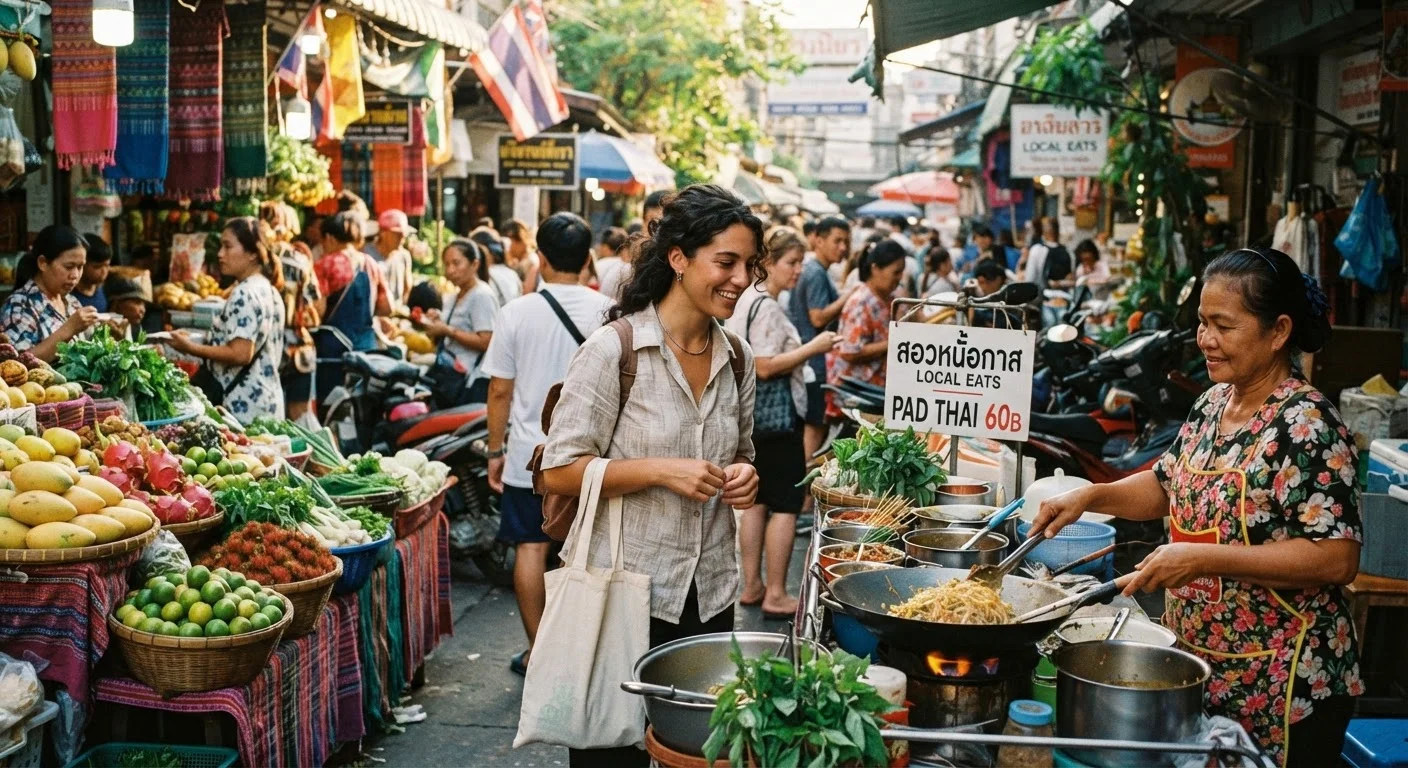
Locate and use the nearest market, food hall, or covered market on arrival.
Markets concentrate the widest range of fresh, local, and prepared food at prices aimed at residents, not visitors. They also cluster multiple cuisines and options, so groups with different preferences can all eat well for less.
Walk one or two blocks away from major attractions before choosing a restaurant.
Restaurants immediately adjacent to landmarks, museums, or popular squares price for foot traffic and impulse decisions. A two-minute walk frequently reveals the same type of cuisine at significantly lower prices.
Learn the local street food staples before you arrive.
Street food is not uniformly cheap globally - in some markets it's priced for tourists - but in many destinations it remains the authentic, affordable daily diet of residents. Knowing what to look for, and where, prevents spending more on a recognizable option that happens to be a markup.
Set a realistic daily food budget and check against it each evening.
Without a reference number, food spending expands to fill the day. A simple daily target - based on destination cost levels researched in advance - turns abstract intentions into concrete decisions.
Practical Habits That Keep the Bill Down
The tactics below aren't about sacrificing quality - they're about redirecting spending toward food that is genuinely good and genuinely local. Most experienced travelers settle on a version of these practices naturally; naming them explicitly makes it easier to apply them from day one.
One habit worth building early: tracking what you actually spend on food each day, even roughly. Knowing you spent $22 yesterday helps calibrate whether today's $15 lunch is fine or a warning sign. Our guide to tracking travel spending covers simple methods that don't require complicated apps.
Reading the Local Food Landscape
Every destination has structural patterns that, once understood, make affordable eating straightforward. In many parts of Europe, a set lunch menu (prix fixe or menu del día) offers two or three courses at a price well below the à la carte equivalent - often because restaurants fill seats during a slow midday window. In Southeast Asia, street stalls and hawker centers serve dishes that are not budget compromises but the actual mainstream dining culture. In the US, lunch specials at sit-down restaurants frequently mirror the dinner menu at 30-40% lower prices.
Tipping and Service Charge Norms Vary Widely
What counts as a standard tip - or whether tipping is expected at all - differs significantly by country. In some destinations, service charges are included in the listed price; in others, tipping is not customary and may even be considered unusual. Before assuming the US norm of 18-20% applies, check the local convention. This can meaningfully affect your per-meal cost, particularly over a multi-week trip. Government tourism sites and widely used travel forums typically carry accurate, current guidance.
The principle is consistent: find where ordinary working residents eat on a weekday, and eat there. This isn't just cheaper - it's usually more representative of what a place actually tastes like. If you're new to planning travel around a tight food budget, our guide for first-time budget travelers outlines how to build these habits from scratch.
30-50%
Typical price premium in tourist-adjacent restaurants
Travel industry research and cost-of-travel analyses consistently find that restaurants in high-footfall tourist zones charge materially more than comparable establishments a short walk away.
~40%
Average food share of a traveler's daily budget
Food routinely accounts for a significant portion of on-the-ground daily travel spending, making it one of the highest-leverage areas for cost control, according to general travel budget frameworks.
Grocery stores and markets deserve special mention. Picking up breakfast items - yogurt, fruit, bread, cheese - from a local supermarket costs a fraction of a café breakfast and often introduces you to regional products you wouldn't otherwise encounter. It also creates a flexible buffer: a filling, low-cost meal whenever the day runs long and restaurants near you are expensive.
For a candid look at what budget travel involves beyond food - including the real trade-offs - see our honest assessment of budget travel.