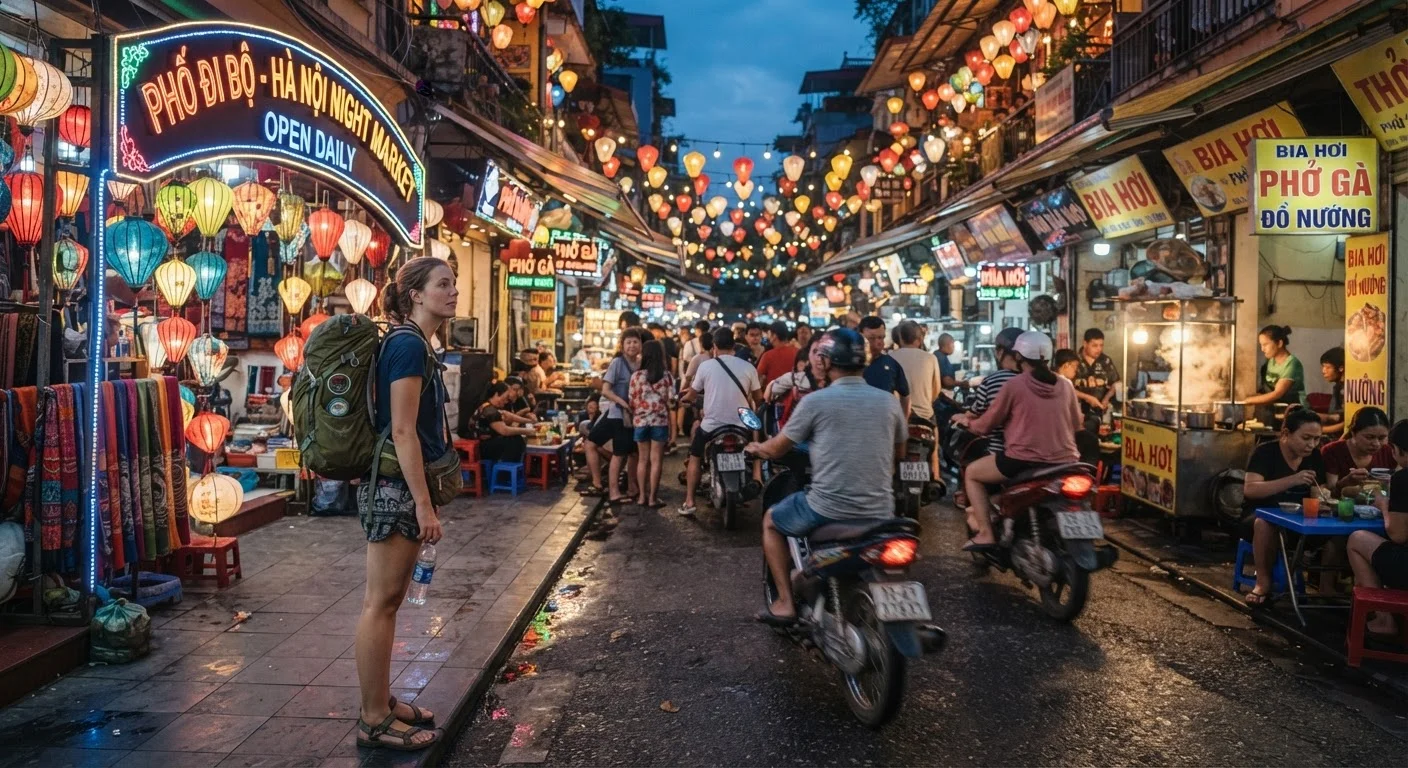
Why First-Timers Underestimate Southeast Asia
Southeast Asia gets marketed as an easy, affordable region to explore solo - and in many ways it is. But the gap between the Instagram version and the ground reality catches a surprising number of first-timers off guard. The region spans eleven countries, each with distinct entry rules, languages, currencies, and cultural norms. What works in Thailand doesn't automatically apply in Vietnam, Myanmar, or Indonesia.
Before diving into logistics, it helps to build honest foundational knowledge. Our guide for first-time budget travelers covers the baseline concepts every newcomer needs before committing to a region as diverse as this one.
Visa on arrival
A visa issued at the destination country's border or airport upon entry, rather than arranged in advance. Eligibility, fees, and permitted stay duration vary by nationality and country.
E-visa
An electronic travel authorization applied for online before departure. It replaces the need to visit an embassy or obtain a stamp at the border for participating countries.
Travel advisory
An official government assessment of safety and entry conditions for a foreign destination, updated as conditions change. U.S. travelers can find these at travel.state.gov.
Medical evacuation coverage
A type of travel insurance that covers the cost of transporting a traveler to adequate medical facilities - sometimes back to their home country - if local care is insufficient.
Buffer day
A day in an itinerary with no fixed activities, used to absorb delays, recover from fatigue, or extend time in a place you enjoy more than expected.
Rainy season
A recurring annual period of heavy rainfall that affects travel conditions across much of Southeast Asia, with timing varying significantly by country and region.
Safety Realities: What the Numbers and Norms Actually Say
Safety in Southeast Asia is a topic that attracts both excessive fear and excessive reassurance. The pragmatic middle ground: tourist-heavy areas in Thailand, Vietnam, Cambodia, and Bali are considered low-risk for violent crime by most major government travel advisory systems, but petty crime is genuinely common. Bag snatching from moving motorbikes, distraction theft in crowded markets, and elaborate tourist scams (fake gem deals, rigged tuk-tuk tours, overpriced transport arranged by strangers) are the incidents travelers most frequently report.
Practical risk reduction is straightforward: keep valuables out of sight, use a cross-body bag rather than a backpack zipper pocket in crowded spaces, and treat unsolicited offers of tours or transport with skepticism. For solo women travelers specifically, accommodation choices matter - guesthouses and hostels with reception desks and secure room locks in well-lit areas offer meaningfully more security than isolated budget rooms.
Scams Target First-Time Visitors Specifically
Common schemes include strangers offering unsolicited help who then demand payment, 'closed today' redirects that steer you to overpriced shops, and gem or investment deals that seem improbably lucrative. If an offer from a stranger seems unusually helpful or profitable, treat it with skepticism. No legitimate service requires on-the-spot decisions from tourists.
Always verify current conditions through your government's official travel advisory - the U.S. State Department maintains country-level advisories at travel.state.gov - before finalizing your destination list.
Cultural Courtesies You Need Before You Land
Disrespecting local customs isn't just socially awkward in Southeast Asia - at religious sites, it can get you turned away or, in rare cases, create serious legal complications. Key rules that apply broadly across the region:
- Temple dress codes are enforced, not suggested. Shoulders and knees must be covered at most Buddhist temples and Hindu sites. Many entry points sell or lend sarongs, but relying on this is a gamble.
- Remove footwear before entering homes and many temples. Watch for a pile of shoes at the door - that's your signal.
- The head is considered sacred in Buddhist-majority countries. Avoid touching anyone's head, including children's.
- Public displays of frustration or raised voices are socially costly. In many regional cultures, maintaining composure - even when things go wrong - earns cooperation; losing your temper typically achieves the opposite.
Research the specific customs of each country on your itinerary rather than applying a single regional rule set.
Logistics Newcomers Routinely Underestimate
Three logistics areas consistently trip up first-timers:
- Visa and entry requirements. Several Southeast Asian countries offer visa-on-arrival or e-visa options for U.S. passport holders, but permitted stay durations, fees, and eligibility differ by nationality and change periodically. Never assume you know the current rules - confirm directly with official government immigration sources or your nearest embassy.
- Real travel times. A four-hour bus journey on a map can take eight hours on winding mountain roads or during rainy season. Overnight buses and trains are common, but comfort levels vary significantly. Padding itineraries with buffer days is not laziness - it's practical planning. See our guide to building a realistic itinerary for a structured approach.
- Health and travel insurance. Medical care quality varies widely across the region. Travel insurance that includes medical evacuation coverage is widely considered essential, not optional, for this destination. Confirm what your policy actually covers before departure.
Build Buffer Days Into Every Leg
Add at least one unscheduled day for every five days of travel. Delays from weather, border crossings, or illness are common in Southeast Asia - buffer days convert potential crises into minor inconveniences. They also tend to become the days solo travelers remember most fondly.
For a complete pre-departure framework, the travel planning from scratch walkthrough covers the sequencing most first-timers get wrong.
What to Skip (and What to Prioritize Instead)
The urge to cover as many countries as possible on a first Southeast Asia trip is understandable - and almost universally regretted. Travelers who try to hit five countries in two weeks routinely report exhaustion, missed depth, and a blur of airports and guesthouses. A more defensible approach: anchor your trip around two or three destinations, build in at least one slow day per location, and treat transit days as full days (because they are).
Skip the itineraries you see in travel content designed for maximum destination count. Prioritize experiences that require time to appreciate - a cooking class, a day trip to a rural area, or simply navigating a local market without rushing. These are the moments most solo travelers describe as transformative, and they don't show up in highlight reels.
Solo travel also comes with its own cost math. If you're weighing the financial trade-offs between traveling alone versus joining a group arrangement for portions of your trip, the solo vs. group travel cost breakdown offers an honest comparison worth reading before you commit to a travel style.
This article provides general travel information for educational purposes only. Entry requirements, health recommendations, and safety conditions change - always verify current details with official government sources and consult a licensed professional for health and insurance decisions specific to your circumstances.