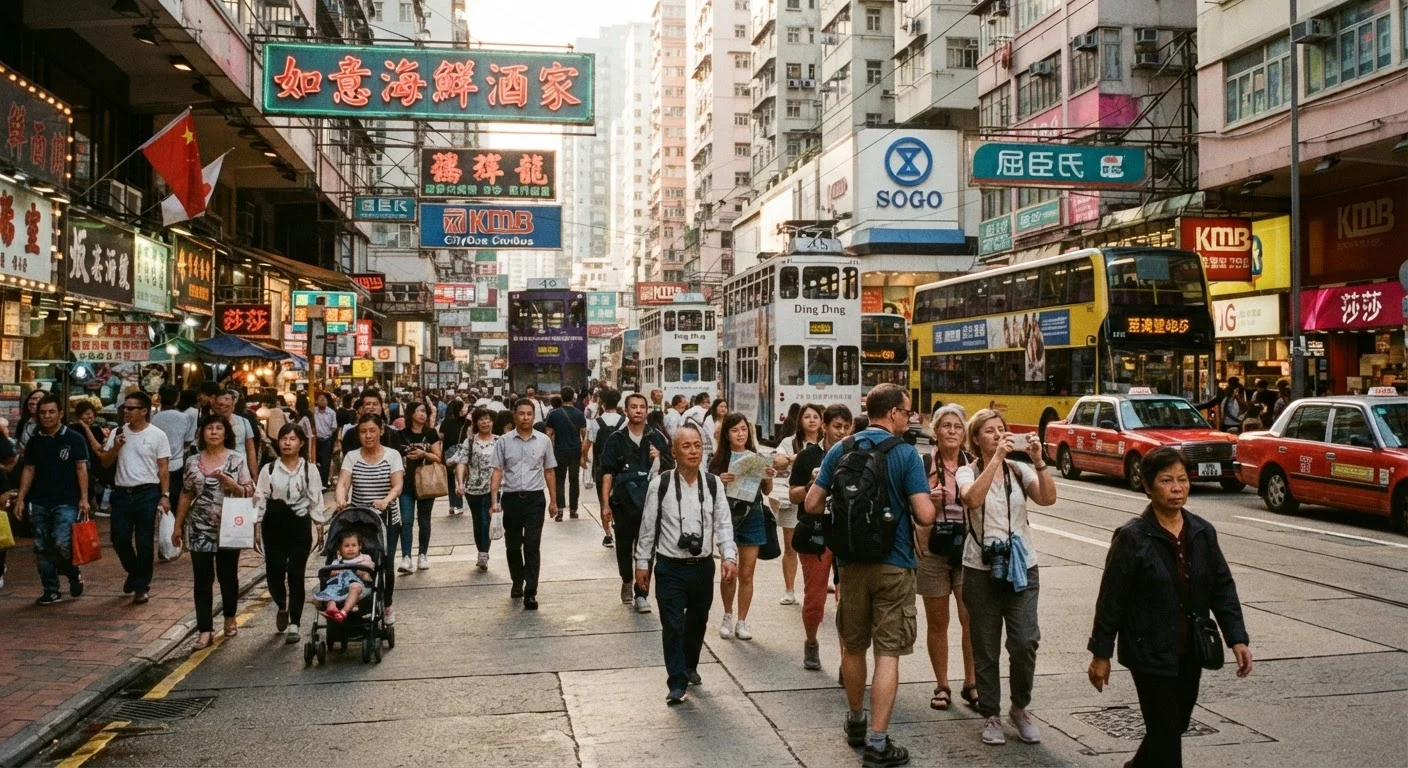
Why the 'Safe Zone' Mental Model Fails Travelers
Most travelers mentally divide destinations into two buckets: safe areas and dangerous ones. Tourist districts land in the safe column; peripheral or lower-income neighborhoods land in the dangerous one. It's a tidy framework - and it's consistently wrong.
Risk at any destination is dynamic, not fixed. It shifts with the time of day, crowd composition, local events, and your own behavior. A plaza that's lively and pleasant at noon can be poorly lit and disorienting at midnight. A quiet residential street that seems uninviting can be one of the lowest-crime blocks in a city. Flat categorizations miss all of this nuance.
Building a more accurate picture starts with abandoning the binary and replacing it with a contextual assessment. That means asking not just where you're going, but when, how, and what specific situations are common in that setting. The anatomy of a well-planned trip includes risk research as a core planning phase - not an afterthought.
Myth
If an area is packed with tourists, it must be safe.
Fact
Tourist density attracts opportunistic crime targeting visitors, making heavily touristed zones a specific risk environment - not a safe haven.
Pickpockets, scammers, and unlicensed vendors consistently concentrate where tourist foot traffic is highest. Research from urban crime analysts consistently shows that visitor-facing theft and fraud peaks at landmark sites, transit hubs, and popular restaurant strips - not in quieter residential districts. Crowd cover actually makes it easier for opportunists to operate undetected.
Myth
If a neighborhood looks run-down, it's too dangerous to visit.
Fact
Visual indicators like aging buildings or quieter streets are poor proxies for actual crime risk, which is shaped by social and economic factors that aren't visible.
Many neighborhoods that appear rough to outside observers are stable, community-oriented areas with low visitor-targeted crime. Conversely, glossy commercial districts can harbor con artists and aggressive touts. Judging risk by aesthetics rather than by documented incident data or local insight leads to both unnecessary avoidance and false confidence.
Myth
A country's overall travel advisory tells me whether specific areas are safe.
Fact
Country-level advisories summarize broad conditions and often lag behind on-the-ground changes; they cannot substitute for neighborhood-specific research.
A Level 2 advisory ("Exercise Increased Caution") may apply to an entire country while one province is genuinely low-risk and another is experiencing active unrest. Advisories are updated periodically, not in real time. For granular accuracy, cross-reference official advisories with consular notices for specific regions, recent traveler forums, and local English-language press. See our guide to pre-trip research for a structured approach to sourcing reliable information.
Myth
Staying in a hotel in the tourist district guarantees a safe base.
Fact
Hotel location affects convenience but does not insulate travelers from risk, which depends on behavior and awareness as much as address.
Tourist-district hotels can be targets for room theft and lobby scams. The surrounding area may have higher petty crime than blocks just a few streets away. A well-researched stay anywhere - including understanding your building's security features and keeping valuables stored properly - matters more than the brand of the block your hotel occupies.
Myth
Daytime is always safe; risk only rises after dark.
Fact
Many visitor-targeted incidents occur in broad daylight in crowded settings where distraction and confusion are easy to engineer.
Distraction thefts, staged accidents, and overcharging schemes almost always happen during busy daytime hours when targets are abundant and escape is easy. Nighttime risk is real in some contexts - poorly lit streets, limited transit, and alcohol-related environments - but framing all daytime activity as inherently safe produces dangerous complacency.
How to Actually Assess Risk Before and During Travel
Effective risk assessment layers multiple sources rather than relying on any single one. Start with your government's official advisory to understand the macro picture, then drill down using consular region-specific notices, local English-language media, and recent firsthand accounts from travelers who visited within the last few months.
Advisories Are a Floor, Not a Map
Government travel advisories - such as those issued by the U.S. State Department - assess country- or region-level conditions, not individual streets or neighborhoods. Treating an advisory as a neighborhood-by-neighborhood safety guide will consistently mislead you. Always cross-reference advisories with consular updates, recent traveler reports, and local news before drawing conclusions about specific areas.
On the ground, situational awareness is your most practical tool. This means staying oriented - knowing your general route before leaving a building, keeping valuables secured, and noticing when a situation feels engineered to distract you. It doesn't mean constant vigilance or treating every local as a threat; it means reading your environment the way you would at home in an unfamiliar part of town.
Tourist Zones Are Not Risk-Free Zones
High foot traffic and visible tourism infrastructure can create a false sense of security. Pickpocketing, distraction scams, and overcharging are statistically more concentrated in popular tourist corridors than in adjacent residential areas. Staying alert in crowded squares and transit hubs is as important as caution in less-visited parts of a city.
When building your itinerary, build in margin. Over-scheduling forces rushed movement through unfamiliar areas, which increases exposure. Our guide on over-scheduling explains how to right-size daily plans, which directly supports calmer, more aware travel. And as you finalize where to spend time, our pre-trip research guide outlines which sources consistently produce reliable destination intelligence versus which ones lag or mislead.
This article provides general travel information for educational purposes. Conditions vary by destination and change over time. Always verify entry requirements, local laws, and current safety conditions through official government sources and your country's foreign affairs or state department before traveling.