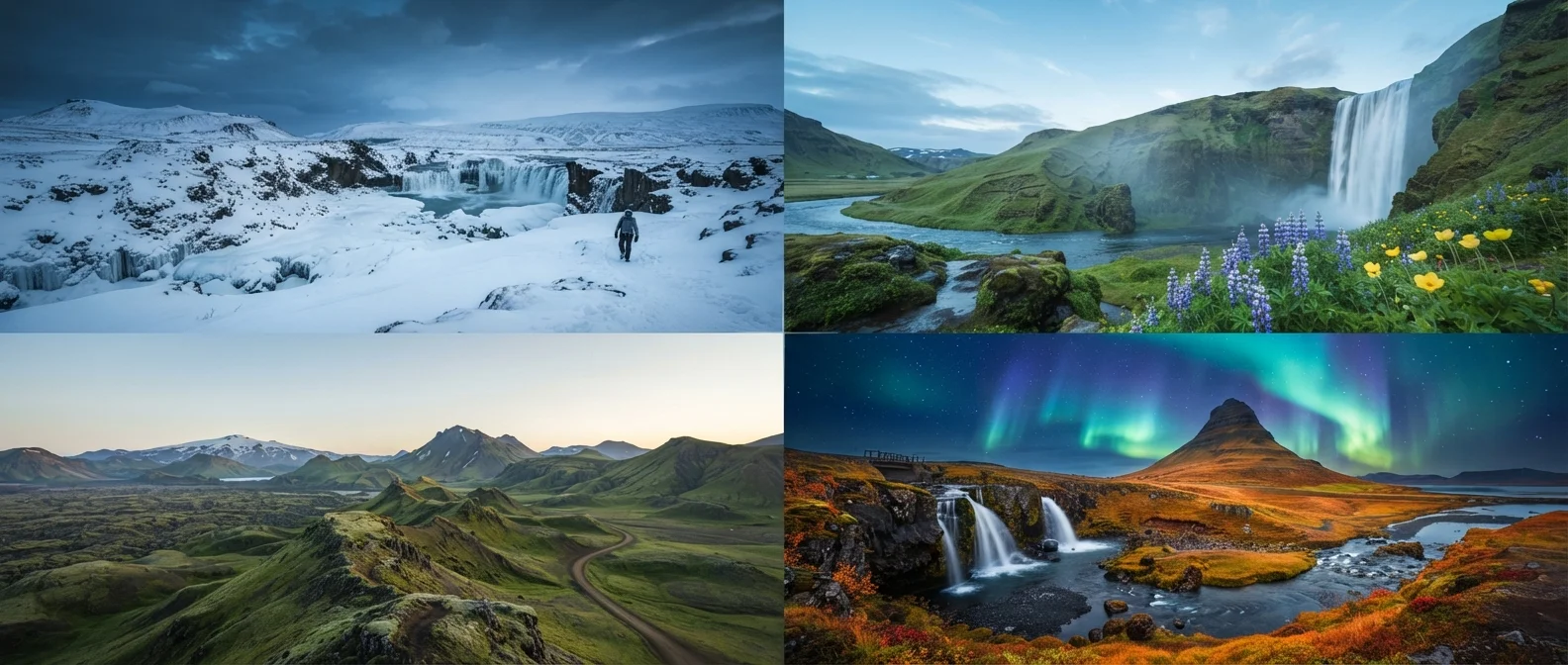
Why Timing Matters More in Iceland Than Most Destinations
Iceland isn't a destination you can visit on autopilot. The same road that's accessible in July may be completely closed in January. The northern lights that draw winter visitors require clear, dark skies that simply don't exist in midsummer. Daylight hours swing from roughly 4 hours in December to nearly 24 in June. Each season effectively delivers a different country.
This isn't a reason to avoid Iceland - it's a reason to align your expectations with reality. Understanding what each season actually offers (and what it takes away) is the single most useful thing you can do before booking.
Winter (November-February): Dark, Cold, and Genuinely Magical
Winter in Iceland means long nights, frequent storms, and road conditions that demand respect. Interior highland roads (the F-roads) are closed entirely. Driving the Ring Road in winter requires a 4WD vehicle, careful planning, and a willingness to change your itinerary when weather dictates. This is not hyperbole - conditions can turn dangerous quickly.
What winter delivers in return: the northern lights. Dark skies from September through March offer the longest aurora-viewing windows. Reykjavík's compact, walkable core works well in winter - the Golden Circle remains accessible, and geothermal pools (including the Blue Lagoon area) are operational year-round. Prices and crowd levels are notably lower outside of Christmas and New Year's.
Verify Road Conditions Before Every Drive
Iceland's weather can shift within hours. The Icelandic Road and Coastal Administration (road.is) publishes live road status, including closures and hazard warnings. Checking this resource each morning during your trip is a practical baseline habit, not optional caution. This applies in all seasons, but especially in winter and early spring.
Winter also suits visitors who want Iceland's landscape without the crowds. Waterfalls partially freeze into sculptural forms, and the stark volcanic terrain under snow has a distinct visual drama. Pack serious waterproof layers - the wind chill is the factor most travelers underestimate.
Spring (March-May): Shoulder Season With Real Advantages
Spring is arguably Iceland's most underrated window. Daylight returns quickly - Reykjavík gains roughly 5-6 minutes of daylight per day through April. Snow begins melting at lower elevations, waterfalls surge with snowmelt, and highland roads start opening (typically late May to mid-June, depending on snowpack).
March still offers aurora chances with darkening nights. By May, the landscape turns vivid green and wildflowers appear. Prices sit below peak-summer levels, and popular sites like Seljalandsfoss and Skógafoss are far less crowded than they'll be in July or August.
Spring is a strong fit for travelers who want both flexibility and value - which is a core argument made in our shoulder season travel guide. Road conditions still require checking before each drive; consult the Icelandic Road and Coastal Administration's live road status tool.
Summer (June-August): Midnight Sun and Maximum Access
Summer is peak season by every measure. The midnight sun delivers near-constant daylight, highland F-roads open, and the full Ring Road is at its most accessible. Puffins nest along coastal cliffs from May through August. Glacier hikes, whale-watching tours, and highland trekking all operate at full capacity.
The trade-off is crowds and cost. Accommodation books out months in advance, particularly in Reykjavík and near popular natural sites. Camping is popular and significantly cheaper - Iceland has a well-developed campsite network - but even campsites fill on summer weekends.
One thing summer cannot offer: northern lights. Continuous daylight means no dark sky. If aurora viewing is your primary goal, summer is the wrong season. For families working around school calendars, our guide to school holiday travel planning covers the logistics of peak-season trips in more depth.
~2.3M
Annual tourist arrivals (pre-pandemic peak)
Iceland Tourism figures showed record arrivals before 2020, heavily concentrated in summer months.
~24 hrs
Daylight near summer solstice
Around June 21, Reykjavík experiences near-continuous daylight - the sun barely sets below the horizon.
~4 hrs
Daylight near winter solstice
Around December 21, Reykjavík receives roughly 4 hours of daylight, making indoor planning essential.
Autumn (September-October): Short Window, High Reward
Autumn is brief but delivers a genuinely compelling mix. Aurora season resumes in September as dark nights return. Crowds thin noticeably after the first week of September. Highland roads begin closing in October, so access to the interior is time-sensitive.
Foliage in Iceland isn't dramatic by North American standards, but the low-angle autumn light creates striking photography conditions. Temperatures are cool rather than bitterly cold, and accommodation prices step down from peak rates. September sits in a sweet spot: dark enough for aurora, accessible enough for most roads, and uncrowded enough to feel like you have the landscape to yourself.
Whatever season you choose, a realistic itinerary makes the difference between a rewarding trip and a frustrating one. Our itinerary planning guide covers how to build a schedule that accounts for weather delays and travel logistics - both critical in Iceland.
Travel conditions, road closures, and entry requirements change. Always verify current information with official Icelandic government and transport sources before traveling.