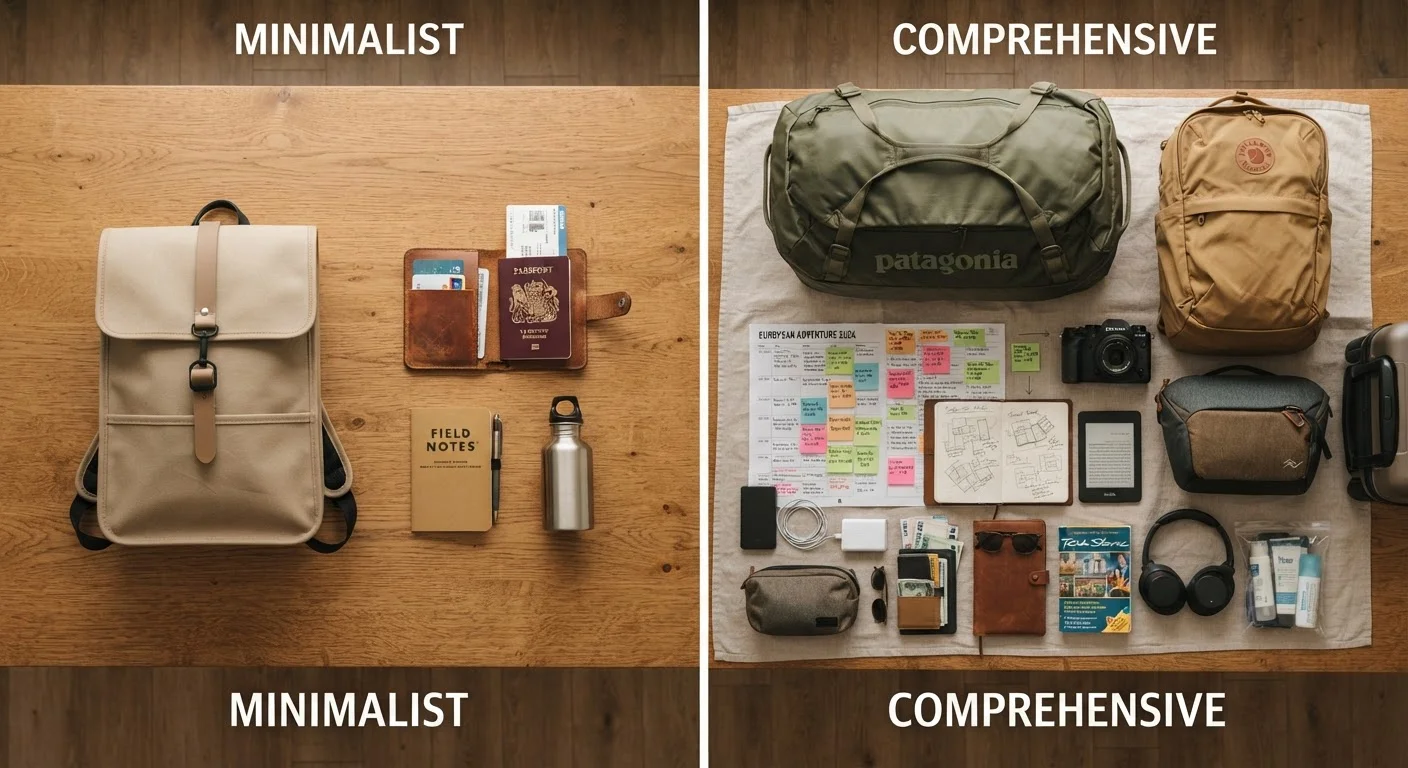
How the Decision-Making Process Differs
The most fundamental difference between solo and group travel planning isn't the destination - it's who holds the decision-making authority. When you're traveling alone, every choice from flight time to dinner spot is yours. That speed and autonomy is the defining advantage of solo planning. You can research, book, and adjust in a single sitting without waiting on anyone else.
Group travel introduces a coordination layer that many first-time group planners underestimate. Even a trip with two or three people requires aligning on dates, budget ranges, activity preferences, and accommodation standards. The more travelers involved, the more rounds of communication those decisions typically require. Before any booking happens, experienced group planners recommend establishing a few ground rules: a rough per-person budget ceiling, a shared calendar for availability, and agreement on the trip's general pace - relaxed versus packed.
For deeper context on how these phases connect regardless of group size, see the anatomy of a well-planned trip.
| Criterion | Solo Travel Planning | Group Travel Planning |
|---|---|---|
| Decision speed | Immediate - one person decides | Slower - requires consensus |
| Booking lead time needed | Shorter - single availability | Longer - group slots fill faster |
| Itinerary flexibility | High - change anytime | Lower - locked by group commitments |
| Accommodation options | Hostels, single rooms, sofa stays | Shared rentals, multi-bed rooms |
| Coordination overhead | Minimal | Significant - grows with group size |
| Packing | Fully self-contained | Shared items possible |
| On-the-ground pivoting | Fast and low-friction | Requires group communication |
Booking Logistics: Where the Gaps Widen
Solo travelers generally have more flexibility in booking windows. Last-minute availability for a single room or seat is far more common than availability for five or eight. If you're traveling alone, you can often act on a good fare or opening-night room with minimal lead time.
Group bookings require more runway. Securing contiguous seats on flights, multiple beds in the same property, or a table at a popular restaurant during peak season all get significantly harder as party size grows. Group travelers often need to book accommodation two to four weeks earlier than a solo traveler would for the same destination and dates - and sometimes longer for high-demand periods.
There's also the question of who manages the bookings. A common failure point in group trips is fragmented responsibility: one person books flights, another handles hotels, and no one verifies that the check-in dates actually align. Assigning a single coordinator - or using a shared planning document everyone can edit - prevents costly misalignments. Organising a multi-city trip explores this coordination challenge in more detail when multiple destinations are involved.
62%
Solo travelers who cite flexibility as top benefit
According to a survey by the Adventure Travel Trade Association, flexibility is consistently the leading motivation reported by solo travelers.
3-4 weeks
Earlier booking lead time for groups vs. solo
Travel industry guidance generally recommends groups of five or more book accommodation and transport significantly earlier than solo travelers for the same destinations.
4 in 10
Group travelers who report itinerary conflicts mid-trip
Research by tourism behavioral studies suggests disagreements over daily plans are among the most common friction points reported in group travel experiences.
Itinerary Building and Day-to-Day Flexibility
A solo itinerary can be as loose or as structured as you want. You might block out anchor points - a flight, a museum with timed entry, a day tour - and leave everything else open. If you wake up and want to spend the morning at a café instead of a landmark, that's a decision with zero friction.
Group itineraries carry more structural weight by necessity. When eight people have paid for a cooking class at 10 a.m., spontaneous detours aren't really an option. This isn't inherently a problem - many travelers prefer the structure - but it does mean the itinerary needs to be more deliberately built. Buffer time, rest periods, and explicit free afternoons should be planned in, not assumed to happen organically.
If you're new to building a trip framework from scratch, travel planning from scratch walks through the sequencing regardless of whether you're going alone or with others. And for the cost implications of each approach, the cost reality of solo vs. group travel breaks down when each genuinely saves money.
Packing and On-the-Ground Adjustments
Solo travelers pack for themselves - which sounds obvious, but it has real implications. Every item is your call, your weight, and your responsibility. There's no one to share a first-aid kit, adapter, or travel umbrella with, which means your bag needs to be more self-contained. Many experienced solo travelers prioritize carry-on-only to maintain speed and flexibility, particularly on trips involving multiple cities or modes of transport.
Group travelers can divide shared items across bags, reducing individual load. One person carries the portable charger, another packs the universal adapter, and so on. This works well when the group stays together - and becomes a problem if people split off for different activities or if one bag gets delayed.
On-the-ground, solo travelers adapt faster. If a planned activity closes unexpectedly or a transport option falls through, one person can pivot in minutes. A group needs to regroup, communicate, and reach a new consensus - which can eat into the time you were trying to save. Building redundancy into a group plan (a backup restaurant, an alternate transport route) is worth the extra ten minutes of planning upfront.
This article is for general travel planning information only. Always verify entry requirements, local conditions, and booking details with official sources before traveling.