What happens during a claim - the big picture
Filing an auto insurance claim can feel overwhelming in the moment, but the process follows a predictable sequence. Understanding each stage helps you move through it efficiently and avoid mistakes that could reduce your payout. For a broader grounding in how auto policies are structured before you need to use one, see Auto Insurance Decoded.
At its core, a claim is a formal request asking your insurer to fulfil the coverage you paid for. The insurer investigates, determines who is liable and to what extent, values the loss, and issues payment minus your deductible. The process may involve your own insurer, the other party's insurer, or both - depending on who is at fault and what coverages apply.
Smartphone with camera
Capture timestamped photos and video of the scene, vehicle positions, damage, and any signage.
Insurance ID card
Provides your policy number, insurer contact, and coverage effective dates needed to open a claim.
Pen and paper (or notes app)
Record other parties' contact details, license plate numbers, witness names, and officer badge numbers.
Insurer's mobile app
Many insurers allow you to file a claim, upload photos, and track status directly through their app.
If unfamiliar terms come up during the process - subrogation, diminished value, appraisal clause - keep the Auto Insurance Glossary handy as a plain-language reference.
Follow these steps from incident to settlement
Ensure safety and call 911 if needed
Before anything else, check that everyone involved is safe. Move vehicles out of active traffic only if it is safe to do so and your state's laws permit it. Call 911 if there are injuries, significant property damage, or if the other driver is uncooperative or uninsured - a police report creates an official record that supports your claim.
Gather and document all information at the scene
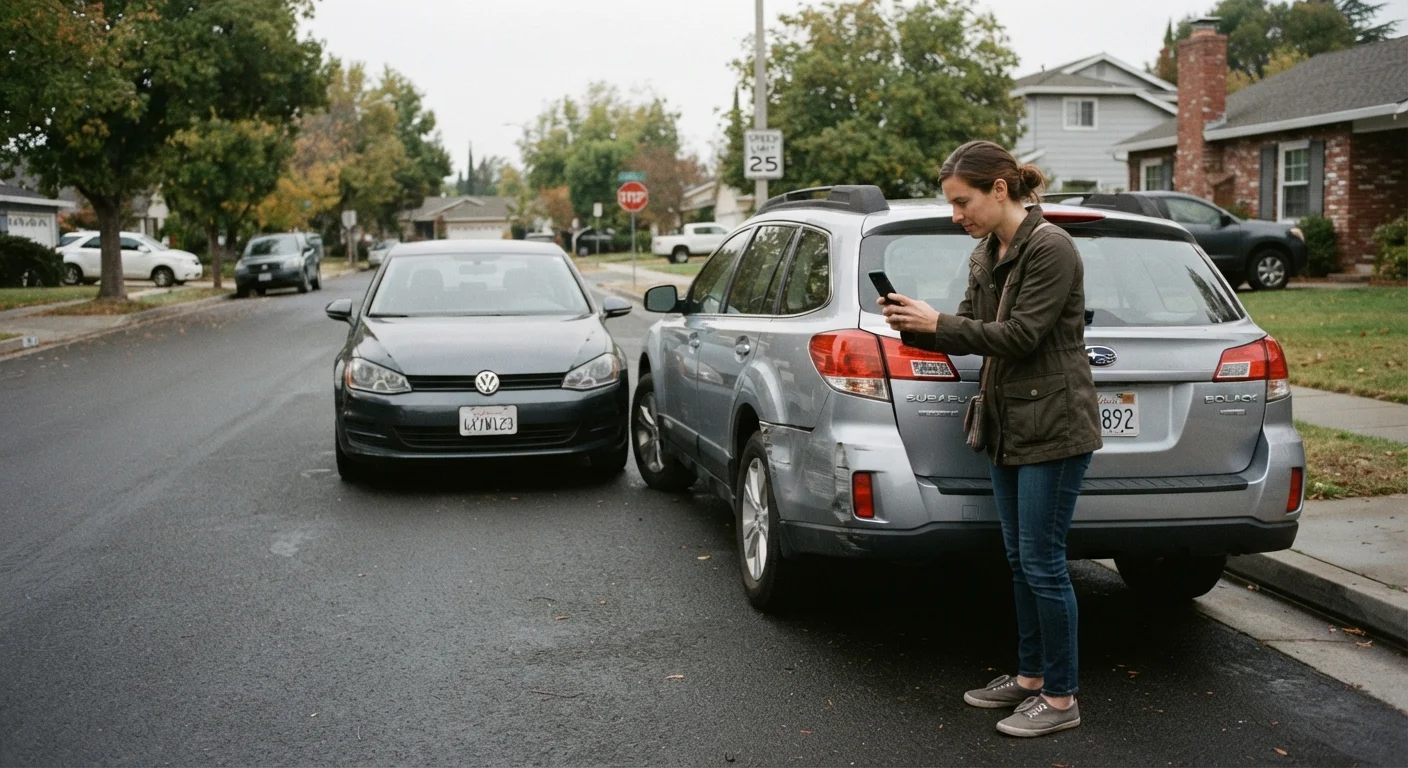
Collect the other driver's name, contact details, license plate number, driver's license number, and insurance information. Photograph all vehicles from multiple angles, the point of impact, road conditions, traffic signs, and any visible injuries. Note the time, location, and weather. Get names and contact details from any witnesses before they leave.
Notify your insurance company
Contact your insurer as soon as practicable - most policies require prompt reporting, and some have explicit notification windows. Use the number on your insurance card, the insurer's website, or their mobile app. You'll provide basic details: date, location, a description of what happened, and the other party's information. The insurer will open a claim file and assign a claim number - record this immediately.
Work with the claims adjuster
Your insurer will assign a claims adjuster - either staff-based or an independent contractor - whose job is to investigate the incident and assess the damage. The adjuster may inspect your vehicle in person, use photos you submit, or send it to a preferred repair facility. They will also review the police report, speak with witnesses, and may contact the other party's insurer. You can ask the adjuster to explain their findings and the basis for any valuation.
Review the settlement offer and understand your deductible
Once the damage assessment is complete, your insurer will present a settlement figure. Your deductible - the amount you agreed to pay out-of-pocket when you bought the policy - is subtracted from that figure before payment is issued. Review the offer carefully: if you believe the vehicle valuation or repair estimate is inaccurate, you have the right to provide your own documentation, such as independent repair estimates or comparable vehicle listings for a total-loss situation.
Authorize repairs and close the claim
Once you accept the settlement, authorize the repair work. Keep copies of all invoices, supplement payments, and correspondence. If additional damage is found during repairs, the shop should contact the adjuster directly to approve a supplement before proceeding. When all repairs are complete and payment is finalized, the claim is closed. Retain all documentation until well after the claim is settled - disputes can occasionally arise after the fact.
Common pitfalls that can slow or reduce your claim
Several avoidable mistakes regularly complicate claims. Waiting too long to report is the most common - even if you're unsure whether the damage is worth claiming, notify your insurer early and decide later. Accepting a verbal settlement without written confirmation is another risk; always get the agreement in writing before repairs begin.
Keep a Claims Documentation File
Create a dedicated folder - physical or digital - the moment an incident occurs. Store photos, the police report number, all adjuster correspondence, repair estimates, and final invoices in one place. Organized records make it far easier to dispute discrepancies and serve as proof if a closed claim is later questioned.
It also pays to re-read your policy before a claim is filed if time allows. Coverage gaps, exclusions, and endorsements you've forgotten about directly affect what gets paid. Our guide on reading your auto insurance policy walks through how to navigate the document and identify gaps. For a broader look at misconceptions that trip up drivers at claim time, Auto Insurance Myths That Could Cost You at Claim Time is worth reviewing.
This article is for general informational purposes only and does not constitute insurance, legal, or financial advice. Coverage terms, claim procedures, and policyholder rights vary by insurer and by state. Always refer to your actual policy documents and consult a licensed insurance professional for guidance specific to your situation.