The Costs That Don't Make the Brochure
When most drivers calculate what a car costs them, they land on three numbers: the monthly payment, fuel, and insurance. That's an understandable starting point - but it's an incomplete one. The expenses that actually strain annual budgets are often the smaller, irregular ones: the registration renewal that arrives in the mail, the set of tires that wears out sooner than expected, the parking fees that add up across a month of daily commuting.
According to data from AAA, the average American driver spends well over $10,000 per year on vehicle ownership when all costs are included - a figure that surprises most people because the overlooked line items accumulate quietly. Understanding the true cost of owning a car means accounting for every category, not just the obvious ones. The list below covers the expenses most drivers consistently fail to budget for - and what you can do about each.
Start With a 12-Month Lookback
Before estimating future ownership costs, review your actual bank and credit card statements for the past year and tag every vehicle-related charge. Include registration, tires, washes, parking, tolls, loan payments, insurance, and any repairs. Most drivers find the real annual total is 20-30% higher than their mental estimate - and the gap is almost always explained by the categories covered in this article.
Seven Ownership Costs Worth Putting on Your Radar
Annual registration and title fees
Every state charges annual vehicle registration fees, and the amounts vary widely - from under $50 in some states to several hundred dollars in others, particularly for newer or heavier vehicles. Some states tie fees to the car's value, meaning a newer purchase comes with a higher registration bill each year until the vehicle depreciates. Drivers often pay this once and forget to factor it into their monthly ownership math, which means it shows up as a budget surprise rather than a planned expense.
The fix is simple: divide your annual registration cost by 12 and treat it as a fixed monthly line item, even if payment is annual.
Registration fees can reach several hundred dollars annually depending on your state and vehicle value.
Tire replacement and rotation
Tires are one of the most significant maintenance costs most drivers underestimate. A full set of replacement tires for a standard sedan typically runs between $400 and $800 installed, and performance or SUV tires can exceed that considerably. The average tire lasts roughly 25,000 to 50,000 miles depending on tire type, driving habits, and road conditions - meaning replacement may be needed every three to five years for a typical driver.
Rotation services, generally recommended every 5,000 to 7,500 miles, add a smaller but recurring cost. Skipping rotations accelerates uneven wear and shortens tire life, so the apparent saving often costs more over time. For more on how deferred maintenance compounds costs, see our piece on what neglected maintenance really costs.
A full tire replacement set can easily run $400-$800 or more, and most drivers don't budget for it in advance.
Parking fees and tolls
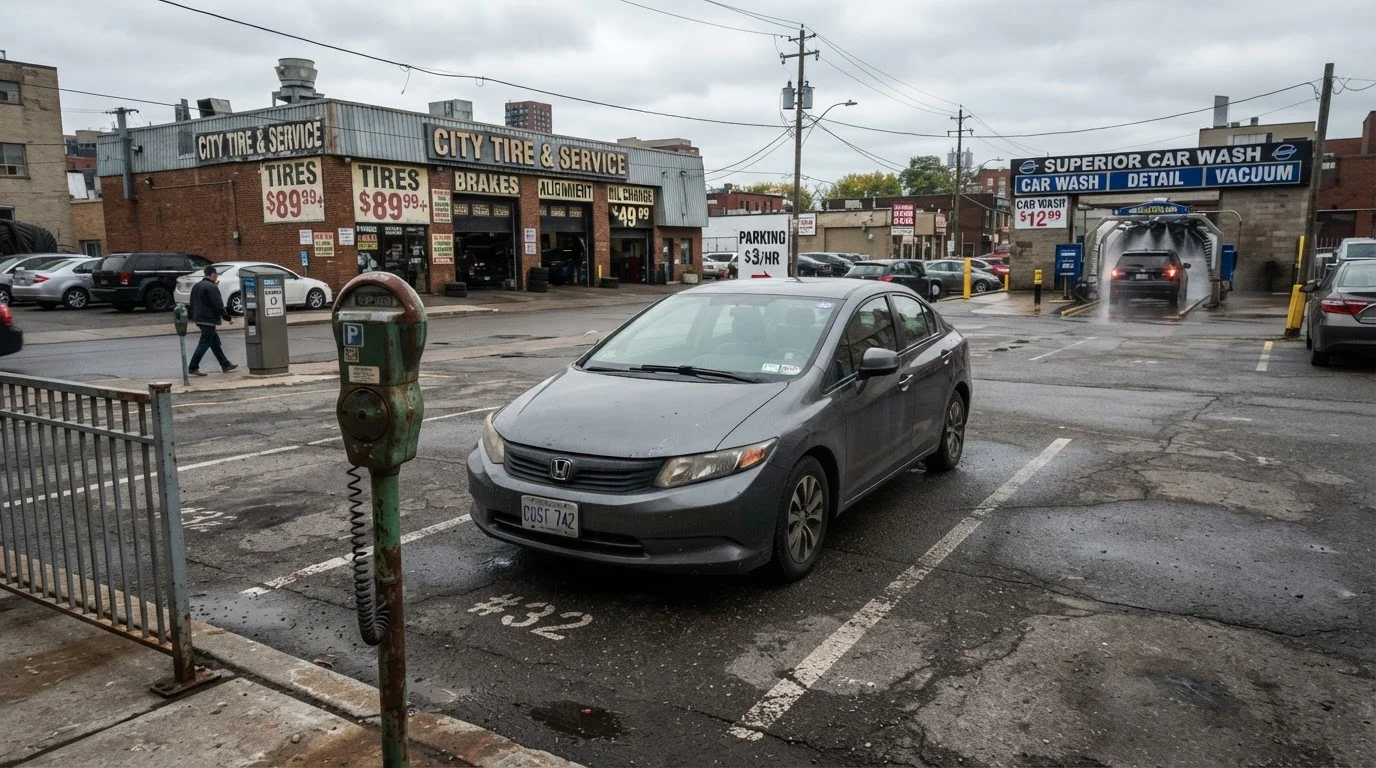
For drivers in or near urban areas, parking and tolls can represent a substantial monthly cost that rarely appears in ownership estimates. Daily parking in a city garage can run $15 to $30 per day; even occasional airport parking, event parking, or metered street parking adds up across a year. Toll roads and bridge crossings - particularly where electronic tolling is automated - are easy to undercount because individual charges are small.
Keeping a rough monthly tally of these costs for two or three months is often enough to reveal whether this category deserves a dedicated budget line. Many drivers are surprised to find it rivals their monthly fuel spending.
Urban drivers can easily spend hundreds per year on parking and tolls without tracking either category.
Car washes and detailing
Car washes feel minor individually - $10 to $20 for a standard automated wash, $50 to $150 or more for a hand wash or interior detailing. But at even modest frequency, they accumulate. A driver who washes their car twice a month at $15 per wash spends $360 annually before a single detailing appointment. Some drivers subscribe to unlimited wash memberships, which can be cost-effective if used frequently but often become forgotten recurring charges if habits shift.
This is the kind of expense highlighted in broader discussions of categories where people routinely overpay - not because the service lacks value, but because the cumulative spend rarely gets examined.
Bi-monthly car washes alone can easily add up to $300-$400 per year before any detailing costs.
Roadside assistance and extended warranties
Many drivers pay for roadside assistance through their insurer, through a separate membership, and sometimes through a dealer-added vehicle plan - without realizing they're paying for overlapping coverage. Extended warranty products, often sold at the dealership or through third-party providers, vary significantly in what they actually cover, and their cost-effectiveness depends heavily on the specific vehicle and how long it's kept.
These costs are worth auditing annually. Check your auto insurance policy to see if roadside assistance is already included before paying for a separate plan. Overlap is common and rarely flagged proactively.
Many drivers unknowingly pay for roadside assistance through multiple overlapping plans simultaneously.
Loan interest over the full term
The total interest paid on an auto loan is a cost that's technically disclosed upfront but almost universally ignored in monthly budgeting. On a $30,000 vehicle financed at 7% over 60 months, total interest paid comes to roughly $5,600 - adding nearly 19% to the vehicle's purchase price before any other expense is counted. Longer loan terms reduce the monthly payment but substantially increase total interest paid.
This figure matters when comparing the real cost of leasing versus buying, and it matters even more when considered alongside depreciation - both of which reduce a vehicle's financial value while payments continue.
Interest on a typical auto loan can add thousands of dollars to a vehicle's true purchase price.
Opportunity cost of a higher trim or newer model
Upgrading to a higher trim level or choosing a newer model year often seems like a modest incremental decision at the dealership - a few extra dollars per month. But across the loan term, the difference in purchase price, insurance premiums (higher on more expensive vehicles), registration fees (value-based in many states), and depreciation rate can amount to thousands of dollars over a typical ownership period.
The total cost of ownership framework is the right lens for this decision. A vehicle that costs less upfront and carries lower ongoing expenses may represent meaningfully better value even if its feature list is shorter.
Choosing a higher trim adds costs far beyond the sticker price through insurance, fees, and faster depreciation.
Costs Vary Significantly by Location and Vehicle
The figures referenced throughout this article are general illustrations based on commonly reported ranges. Your actual costs will depend on where you live, the type of vehicle you drive, how many miles you cover annually, and local fee structures. State registration fees, parking rates, and insurance premiums in particular can differ dramatically from one region to another. Use these figures as a starting framework, not a precise forecast.
Building a More Honest Vehicle Budget
The most practical step you can take is running a yearly car cost audit - pulling together every vehicle-related expense from the past 12 months and categorizing it. Most drivers find at least one category that's significantly higher than they assumed. That same exercise is worth doing before acquiring a vehicle, not just after. If you're weighing options, see how the numbers shift in a leasing vs. buying cost comparison.
Vehicle ownership is also part of a broader pattern of spending that happens below most people's awareness. The same dynamics that produce spending leaks in a household budget - small, recurring, easy-to-ignore charges - apply directly to car costs. Surfacing them is the first step to managing them.
This article is for general informational purposes only and does not constitute financial or automotive advice. Costs vary significantly by vehicle type, location, driving habits, and individual circumstances. Consult qualified professionals for guidance specific to your situation.