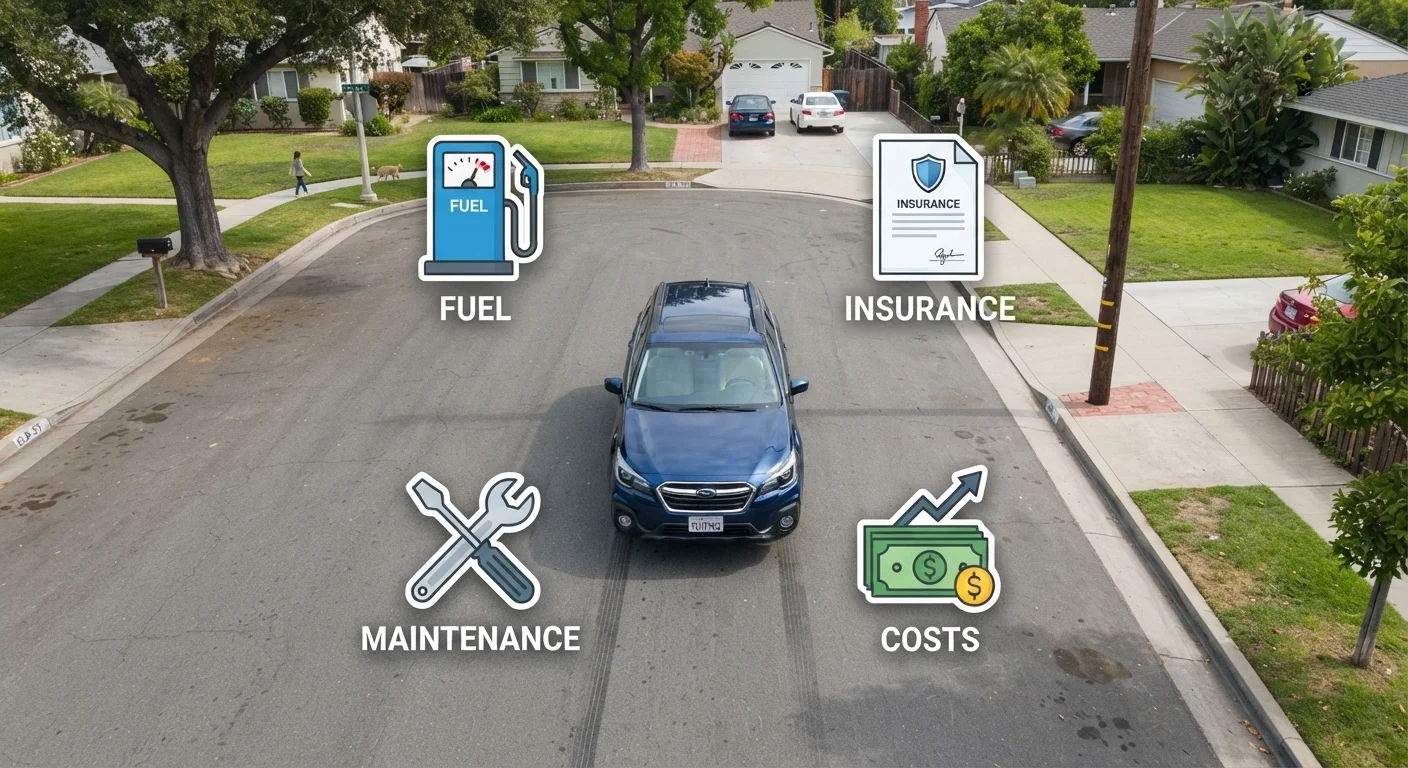
What Does Car Ownership Really Cost?
Most US drivers focus on the monthly payment when sizing up a car purchase. That figure, however, captures only a fraction of what you will actually spend. AAA's annual Your Driving Costs study has consistently found that the average American spends well over $10,000 per year - roughly $833 per month - when all ownership expenses are tallied. For new sedans, SUVs, and trucks, that figure can climb significantly higher.
The full picture includes depreciation, auto insurance, fuel, loan interest, routine maintenance, tires, registration, and a long tail of smaller but persistent costs. Understanding each category is the first step toward managing them. See how the components fit together in our total cost of ownership explainer.
$10,000+
Average annual US car ownership cost
According to AAA's Your Driving Costs study, average total annual ownership and operating expenses consistently exceed this threshold for new vehicles.
~50%
Value lost in five years (typical new vehicle)
Industry data broadly supports that many new vehicles depreciate by around half their original value within the first five years of ownership.
$1,700+
Average annual full-coverage auto insurance
Recent national survey data from multiple insurance research organizations places average full-coverage premiums above this level, with wide variation by state and driver profile.
Depreciation: The Silent Wallet Drain
Depreciation is the difference between what you paid for a vehicle and what it is worth when you sell or trade it - and it is typically the single largest ownership expense. A new vehicle can lose 15-25% of its value in the first year alone, and roughly 50% over five years, though exact rates vary widely by make, model, and market conditions.
Because depreciation is not a bill that arrives in the mail, it is easy to overlook. But if you buy a $40,000 vehicle and sell it five years later for $20,000, that $20,000 loss - about $333 per month - dwarfs many other line items. Our depreciation guide explains exactly what drives that decline and how to factor it into your purchase decision.
Practical ways to limit depreciation exposure include buying a vehicle that is one to three years old (letting the first owner absorb the steepest drop), choosing models with historically strong resale values, and keeping mileage reasonable.
When comparing two vehicles at similar prices, run a five-year depreciation estimate using publicly available residual value data - not just the sticker price. The cheaper car up front is often more expensive to own.
Depreciation is the largest single cost category for most drivers, yet it is invisible at the point of purchase. A vehicle with strong resale value can save thousands over a typical ownership period.
If you finance, make even one extra principal payment per year - it reduces interest paid and shortens the loan term without requiring a refinance.
On a typical 60-month auto loan, accelerating payoff by even a few months can reduce total interest paid by several hundred dollars, with no fees or paperwork.
Insurance, Fuel, and Financing
Insurance is a fixed, recurring cost that varies enormously by state, driving record, vehicle type, and coverage level. The national average for full-coverage auto insurance has trended above $1,700 per year in recent surveys, though urban drivers and younger motorists often pay considerably more. Visit our auto insurance hub for straightforward strategies on comparing coverage and reducing premiums without sacrificing protection.
Fuel is the cost most drivers track most closely, since it shows up at every fill-up. At average US driving levels of around 15,000 miles per year and typical fuel economy, gasoline costs often land between $1,500 and $2,500 annually depending on current pump prices and vehicle efficiency. If you are evaluating an electric vehicle, our gas vs. electric cost comparison puts the numbers side by side.
Financing interest is frequently underestimated. Borrowing $30,000 at 7% over 60 months means paying roughly $5,600 in interest over the life of the loan - money that provides no ongoing value. Whether buying or leasing, the leasing vs. buying breakdown shows how financing structure affects your real total outlay.
Maintenance, Repairs, and the Costs Most Drivers Miss
Routine car maintenance - oil changes, brake pads, filters, fluid flushes, and tire rotations - runs most drivers $500-$1,200 per year on a newer vehicle in good condition. Older or high-mileage vehicles can push repair costs significantly higher, and a single unplanned repair (transmission, timing chain, or AC compressor) can run $1,000-$4,000 or more.
Beyond the garage bill, a cluster of smaller costs quietly inflates the annual total: annual registration and title fees ($50-$400+ depending on state), tire replacement every 40,000-60,000 miles (typically $600-$1,200 for a full set), parking fees, tolls, and car washes. Our article on underestimated car ownership costs walks through each of these line items in detail.
Skipping Maintenance Costs More Long-Term
Delaying scheduled maintenance to save money in the short term is one of the most common ways drivers create larger, avoidable repair bills. Oil sludge, worn brake components, and neglected coolant can each lead to repair costs that dwarf the original service price. Follow your vehicle's manufacturer-recommended maintenance schedule, not just mileage-based rules of thumb.
How to Reduce Your Total Ownership Costs
Cutting your total cost of ownership does not require sacrifice - it requires strategy. The highest-leverage moves are:
- Buy used, not new. A two- to three-year-old vehicle with a clean history can cost 20-30% less than its new equivalent while retaining most of its practical life.
- Pay attention to fuel economy. Over 15,000 miles per year, a vehicle that gets 30 mpg versus 20 mpg saves roughly $750-$1,000 annually at typical fuel prices.
- Maintain on schedule. Skipping oil changes or ignoring small problems consistently leads to larger, more expensive repairs. A $50 maintenance visit can prevent a $1,500 repair.
- Shop your insurance annually. Rates shift year over year; getting competing quotes at renewal is one of the fastest ways to reduce a fixed recurring cost.
- Consider total cost, not just payment. A lower monthly payment achieved through a longer loan term may cost thousands more in interest. Run the full-term numbers before signing.
Car ownership is one of the largest budget commitments most Americans make. Treating it as a system of costs - not just a purchase price - puts you in a far stronger position to minimize unnecessary spending over the years you hold the vehicle.
This article provides general financial and consumer information for educational purposes only. It is not personalized financial or insurance advice. Consult a licensed financial professional or insurance agent for guidance specific to your circumstances.