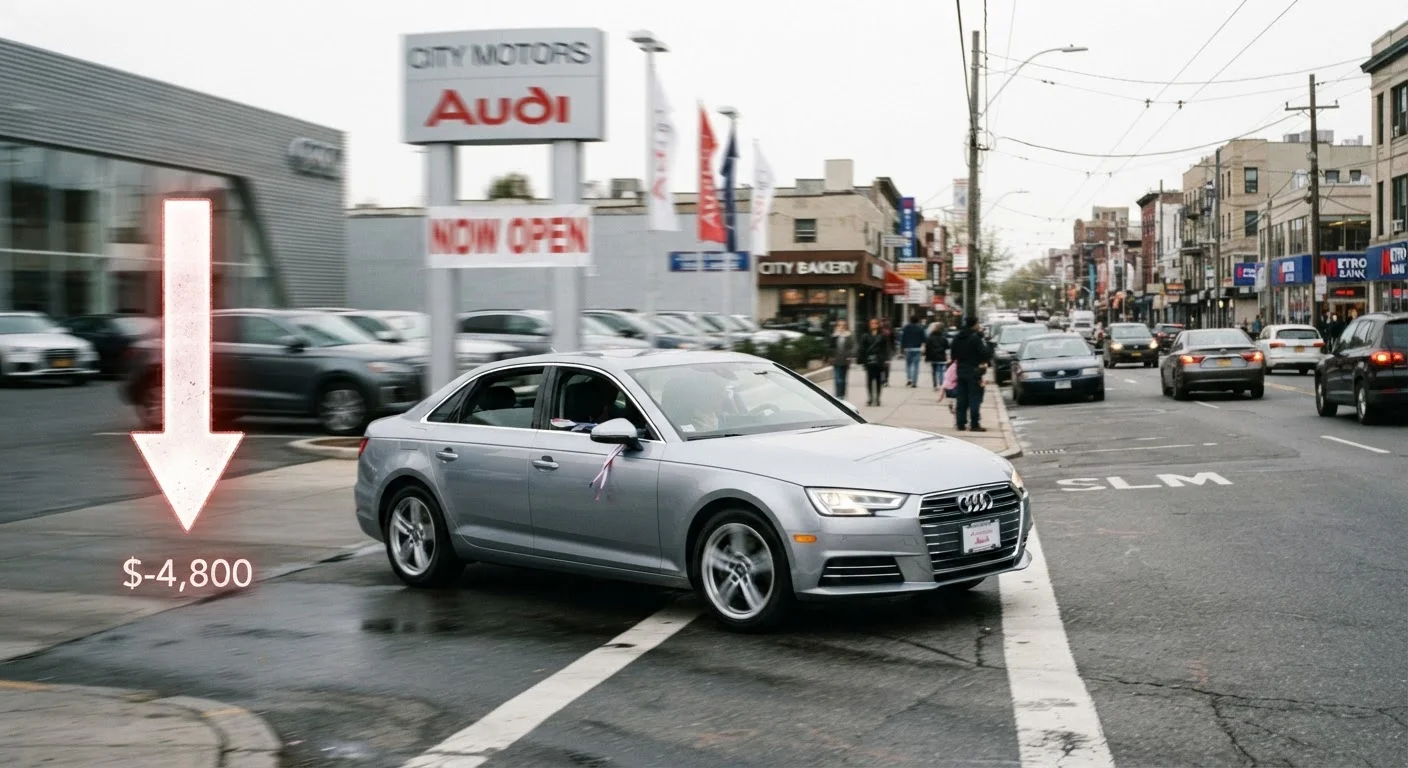
Why Depreciation Starts Before You Leave the Lot
The sticker price you pay for a new vehicle reflects its value as an unused, factory-fresh asset. The moment you sign the paperwork and drive away, that classification changes permanently - the car is now 'used,' and the market prices it accordingly. This isn't a quirk of accounting; it's a straightforward reflection of supply and demand.
Dealers and private sellers list used cars at lower prices than new ones because buyers expect compensation for miles driven, wear, and the assumption of unknown history. Even a car with zero miles on the odometer after a test drive commands a different price on the resale market than the identical model sold new. That gap - sometimes several thousand dollars in the first year alone - is the opening chapter of depreciation.
Understanding this mechanism matters because it reframes how you evaluate a vehicle purchase. The advertised price is what you pay to own it; depreciation is what you pay to use it over time. For a full picture of what car ownership actually costs, see our breakdown of the true cost of owning a car in the US.
The Depreciation Curve: How Value Falls Over Time
Depreciation is not linear. It front-loads: the sharpest drops occur in the first one to three years of ownership, then the rate of loss typically slows. Industry data generally suggests new vehicles lose around 15-20% of their value in year one and can shed close to half their original value within five years, though figures vary considerably by make, model, and market conditions.
~20%
Average new-car value lost in year one
Industry estimates consistently place first-year depreciation for new vehicles in the 15-20% range, though it varies by make and model.
~50%
Typical value remaining after five years
Many new vehicles retain roughly half their original purchase price after five years of average use, with significant variation by segment.
#1
Depreciation's rank among ownership costs
For most US drivers, depreciation represents a larger annual expense than fuel, insurance, or maintenance, according to vehicle cost analysts.
After the initial steep curve, depreciation tends to flatten. A ten-year-old car in decent condition may lose only a few hundred dollars of value per year. This is why the cost-per-year of ownership often improves significantly the longer you keep a vehicle - the early depreciation hit is already absorbed.
For vehicle-specific figures across sedans, SUVs, trucks, and EVs, the standard depreciation rates by vehicle type reference guide offers a useful starting point for comparison.
Key Factors That Drive Faster or Slower Depreciation
Not all vehicles depreciate at the same rate. Several variables interact to determine how quickly a specific car loses value:
- Brand and model reputation: Vehicles with a track record of reliability and low ownership costs tend to retain value better. Perceived quality matters to used-car buyers.
- Mileage: Higher annual mileage accelerates depreciation. Vehicles crossing high-mileage thresholds often drop in resale price more sharply.
- Condition and service history: A well-documented maintenance record and clean cosmetic condition support higher resale values. Accident history - visible on vehicle history reports - can reduce value significantly.
- Supply and demand: Models in high demand with limited used inventory hold value better. Market shifts, such as fuel price swings, can reshape demand for entire vehicle segments quickly.
- Trim level and options: Popular feature packages tend to retain value; niche or unpopular options may not add resale value proportionally to their original cost.
Check Resale Value Before You Buy
Before committing to any vehicle purchase, look up historical resale values for that specific make, model, and trim level using publicly available market data tools. A model that costs $3,000 more upfront but retains significantly more value over five years may be the more economical choice overall. Resale value is a feature worth researching just like fuel economy or safety ratings.
These factors also influence auto insurance premiums, since insurers consider a vehicle's current market value when calculating comprehensive and collision coverage costs.
How to Use Depreciation to Make Smarter Ownership Decisions
Knowing how depreciation works gives you practical leverage when buying, holding, or selling a vehicle. A few approaches that many financially aware drivers consider:
Buy used, not new: Purchasing a vehicle that is two to four years old means someone else has absorbed the steepest portion of the depreciation curve. You get a vehicle with significant useful life remaining at a meaningfully lower cost basis. The new car vs. used car comparison weighs this tradeoff across multiple cost dimensions.
Hold the vehicle longer: Once the early depreciation years are behind you, the annual cost of ownership often drops. Drivers who keep vehicles for eight to ten years spread the original purchase cost - and its depreciation - across more years of use.
Maintain it well: Consistent car maintenance preserves both mechanical reliability and resale value. A vehicle with full service records and no deferred maintenance will command more on resale than an identical model that hasn't been cared for.
Factor it into your total cost calculation: Depreciation belongs in any honest comparison of vehicle options. It's as real a cost as fuel or insurance - it just doesn't show up on a monthly bill. Several other ownership costs also go untracked for the same reason.
Depreciation won't disappear, but treating it as a known, manageable variable - rather than an invisible loss - puts you in a much stronger position as a vehicle owner. For a broader framework that incorporates depreciation alongside every other expense, the total cost of ownership guide is worth reviewing before your next purchase decision.