The Depreciation Gap: Where the Real Money Goes
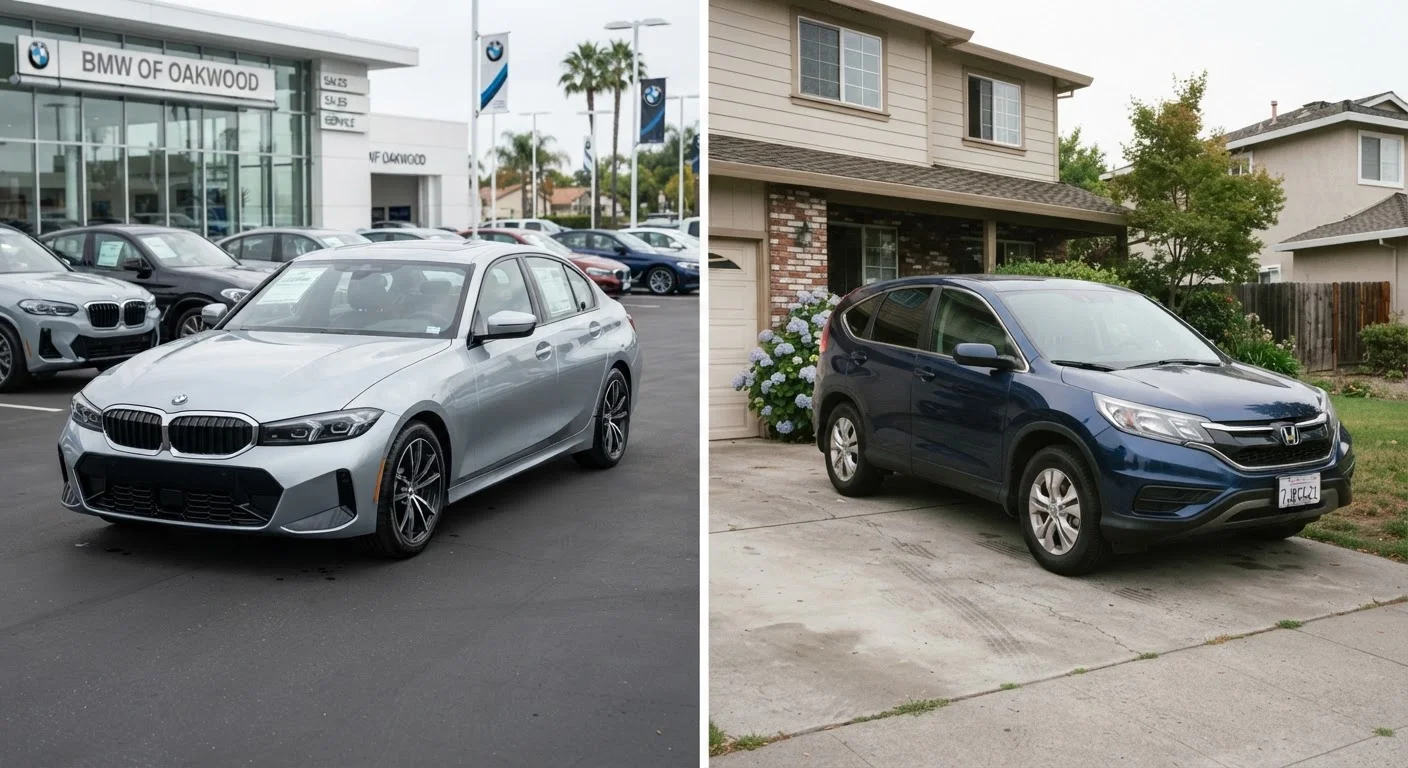
Depreciation is the single largest cost most car owners never see itemized on a bill. A new vehicle typically loses 15-25% of its value within the first 12 months, and up to 50% over five years, according to general industry data on vehicle residual values. That means a driver who buys a $38,000 sedan and sells it five years later may recover only $18,000-$20,000 - a loss that dwarfs most maintenance or repair bills.
A used-car buyer sidesteps the steepest part of that curve. Purchasing a two- or three-year-old vehicle means someone else absorbed the first-year drop. For context on how depreciation varies by segment, see depreciation rates by vehicle type - SUVs and trucks tend to hold value better than sedans, while some EVs have depreciated sharply as the used market matures.
The caveat: if you plan to own a new vehicle for 10 or more years, the annual depreciation cost per year shrinks considerably, narrowing the gap with a used alternative.
Financing, Insurance, and the Cost of Borrowing
New cars almost always qualify for lower interest rates. Manufacturer-backed financing and bank programs routinely offer promotional rates to creditworthy buyers, which can meaningfully reduce the total interest paid over a 48-72 month loan. Used-car loans, by contrast, typically carry rates 1-4 percentage points higher, and older vehicles may face loan-term restrictions that push monthly payments up even on smaller balances.
Insurance is another lever that favors used vehicles on a pure cost basis. Collision and comprehensive premiums are pegged to the vehicle's actual cash value, so insuring a five-year-old car costs noticeably less than insuring its new equivalent. If you're weighing those tradeoffs as part of a broader budget, the auto insurance hub covers strategies for managing premium costs regardless of which route you choose.
| New Car | Used Car | |
|---|---|---|
| Purchase Price | Higher sticker price | Lower entry cost |
| Depreciation Hit | Steepest in year one | First-year drop already absorbed |
| Financing Rate | Typically lower | Typically 1-4 pts higher |
| Insurance Premium | Higher (based on ACV) | Lower (lower ACV) |
| Warranty Coverage | Full manufacturer warranty | Limited or none (CPO varies) |
| Reliability Certainty | High - no unknown history | Variable - depends on history |
| Long-Term Value (10+ yr hold) | Depreciation cost spreads out | Lower base cost advantage |
One factor buyers sometimes overlook: gap insurance. If you finance a new car with a small down payment, the loan balance can quickly exceed the vehicle's market value - meaning a total-loss accident leaves you owing money after the insurer pays out. Gap coverage addresses this but adds to your monthly cost.
Reliability, Maintenance, and Warranty Coverage
New cars come with a manufacturer's warranty - typically 3 years/36,000 miles for bumper-to-bumper and 5 years/60,000 miles for powertrain. That coverage provides a financial floor: unexpected mechanical failures during those years largely shift cost to the manufacturer rather than your wallet.
Used vehicles carry more variability. A well-maintained three-year-old car from a brand known for durability may cost very little to operate. A poorly maintained six-year-old vehicle from any manufacturer can generate repair bills that erode its purchase-price advantage quickly. Certified pre-owned (CPO) programs offer a middle path: dealers and manufacturers inspect and recertify vehicles under set standards, then extend limited warranty coverage. CPO vehicles cost more than non-certified used cars but less than new ones, with reduced uncertainty about condition.
If you end up owning a higher-mileage vehicle, proactive upkeep matters enormously - the car maintenance hub outlines the key service intervals that protect long-term reliability. And if you're already running a high-mileage car, keeping a high-mileage car on the road without overspending walks through when continued investment makes financial sense versus when replacement is the smarter call.
Get a Pre-Purchase Inspection on Any Used Vehicle
Before finalizing a used-car purchase, pay an independent mechanic - not the selling dealer's shop - to inspect the vehicle. A typical inspection costs $100-$200 and can surface hidden issues worth thousands in future repairs. Request a vehicle history report as well, but don't rely on it alone: unreported accidents and deferred maintenance won't always appear in the data.
Running the Real Numbers: Total Cost of Ownership
Sticker price comparisons miss the point. The financially sound way to evaluate new versus used is to estimate total cost of ownership (TCO) - purchase price minus eventual resale value, plus financing interest, insurance, fuel, taxes, registration, and expected maintenance over your planned ownership period.
For a practical framework on how to build that calculation, see total cost of ownership explained. When buyers run these numbers honestly, a $22,000 three-year-old vehicle and a $36,000 new vehicle can end up surprisingly close in five-year TCO - or one can clearly dominate, depending on financing terms, local insurance rates, and maintenance history.
If you're also considering leasing as a third option, leasing vs. buying a car breaks down how lease payments and end-of-term costs stack up against financing either a new or used vehicle outright. And for those monitoring timing as part of their buying strategy, what affects car purchase timing explains how model-year cycles and inventory conditions influence what you'll actually pay.
This article provides general financial information for educational purposes only and does not constitute personalized financial or legal advice. Costs and financing terms vary by lender, region, and individual circumstances. Consult a licensed financial professional before making major purchasing decisions.