What Health Tracking Tools Actually Do
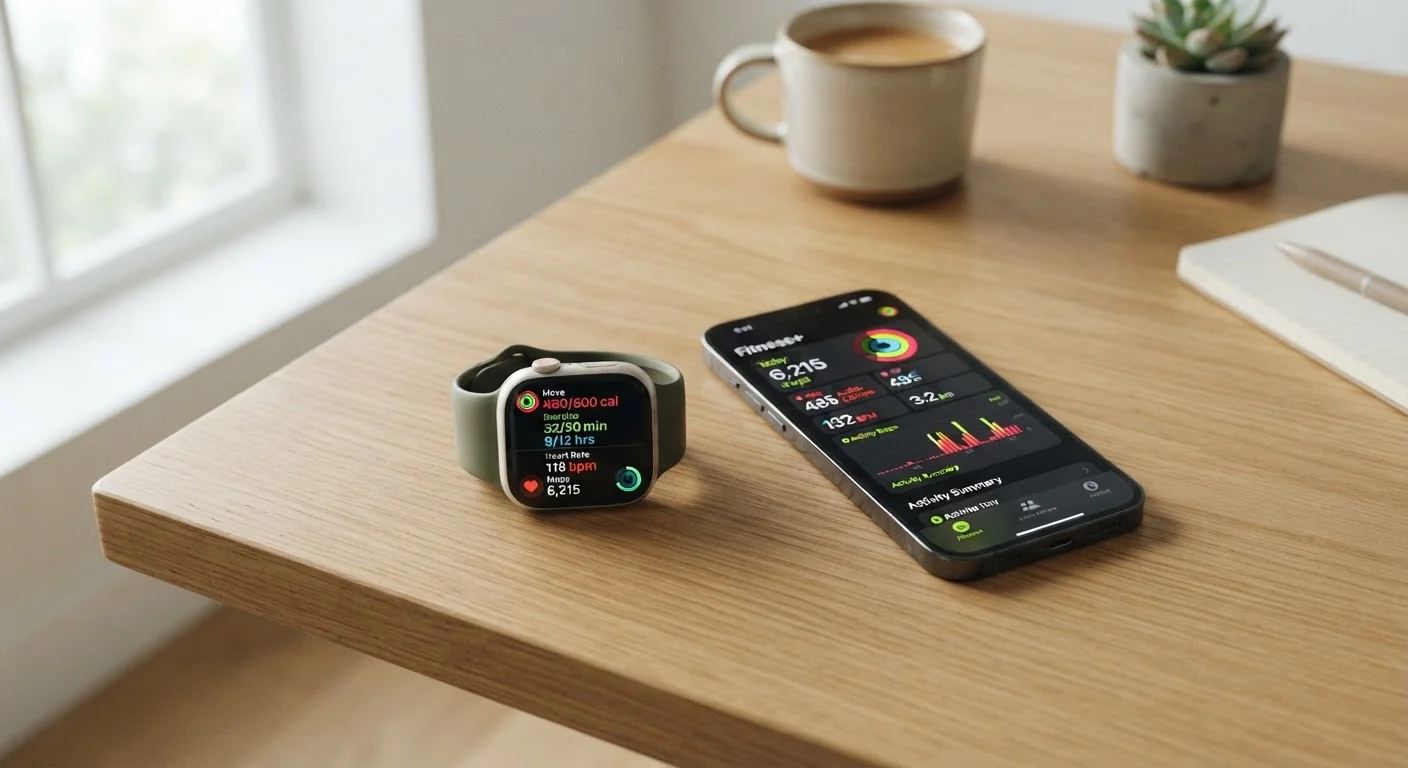
Health apps and wearable devices - think fitness trackers, smartwatches, and smartphone-based wellness apps - collect data points like step counts, heart rate, sleep duration, blood oxygen estimates, and menstrual cycles. They synthesize that data into dashboards, streaks, and trend charts designed to make health patterns visible at a glance.
The underlying technology varies considerably. Optical heart rate sensors use light to detect blood-volume changes under the skin, while accelerometers measure movement. More advanced devices incorporate ECG (electrocardiogram) capabilities or skin-temperature sensors. Each method has its own accuracy ceiling, and consumer devices operate under different standards than clinical-grade equipment.
Understanding what these tools are - and what they are not - is the starting point for using them well. They are behavioral nudges and pattern-awareness tools, not diagnostic instruments. Readers dealing with specific symptoms or health concerns should consult a qualified healthcare professional rather than relying on wearable readouts.
The Case For Tracking: Genuine Benefits
When used thoughtfully, health trackers deliver meaningful advantages for everyday wellness management.
Increases daily awareness of movement and activity
Seeing step counts, active minutes, or sedentary periods in real time gives many people a concrete feedback loop that motivates more consistent physical activity. Research suggests that self-monitoring is one of the more reliable behavioral mechanisms for habit formation.
Supports accountability and goal-setting
Streak features, reminders, and progress charts can sustain motivation over time, especially when external accountability is limited. Users who set specific, measurable activity goals tend to benefit more than those using trackers passively.
Surfaces long-term health patterns
Tracking sleep duration, resting heart rate, or menstrual cycles over months can reveal trends that are hard to detect day to day. These patterns can provide useful context when discussing health with a physician.
Can prompt timely conversations with healthcare providers
Some wearables with ECG or irregular rhythm detection features have helped users identify atrial fibrillation before seeking evaluation. While these readings require clinical confirmation, they can serve as useful prompts for follow-up care.
Accessible and low-barrier to start
Smartphone-based health apps require no additional hardware and are available to a wide population. Even basic features like step counting or sleep logging provide entry-level insight without significant cost or effort.
~30%
Wearable users who stop within months
Multiple studies on consumer wearable adherence have found that roughly a quarter to a third of users discontinue regular use within three to six months of starting.
27%
Average calorie error in some wearables
A 2017 Stanford University study found that calorie expenditure estimates from seven popular fitness trackers had average error rates ranging from roughly 27% to over 90% depending on the device.
Beyond motivation, trackers can surface patterns that are otherwise invisible. Noticing that sleep duration consistently drops below a personal baseline during high-stress weeks, for example, can prompt behavior change before fatigue compounds. Similarly, gradual improvements in resting heart rate over weeks of regular walking - a metric research associates with cardiovascular fitness - can provide objective feedback that effort is paying off. For more on what walking contributes to health, see our evidence-based look at walking as exercise.
The Real Drawbacks: What to Watch Out For
The limitations of consumer health tracking are substantive and worth examining before making these tools central to health decisions.
Consumer-grade accuracy has meaningful limits
Studies have found significant error rates in calorie expenditure estimates and heart rate measurement during certain activities. Users who treat these figures as precise should understand that the margin of error can be substantial.
Health data privacy protections are limited
Most consumer health apps are not covered by HIPAA and may share data with advertisers, data brokers, or research partners under terms users rarely read. The sensitivity of health data makes this a higher-stakes privacy risk than most app categories.
Can increase health anxiety for some users
Constant access to biometric data can amplify worry in people prone to health anxiety, leading to compulsive checking or distress over normal fluctuations. This effect appears more pronounced among users who already have elevated health-related concern.
Risk of misinterpreting clinical metrics
Features like blood oxygen monitoring or irregular rhythm detection require clinical context to interpret correctly. Misreading a flagged reading as a confirmed condition - or dismissing it entirely - can both lead to poor decisions.
May displace intuitive body awareness
Over-reliance on devices to gauge exertion, hunger, or fatigue can erode the capacity for self-awareness that is itself a valuable health skill. Learning to read internal cues remains important alongside external data.
Engagement often drops after initial enthusiasm
Research on wearable adherence consistently finds that a significant portion of users stop wearing or actively using their devices within months of purchase. Without sustained engagement, the behavioral benefits diminish quickly.
Wearables Are Not Medical Devices
Most consumer fitness trackers and health apps are classified as general wellness products, not FDA-cleared medical devices. This means they are not held to the same accuracy and safety standards as clinical tools. A small number of wearable features - such as certain ECG functions - have received FDA clearance, but these represent a narrow subset of what most devices claim to measure. If you have a diagnosed condition or are monitoring a specific symptom, discuss appropriate tracking tools with your healthcare provider.
Accuracy is perhaps the most significant concern. Research published in peer-reviewed journals has found that consumer wearables can meaningfully undercount or overcount heart rate and calorie expenditure, particularly during non-steady-state activities. Blood oxygen (SpO2) readings from optical sensors are especially prone to error and are not equivalent to clinical pulse oximetry - a distinction the U.S. Food and Drug Administration has publicly noted in guidance for consumers.
Data privacy is a parallel concern. Health data collected by apps is often subject to terms of service that permit sharing with third parties. Unlike data governed by HIPAA (the Health Insurance Portability and Accountability Act), most consumer wellness apps do not carry the same legal protections as data held by healthcare providers. Reading privacy policies - and adjusting data-sharing settings - is a practical step worth taking.
Tracking Anxiety and the Quantified Self
One underappreciated risk of continuous health tracking is its psychological dimension. For some people, the availability of real-time data reduces anxiety by replacing uncertainty with information. For others, it does the opposite - creating preoccupation with fluctuations, obsessive checking, or distress when metrics fall outside an expected range.
Research on this pattern is still developing, but clinicians have noted that compulsive engagement with health tracking data can sometimes interfere with quality of life or reinforce health anxiety in people already prone to it. If reviewing health data frequently causes distress rather than useful insight, that is a signal worth taking seriously - and discussing with a mental health professional if needed.
This kind of data-dependence has parallels in other tracking contexts. Just as budgeting apps can create over-reliance on automation in personal finance, health apps can create over-reliance on metrics at the expense of body awareness and intuition.
How to Use These Tools More Effectively
The most practical approach treats tracking data as one input among many rather than a definitive health report. A few principles help:
- Focus on trends, not single readings. A single elevated heart rate or a low step count on one day carries little signal. Week-over-week or month-over-month patterns are more meaningful.
- Set intentional limits. Checking metrics once a day or less reduces the risk of reactive anxiety without sacrificing useful information.
- Verify anything clinically significant. If a wearable flags something concerning - an irregular heart rhythm, for example - treat it as a prompt to consult a healthcare provider, not as a diagnosis.
- Audit your privacy settings. Review which apps have access to your health data and what third-party sharing those apps permit.
Health tracking tools work best as scaffolding for habits - a temporary structure that builds awareness until the habits themselves become self-sustaining. The data is most valuable when it prompts reflection, not when it becomes an end in itself.
This article is for general informational purposes only and does not constitute medical advice. Always consult a qualified healthcare professional for questions about your personal health.