Why Portion Awareness Matters (Without Making It Stressful)
Portion awareness isn't about control - it's about connection. Understanding roughly how much of different foods you're eating gives your body consistent, balanced fuel without turning every meal into a calculation exercise. If you're just beginning to think about balanced eating, knowing how to gauge amounts is one of the most practical skills you can build.
Research consistently shows that people tend to underestimate how much they eat, particularly with energy-dense foods. But the answer isn't obsessive tracking - it's developing a calibrated eye and a set of reliable habits that work in real life, at restaurants, at home, and everywhere in between.
This article is for general informational purposes only and is not a substitute for personalized advice from a registered dietitian or qualified healthcare professional.
Practical Portion Guides You Already Have
One of the most accessible portion tools you own is your hand. Because hand size scales roughly with body size, these landmarks apply reasonably well across different people:
- Palm: A serving of protein (chicken, fish, tofu) is roughly the size and thickness of your palm.
- Fist: A serving of cooked grains, rice, or pasta is about the size of a closed fist.
- Cupped hand: A single serving of nuts, seeds, or dried fruit fills one cupped palm.
- Thumb: One serving of fats - like nut butter or oil - is approximately one thumb-length.
Everyday objects also help: a deck of cards approximates a 3-ounce meat portion, a tennis ball represents about one cup of leafy or cooked vegetables, and a standard ice cream scoop mirrors a half-cup serving of grains or legumes.
Eating Habits That Naturally Support Better Awareness
Portion size is only half the story. How you eat shapes how well your body registers amounts. Eating slowly and without screens gives your hunger and fullness hormones - including leptin and ghrelin - time to signal your brain before you've significantly overeaten. Most satiety signals take around 15-20 minutes to register, which is why pacing matters.
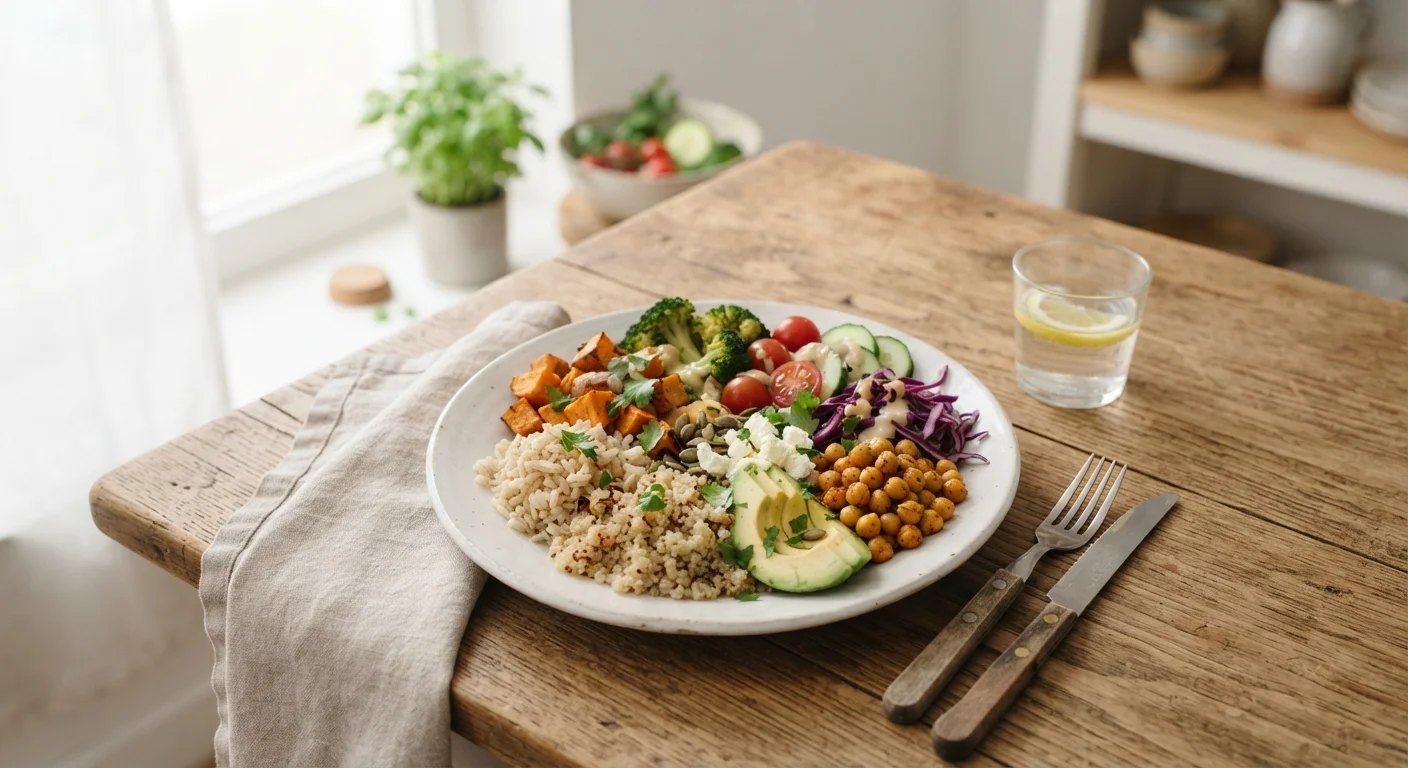
Structured meals also help. When you have a sense of what a balanced plate looks like - roughly half vegetables and fruit, a quarter lean protein, and a quarter whole grains - you don't need to weigh anything. This approach aligns with general guidance from nutrition authorities and complements broader meal planning strategies that many people find sustainable long-term.
Common Traps That Skew Your Perception
Several everyday factors quietly distort portion perception. Larger bowls and plates make the same amount of food look smaller, which can lead to serving - and eating - more than intended. Package sizes often contain multiple servings, but the labeling is easy to overlook.
Liquid calories are another area where awareness often slips. Beverages like juices, smoothies, and specialty coffees can contribute significant energy with minimal satiety feedback. Being aware of this isn't about eliminating those foods - it's about accounting for them. These are among the nutrition pitfalls that quietly undermine otherwise healthy habits.
Eating directly from packages - chips, crackers, nuts - makes it genuinely difficult to gauge how much you've consumed. Portioning a serving into a bowl before eating creates a simple visual checkpoint without requiring any measuring tools.
Building the Skill Over Time
Portion awareness is a practice that sharpens gradually. Occasional use of measuring cups - not as a permanent rule, but as a calibration exercise - can help reset your eye after a period of drift. Trying it for a week every few months helps many people recognize just how far estimates can wander.
The goal is flexibility, not precision. A sustainable relationship with food means you can eat a larger portion at a celebration dinner and a lighter one the next day without anxiety or guilt. Awareness gives you agency; rigidity only creates stress. Treat portion knowledge as a tool in your broader nutritional skill set - useful context, not a daily obligation.