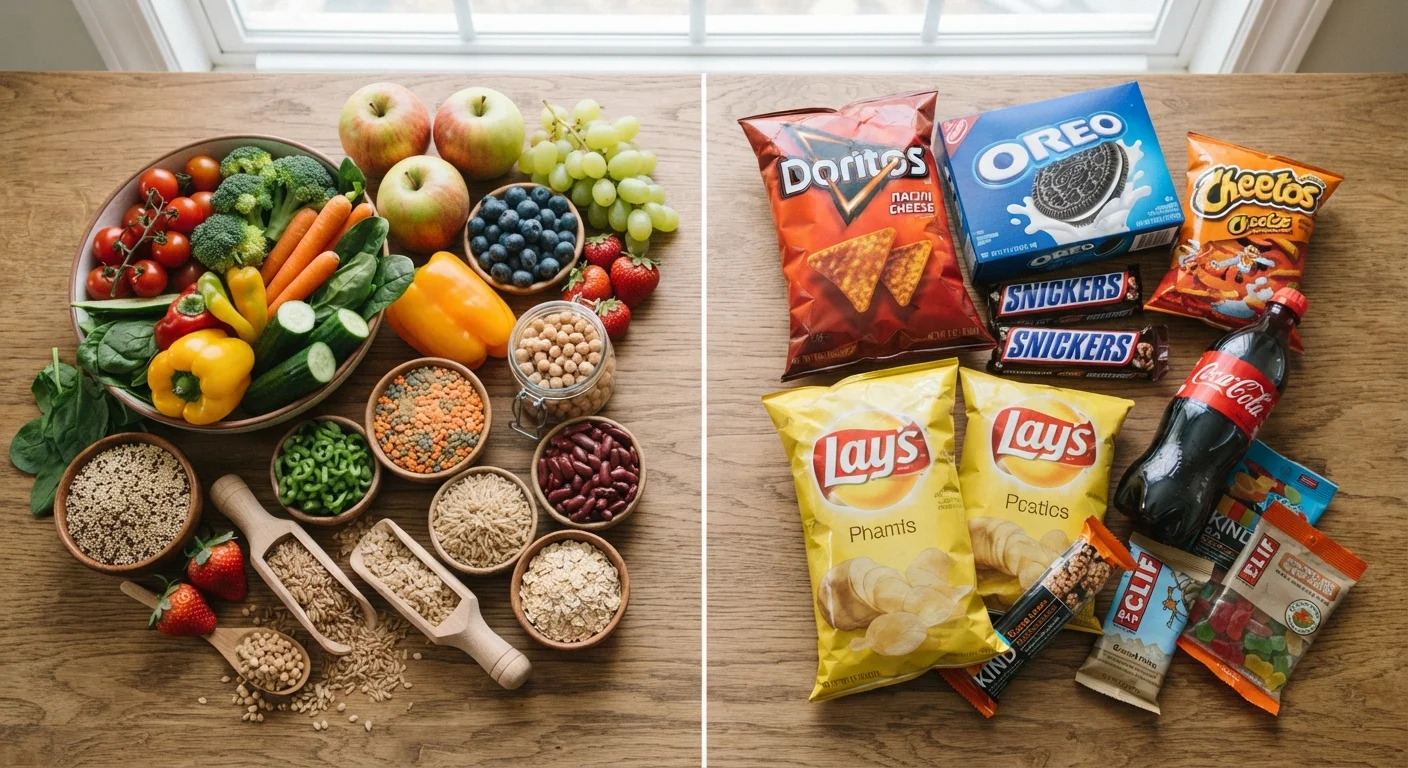
Defining the Terms: A Spectrum, Not a Binary
The phrase "whole foods vs. processed foods" implies a clean divide, but nutrition science tells a more layered story. Whole foods are generally defined as foods that have undergone little to no processing - think an apple, a handful of walnuts, or a cup of dry lentils. Their nutrient profile remains largely intact.
Processed foods, by contrast, is an umbrella term that spans everything from plain rolled oats (minimally processed by flattening) to ready-to-eat snack cakes engineered with stabilizers, emulsifiers, and artificial flavoring. Lumping these together obscures meaningful differences.
Researchers at the University of São Paulo developed the NOVA classification system to bring structure to this spectrum. NOVA organizes foods into four groups: unprocessed or minimally processed foods; processed culinary ingredients (like oils and flours); processed foods (canned vegetables, cheese, cured meats); and ultra-processed foods - industrial formulations that typically contain five or more ingredients, including additives rarely found in a home kitchen.
This framework matters because the health implications at each level differ substantially. See our explainer on what "eating clean" actually means for related context on how popular food language can sometimes mislead.
| Criterion | Whole Foods | Processed Foods |
|---|---|---|
| Definition | Little to no alteration from natural state | Altered by industrial or culinary methods |
| Examples | Apples, oats, lentils, eggs | Canned beans, cheese, packaged cookies |
| Fiber content | Naturally intact | Varies; often reduced in ultra-processed |
| Added sugars & sodium | Typically none | Often elevated in ultra-processed items |
| Shelf stability | Generally shorter | Extended; often months to years |
| Nutrient density | Generally high | Highly variable by processing level |
| Convenience | Requires more preparation | Often ready-to-eat or quick to prepare |
| Research-linked risk | Associated with lower chronic disease risk | Ultra-processed linked to higher risk in studies |
What Happens Nutritionally During Processing
Processing is not inherently destructive. Pasteurization makes milk safe without stripping its protein or calcium. Freezing vegetables shortly after harvest can actually preserve vitamins better than fresh produce that has spent days in transit. Fermentation - used to produce yogurt, kimchi, and sourdough - can enhance digestibility and introduce beneficial bacteria.
The nutritional risks concentrate at the ultra-processed end of the spectrum. Several mechanisms are worth understanding:
- Fiber reduction: Refining grains removes the bran and germ, eliminating most fiber and a significant portion of B vitamins and minerals.
- Added sugars and sodium: Ultra-processed foods account for a disproportionate share of added sugar and sodium in the US diet, according to analyses of national dietary data.
- Disrupted food matrix: Emerging research suggests that the physical structure of food - not just its nutrient content - affects how it is digested and how satisfied we feel afterward. Heavy processing can disrupt this matrix.
- Additive accumulation: While individual additives are generally assessed as safe, the combined, long-term effects of consuming many additives simultaneously remain an active area of research.
~57%
US calories from ultra-processed foods
Research published in BMJ Open estimated that ultra-processed foods account for more than half of total daily caloric intake for average US adults.
90%+
Added sugar from ultra-processed sources
A study in the journal JAMA Internal Medicine found that over 90% of added sugar consumption in the US diet comes from ultra-processed food products.
4 groups
NOVA food classification categories
The NOVA system, developed by researchers at the University of São Paulo, categorizes all foods into four groups based on the extent and purpose of processing.
None of this means that every processed ingredient is problematic. Plain canned tomatoes, for example, are a processed food that delivers lycopene - a beneficial plant compound - in a highly bioavailable form.
Putting It Into Practice
Rigid food rules often backfire. A more durable approach is to think about patterns rather than perfection. Public health guidance from organizations like the American Heart Association and the Dietary Guidelines Advisory Committee consistently emphasizes dietary patterns over single-food judgments.
Practical anchors worth building on:
- Prioritize whole or minimally processed foods as the foundation. Vegetables, fruits, legumes, whole grains, eggs, and plain dairy form a nutritionally dense base that research consistently supports.
- Read ingredient lists on packaged foods. A shorter list with recognizable ingredients is a reasonable proxy for lower processing - though not a perfect rule.
- Don't equate convenience with poor quality. Frozen edamame, canned sardines, and plain Greek yogurt are all processed to some degree, but they remain nutritious, convenient options.
- Reserve ultra-processed foods rather than eliminate them. Chronic, high-frequency consumption is where research shows the clearest associations with health risk - occasional inclusion has not been demonstrated to cause harm in isolation.
Food choices are also shaped by budget, time, culture, and access - factors that a simple whole-versus-processed framework does not fully account for. The goal is to make informed decisions within real-world constraints, not to achieve a standard that most households cannot sustain.
This article is for general informational and educational purposes only and does not constitute medical or dietary advice. For guidance specific to your health needs or conditions, consult a registered dietitian or qualified healthcare professional.