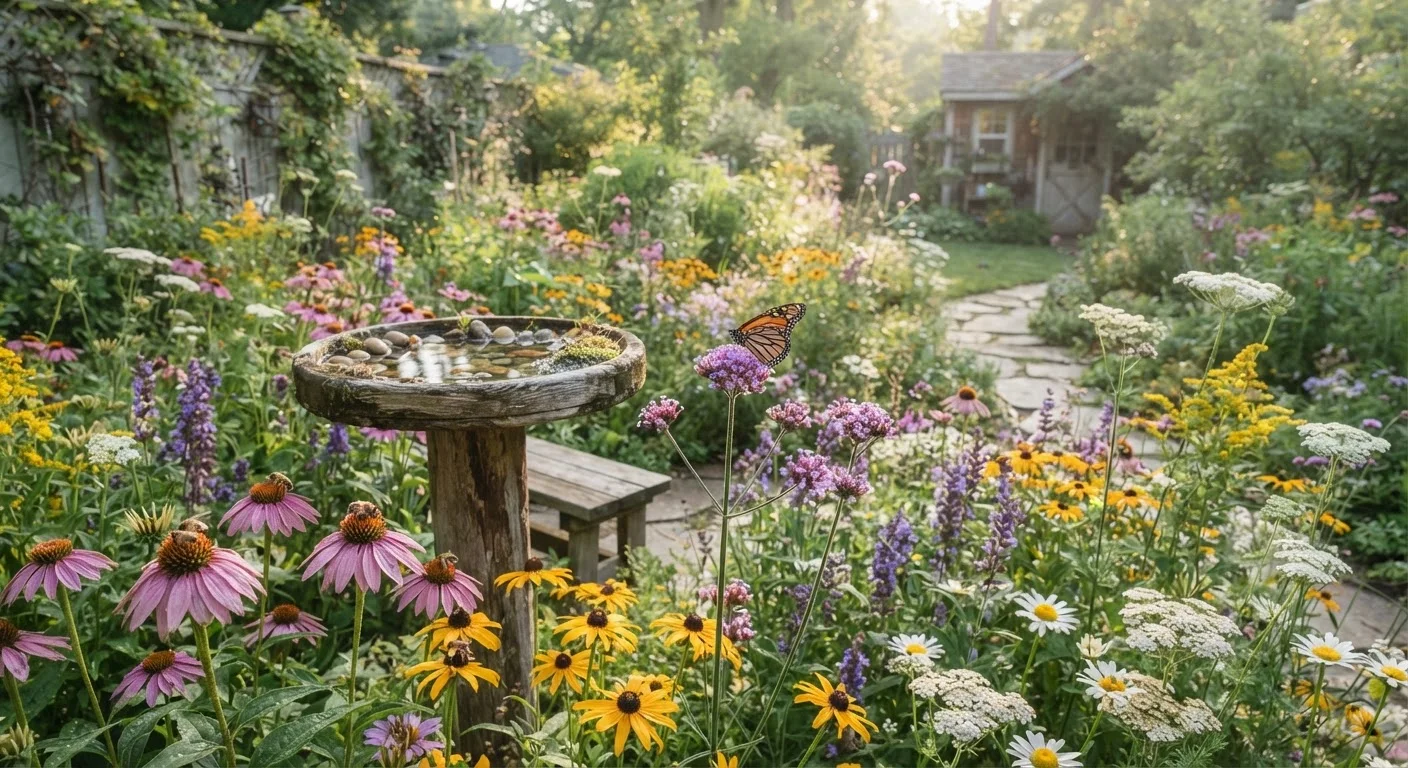
Why Garden Habitat Design Actually Matters
Pollinator and wildlife populations in the US have declined significantly over recent decades, driven in part by habitat loss at the landscape level. Individual yards may seem small, but gardens collectively cover a substantial area - and when managed thoughtfully, they can function as genuine habitat corridors connecting larger natural areas.
The good news is that meaningful change doesn't require a large property or significant investment. Research from organizations like the Xerces Society for Invertebrate Conservation consistently points to the same core principles: the right plants, a water source, shelter, and reduced chemical use. Getting those fundamentals right matters far more than adding decorative "pollinator features" without addressing the underlying conditions.
This guide walks through each of those elements in sequence so you can build a genuinely functional wildlife garden rather than simply an aesthetically appealing one.
What you will need
What to Plant, and Why Native Species Lead the Way
The relationship between native insects and native plants is often highly specific. Many native bee species, for example, can only collect pollen from a narrow group of plant genera. Monarch butterflies require milkweed species for reproduction. Native birds that feed nestlings on insects depend on plants that support large enough caterpillar populations - a metric that ecologist Doug Tallamy's research has highlighted extensively, showing that native oaks alone support hundreds of caterpillar species compared to single-digit numbers for many introduced ornamentals.
This doesn't mean every introduced plant is worthless to wildlife. Lavender, for instance, is widely used by generalist pollinators. But native plants tend to deliver the broadest, most consistent benefit across the full range of local species.
Trowel or hand shovel
Planting native plants, bulbs, and seedlings in prepared soil.
Shallow dish or birdbath
Providing a reliable, accessible water source for birds and insects.
Mulch (bark, leaf, or straw)
Retaining soil moisture, moderating temperature, and mimicking natural ground cover.
Compost
Enriching planting soil so native plants establish more successfully.
Small bee house or bundle of hollow stems
Offering nesting sites for solitary native bees that don't live in hives.
Aim for clusters of the same species rather than single specimens scattered across the garden - pollinators locate and move between larger patches more efficiently. And consider that mulching around new native plantings helps them establish faster by conserving moisture and suppressing competing weeds during the first growing season.
Putting the Steps Together: Sequencing for Success
You don't need to tackle every element at once. A sensible sequence is to start with plant selection and soil preparation, since those decisions shape everything else. Once plants are in the ground, add your water source. As the garden matures over its first full season, you'll have a clearer sense of which areas naturally attract the most activity and where to add shelter elements or expand planting.
Research native plants suited to your region
Native plants are the foundation of any effective wildlife garden. They have co-evolved with local insects and birds, so they provide the right food, shelter, and nesting cues that introduced ornamentals often can't match. Start by identifying plants native to your specific state or ecoregion - your local Cooperative Extension Service office or a native plant society are reliable, free resources for this.
Aim for a mix that includes flowering perennials, grasses, shrubs, and if space allows, at least one native tree. Variety in plant type creates more habitat layers and supports a wider range of species.
Plan for layered planting heights
Wildlife uses different vertical zones in a garden. Ground-level plants attract beetles, ground-nesting bees, and foraging birds. Mid-height shrubs provide shelter and berry sources. Taller plants and canopy layers offer nesting spots and insect-hunting perches for birds. Even in a small yard, you can create two or three distinct layers by combining low groundcovers with medium perennials and at least one taller shrub or ornamental grass clump.
When planning layout, consider that native plantings can also reduce ongoing maintenance compared to traditional landscaping, making this approach practical as well as ecological.
Prepare your soil without heavy chemical inputs
Healthy soil supports the invertebrates at the base of the food chain that birds and beneficial insects depend on. Work in compost to improve structure and microbial activity. Avoid synthetic fertilizers that produce lush foliage but fewer flowers, and skip pre-emergent herbicides in areas where you want wildflowers to self-seed. For more on what your soil might genuinely need before planting, see our guide to soil amendments.
Add a water source and keep it clean
Even a shallow ceramic dish or a repurposed saucer filled with clean water will draw significantly more wildlife than a garden without one. Place it at ground level for birds that prefer to drink from puddles, or elevate it on a stable surface for butterflies and bees. Add a few flat stones so smaller insects can land safely without drowning.
Change the water every two to three days during warm months to prevent mosquito larvae from developing. Moving water - from a small pump or dripper - is even more attractive to birds and can help prevent stagnation.
Eliminate or sharply reduce pesticide use
Many pesticides - including those labeled "organic" - kill beneficial insects alongside pest species. Broad-spectrum insecticides are particularly damaging to pollinators and the natural predators (such as parasitic wasps and ground beetles) that keep garden pests in check. Shift to an integrated pest management approach: tolerate low levels of pest damage, use physical barriers where needed, and treat only specific, confirmed problems with the most targeted product available.
A garden genuinely supporting wildlife will typically develop its own pest-predator balance over a season or two, so patience during establishment matters.
Leave intentional areas of 'managed messiness'
Tidy gardens often remove the very features wildlife needs most. Hollow or pithy plant stems left standing through winter provide nesting tubes for solitary bees. Leaf litter harbors ground beetles, firefly larvae, and overwintering butterfly pupae. A small brush pile in a corner gives cover to wrens, toads, and skinks. You don't need to let the whole yard go wild - a dedicated patch or back corner set aside as a low-disturbance zone can make a meaningful difference.
If you're also growing food nearby, this kind of habitat patch actively supports your edible garden by hosting natural pest predators. Our guide to starting a vegetable garden covers how to site and plan productive beds alongside wildlife zones.
For gardens integrated with seasonal vegetable growing, the autumn wind-down checklist is a useful complement - it helps you protect overwintering habitat while preparing beds for the following spring.
This article is for general informational and educational purposes. Specific plant suitability, local regulations around water features, and habitat requirements vary by region - consult your local Cooperative Extension Service or a certified horticulturalist for guidance tailored to your area.