Why Mulch Deserves a Place in Every Garden Plan
Mulch is one of the most cost-effective tools available to home gardeners, yet it often gets treated as an afterthought - something spread once for looks and then forgotten. In practice, a properly applied mulch layer does sustained work through every season: it slows moisture loss from the soil surface, moderates soil temperature, limits weed germination, and, if it's organic, gradually improves the soil beneath it as it decomposes.
For gardeners trying to reduce maintenance without sacrificing results, mulch is a logical first investment. It pairs well with other water-saving strategies - see drip and sprinkler irrigation comparisons for more ways to cut outdoor water use. It also works naturally alongside low-maintenance landscaping strategies that reduce the overall burden of yard upkeep.
Choosing the Right Type of Mulch
Mulch falls into two broad categories: organic and inorganic. Organic mulches - shredded wood, bark chips, straw, shredded leaves, and compost - break down over time, adding organic matter to the soil. Inorganic options, such as gravel, crushed stone, or landscape fabric, don't decompose and require less frequent replacement, but they also contribute nothing to soil health.
For most planting beds, organic mulches offer more long-term benefit. Shredded hardwood bark works well around trees and shrubs. Straw is a practical choice for vegetable gardens because it breaks down relatively quickly and is easy to turn in at season's end. Shredded leaves - often free in autumn - are excellent for garden beds and improve soil texture as they decompose. If you're already composting at home, finished compost makes an effective, nutrient-rich surface mulch; see how to produce compost at home for guidance on getting started.
Inorganic mulches suit areas where you want permanent definition - gravel paths or rock garden beds - but they're not ideal where soil improvement is a goal.
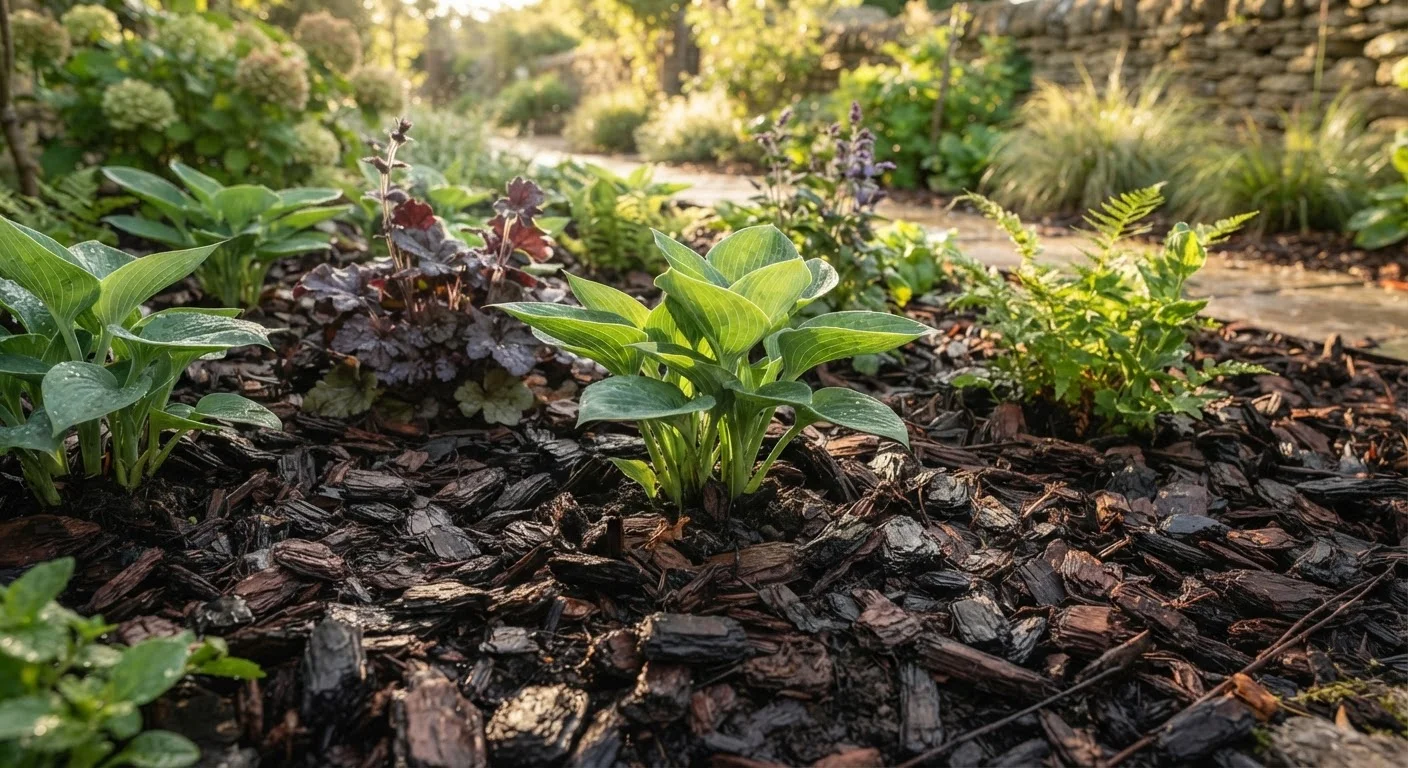
Apply organic mulch at a depth of 2-4 inches across planting beds.
This depth is enough to reduce soil moisture evaporation and block light from reaching weed seeds, without creating conditions that restrict root gas exchange. Thinner layers lose their effectiveness quickly; thicker layers can impede water penetration.
Keep mulch at least 2-3 inches away from plant stems and tree trunks.
Mulch piled against stems holds moisture against living tissue, which encourages rot and can provide cover for rodents that gnaw bark. Maintaining a clear collar around each plant protects its structural base.
Match mulch type to the needs of the planting area.
Different areas of a garden have different requirements. Fine-textured mulches compact more readily and suit ornamental beds; coarser materials stay open longer and work well around larger shrubs. Vegetable gardens benefit from lighter mulches that can be easily worked into the soil.
Weed beds thoroughly before mulching.
Mulch prevents light from reaching the soil surface, which inhibits new weed seed germination. However, established weeds with existing root systems will grow through almost any mulch layer, wasting the material and your effort.
Refresh and loosen mulch at least once a year.
Organic mulch gradually breaks down and compacts. A matted layer can shed water rather than absorb it, and its depth diminishes as decomposition progresses. Annual inspection and top-up maintains the layer's protective function.
How to Apply Mulch Correctly
Correct application makes a significant difference in outcomes. A layer that's too thin provides little benefit; one that's too thick can suffocate roots and create waterlogging conditions.
Soil preparation also matters. Pull existing weeds before mulching - mulch suppresses new germination but won't kill established weeds already rooted in the soil. For beds with persistent weed pressure, laying cardboard or several layers of newspaper directly on the soil before mulching creates an additional barrier that smothers weeds while still allowing water through and decomposing naturally over time.
For plant health, the single most important application rule is to leave a gap between the mulch and any plant stem or tree trunk. Piling mulch against stems traps moisture and can lead to rot, fungal problems, and pest damage. A 2-3 inch clear zone around each stem is adequate.
Maintaining Your Mulch Over Time
Organic mulches break down - that's their value, but it also means they need periodic replenishment. Most gardeners find that checking mulch depth in early spring and again in late summer keeps beds performing well through the season. A refresh once a year is generally sufficient for most mulch types, though coarser materials like wood chips may last 18-24 months before needing a meaningful top-up.
Avoid the common error of layering new mulch directly on top of matted, compacted old mulch without breaking it up first. A compacted mulch layer can actually repel water rather than retain it - the opposite of the intended effect. Rake existing mulch lightly before adding new material to keep the layer aerated and permeable.
Mulch also contributes to a healthier soil ecosystem over time. As organic matter accumulates, it creates habitat and food for earthworms and soil microorganisms that improve soil structure and nutrient cycling. This connects naturally with broader goals like understanding soil amendments and creating conditions that attract beneficial insects and garden wildlife.
2-4 in
Recommended mulch depth for most garden beds
Cooperative extension programs across the US consistently recommend this depth range as the effective zone for moisture retention and weed suppression.
25-50%
Potential reduction in soil moisture evaporation
University horticultural research suggests mulched soils can lose significantly less moisture to evaporation than bare soil under comparable conditions, though results vary by climate and mulch type.