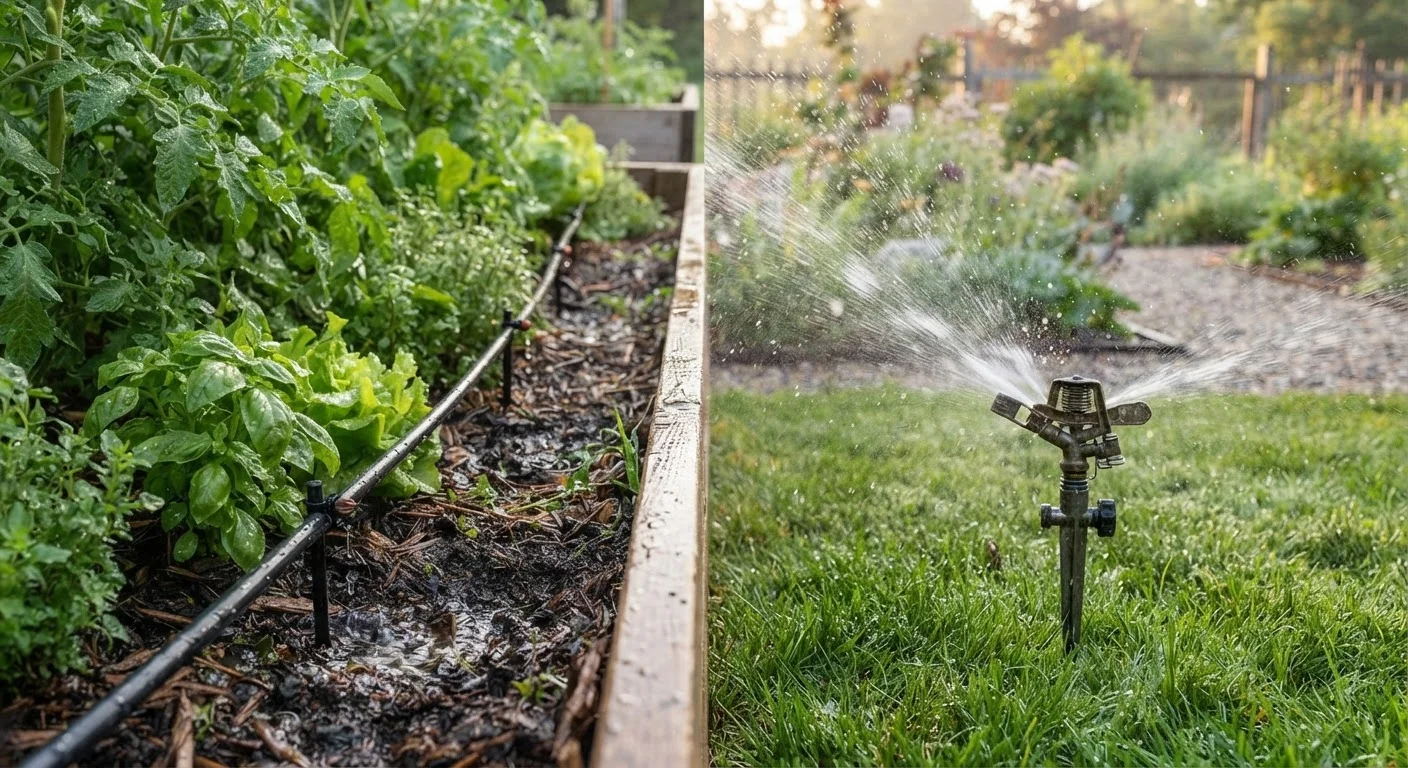
How Each System Actually Works
Understanding the mechanics of each system helps you match the right tool to your yard's layout and plant types.
Drip irrigation uses a network of flexible tubing, emitters, and sometimes soaker hoses to deliver water slowly and directly to the base of each plant. Water seeps into the soil at a rate measured in gallons per hour - often between 0.5 and 2 GPH per emitter - minimizing surface runoff and allowing deep soil absorption. Because water goes straight to the root zone, evaporation from the soil surface is dramatically reduced.
Sprinkler systems distribute water through pressurized heads - pop-up rotors, fixed sprays, or oscillating arms - that project water into the air over a defined radius. Coverage patterns can be adjusted, but water must travel through the air before reaching soil, exposing it to evaporation and wind drift. This makes sprinklers highly effective for turf, where surface-level, even coverage is the goal, but less efficient for raised beds or closely spaced edible plants.
Both systems can be connected to timers and smart controllers, which is one of the most practical steps any homeowner can take to avoid overwatering. For a deeper look at how common watering habits can backfire, see garden watering myths worth reconsidering.
| Criterion | Drip Irrigation | Sprinkler Systems |
|---|---|---|
| Water efficiency | High - minimal evaporation | Moderate - wind and evaporation losses |
| Best application | Garden beds, shrubs, containers | Lawns, large open areas |
| DIY installation ease | Moderate for small areas | Simple (portable); complex (in-ground) |
| Upfront cost (basic setup) | Low to moderate | Low (portable) to high (in-ground) |
| Foliage wetting | None - root-zone only | Yes - overhead spray |
| Maintenance requirements | Emitter checks; seasonal flush | Head adjustments; winterization |
| Timer/automation compatibility | Yes - widely compatible | Yes - widely compatible |
| Coverage uniformity | Plant-specific, not broadcast | Broad, even surface coverage |
Cost, Installation, and Maintenance
Both systems have installation and ongoing costs worth understanding before you commit.
Drip irrigation starter kits for a small garden bed are widely available and relatively affordable, but scaling up to cover a full landscape adds cost in tubing, emitters, pressure regulators, and filters. DIY installation is manageable for most homeowners on a defined garden area. Maintenance involves checking emitters for clogging (especially in areas with hard water), inspecting tubing for damage, and flushing lines seasonally.
Sprinkler systems, particularly in-ground versions with pop-up heads, typically require professional installation when trenching is involved - a cost that can run into several hundred to a few thousand dollars depending on yard size and zone count. Portable or above-ground sprinklers are far less expensive and require almost no installation. Maintenance for in-ground systems includes winterizing (draining lines before frost), replacing worn heads, and adjusting coverage arcs seasonally.
Up to 50%
Water savings vs. sprinkler systems
The US Environmental Protection Agency notes that drip irrigation can use up to 50% less water than conventional sprinkler systems in garden applications.
30-50%
Water lost to evaporation from sprinklers
According to general irrigation efficiency research, overhead sprinkler systems can lose a substantial share of applied water before it reaches plant roots, particularly on hot or windy days.
If you're already working with raised beds, drip irrigation integrates particularly well - running lines beneath mulch keeps the system hidden and working efficiently. See how raised beds and in-ground plots compare overall in our look at raised beds vs. in-ground planting.
Water Efficiency and Plant Health Outcomes
Water efficiency is where the two systems diverge most clearly, and it's often the deciding factor for homeowners in drier climates or those managing water bills.
Drip irrigation is widely considered the more water-efficient choice for garden beds. Because water is applied slowly at soil level, it has more time to infiltrate deeply rather than run off or evaporate. Keeping foliage dry also helps reduce the conditions that favor fungal diseases - a real benefit in vegetable and flower gardens.
Sprinklers, by contrast, apply water overhead and across a broad area. For established turf grass, which is adapted to surface watering and has shallow but dense root systems, this approach works well. For vegetables or perennials, overhead watering can wet leaves unnecessarily and contribute to uneven moisture distribution.
Pairing either system with a consistent mulch layer compounds the efficiency gains - mulch slows evaporation and moderates soil temperature regardless of how water is delivered. Our guide on mulching your garden for long-term payoff covers how to apply it effectively.
For low-maintenance landscapes where both water and labor savings matter, native plantings and groundcovers can also reduce irrigation demands across the board.
Neither System Eliminates the Need for Good Timing
Even the most efficient irrigation system wastes water if it runs at the wrong time. Watering during midday heat - when evaporation rates peak - reduces effectiveness for both drip and sprinkler systems. Early morning is generally considered the most efficient watering window, giving soil time to absorb moisture before temperatures rise. Smart timers and moisture sensors can automate this without requiring daily adjustments.