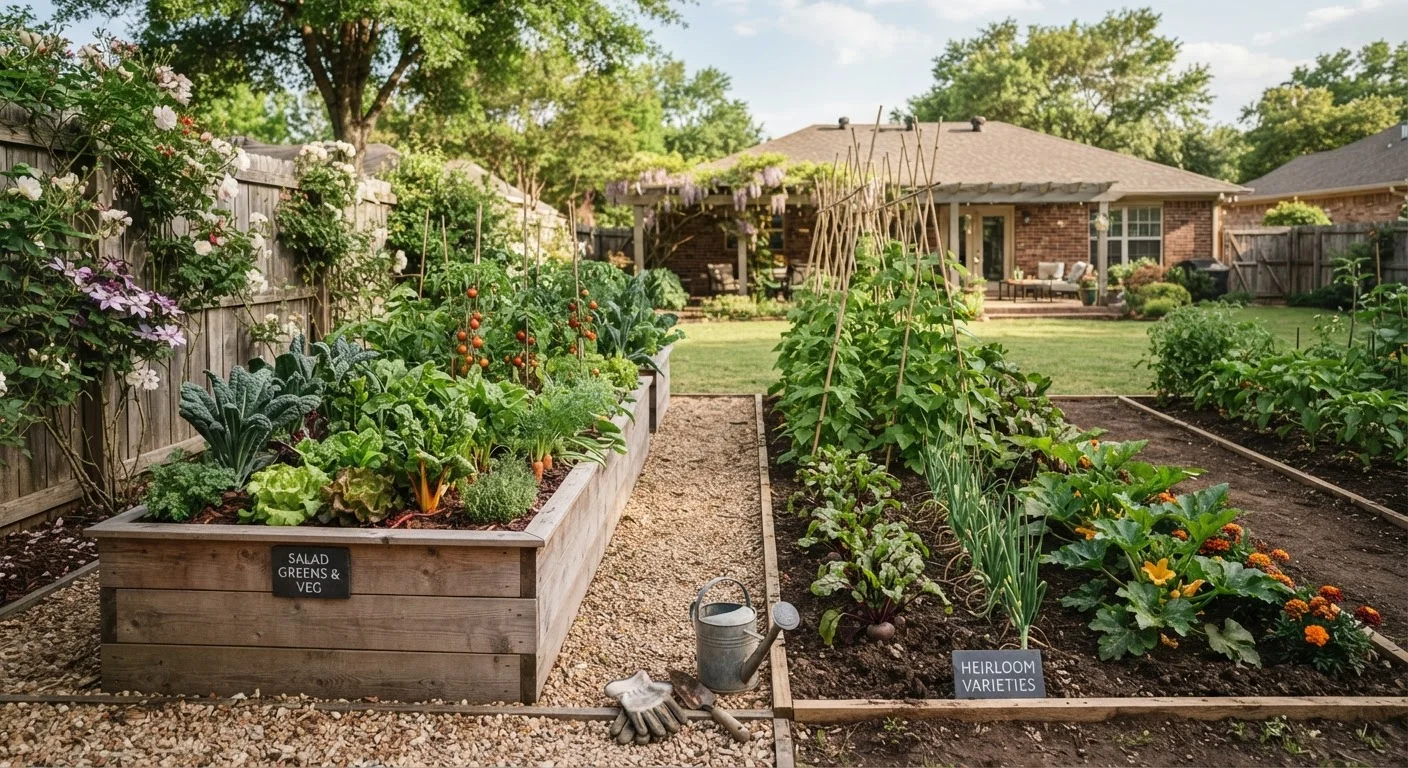
The Core Trade-Off: Control vs. Scale
Choosing between raised beds and in-ground planting comes down to a fundamental tension: how much control do you need over growing conditions, and how much area do you want to cultivate? Neither setup is universally superior - each solves a specific set of problems while creating others.
Raised beds put you in charge of the soil from day one. You fill them with a custom blend - typically a mix of compost, topsoil, and an aerating amendment - which means you're not fighting clay, compaction, or low organic matter. That control pays off quickly, especially in yards where native soil has been disturbed by construction. The downside is real: materials, lumber, hardware cloth (if you're lining against burrowing pests), and bulk soil delivery add up before a single seed goes in. A modestly sized 4×8-foot bed can cost anywhere from $50 to $200 or more to build and fill, depending on materials and region.
In-ground planting starts cheaper. Amending an existing plot with compost and a broadfork costs a fraction of constructing raised beds, and scaling up means simply expanding your rows. The limitation is your native soil. If it drains poorly, compacts easily, or harbors persistent weed seeds, those problems don't disappear - they require ongoing management. Starting a vegetable garden from scratch covers site selection and soil prep in detail, which is worth reading before committing to either format.
| Criterion | Raised Beds | In-Ground Planting |
|---|---|---|
| Upfront cost | Higher (materials, fill soil) | Lower (amendments only) |
| Soil control | Complete - custom mix | Dependent on native soil |
| Drainage | Excellent; dries quickly | Varies; holds moisture longer |
| Watering frequency | Higher in warm weather | Lower; roots access deeper water |
| Season start | Earlier; soil warms faster | Later warming in spring |
| Scalability | Limited by cost and space | Easily expanded at low cost |
| Accessibility | High (adjustable height) | Lower; requires bending |
| Longevity of structure | 5-15 years depending on material | Indefinite (no structure) |
| Weed pressure | Lower initially | Higher without consistent mulch |
| Best for | Poor soil, small intensive plots | Large areas, workable soil |
Soil Health, Drainage, and Watering Demands
Raised bed soil tends to drain faster than in-ground plots - a genuine advantage in wet climates where waterlogged roots are a constant threat. That same drainage characteristic, however, means raised beds dry out more quickly during hot spells. In practice, raised bed gardeners often water more frequently, particularly in summer. Drip irrigation can offset this workload considerably; see our comparison of drip irrigation vs. sprinkler systems for a closer look at the options.
In-ground soil holds moisture longer because it connects to the broader soil ecosystem below. Roots can chase water deeper during dry periods, providing some natural resilience. The trade-off is compaction risk: foot traffic around beds can compress soil over time, so clearly defined pathways matter. Regardless of format, a consistent layer of mulch meaningfully reduces watering frequency and suppresses weeds in both setups. The long-term payoff of mulching is well worth factoring into your maintenance plan.
2-3 weeks
Earlier spring planting in raised beds
University extension programs consistently note that raised bed soil can warm 2-3 weeks ahead of in-ground plots in the same climate zone.
25-50%
Potential water savings with drip irrigation
The EPA's WaterSense program estimates that drip irrigation can reduce outdoor water use by 25-50% compared to overhead watering methods commonly used in in-ground gardens.
4-6 inches
Minimum recommended raised bed depth
Most cooperative extension guidelines recommend at least 6 inches of quality growing medium in a raised bed to support the root systems of common vegetable crops.
Soil amendment is a continuous investment in both systems, not a one-time fix. Raised beds lose volume as organic matter breaks down and typically need topping up each season. In-ground beds benefit from annual compost additions and periodic aeration to maintain structure. Neither setup is truly low-maintenance without deliberate, consistent inputs.
Practical Considerations: Cost, Longevity, and Garden Fit
Upfront cost is often the sharpest dividing line. A full raised bed build - lumber, hardware, fill soil - represents a meaningful investment before yields begin. Cedar and redwood resist rot naturally and can last a decade or more, but they carry higher price tags than pine. Composite and galvanized metal beds extend longevity further. For a thorough breakdown of what garden projects typically cost, the real costs of a garden makeover is a useful reference before you budget.
In-ground beds have essentially no infrastructure cost, but they do require time investment in soil improvement - particularly if you're working with heavy clay or sandy, nutrient-poor ground. Patience with in-ground soil pays dividends over several seasons as organic matter accumulates and beneficial biology establishes. For a more detailed look at the advantages and genuine drawbacks of raised setups specifically, the raised garden bed pros and cons article offers an honest assessment.
For gardeners planning a mix of food crops and ornamentals across a larger yard, a hybrid approach is often practical: raised beds for intensive vegetable growing where precision matters most, and in-ground planting for sprawling crops like squash, corn, or cut flowers that benefit from room to spread. Thinking through your plant selections early - including whether you'll lean on annuals vs. perennials - will help you size each zone appropriately before you build or dig.
When Your Yard Has Both Problems
Many residential yards feature a patchwork of conditions - good soil in one corner, compacted builder fill in another, and shaded areas that limit options entirely. A single-format commitment isn't always necessary. Mapping your yard's drainage, sun exposure, and soil quality before deciding can reveal where each approach makes the most sense, and where neither is worth the effort without significant intervention first.