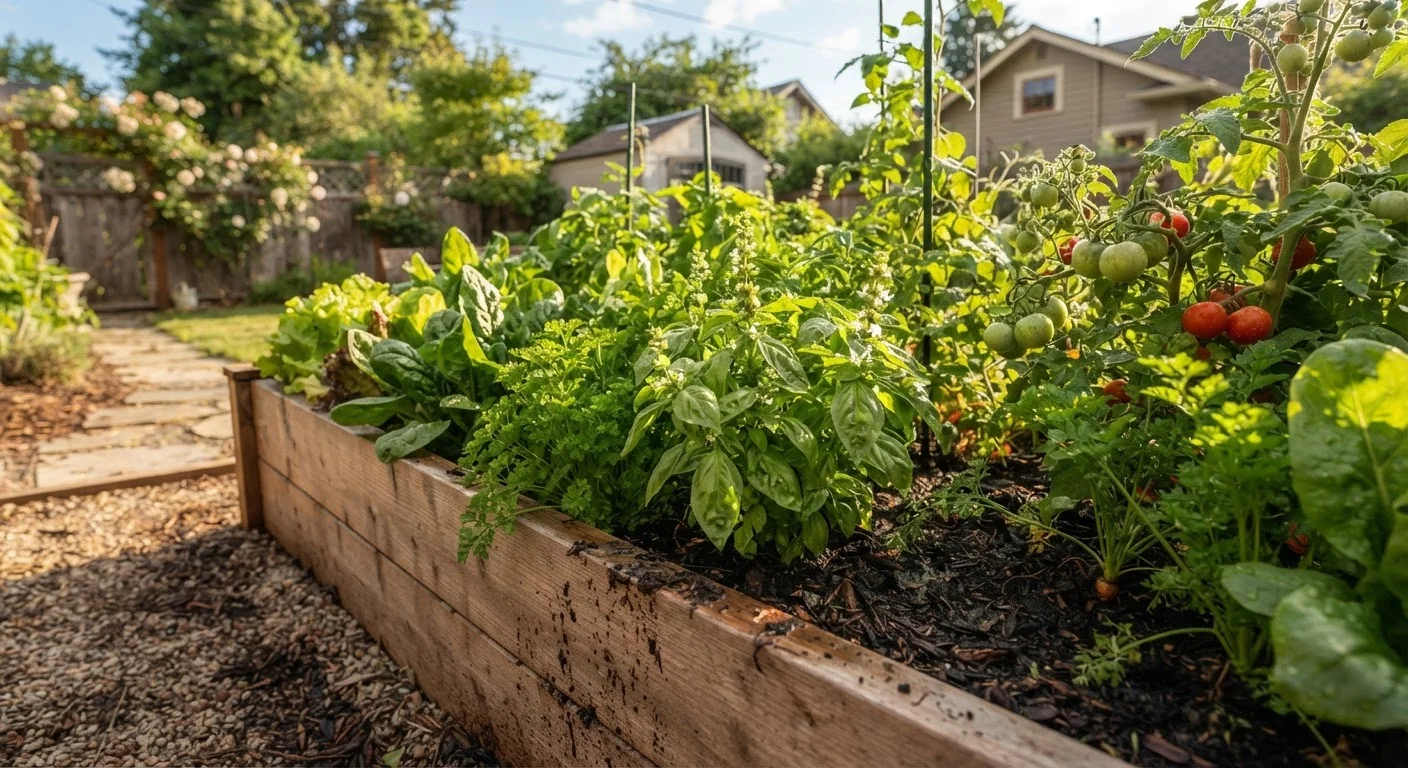
What Raised Garden Beds Actually Are
A raised garden bed is a contained growing structure - typically framed in wood, galvanized metal, or composite material - filled with a soil mix you choose and control. Unlike in-ground planting, the growing medium sits above the existing ground level, usually between 6 and 24 inches high. That height difference is the source of nearly every advantage and disadvantage the format carries.
Raised beds aren't a single product or system. They range from simple untreated lumber frames assembled in an afternoon to permanent masonry structures. For a fuller comparison of how they stack up against traditional plots, see our raised beds vs. in-ground planting comparison.
The Genuine Advantages
Understanding what raised beds do well helps you judge whether those benefits solve your specific problems.
Complete control over soil quality and composition
You select and mix the growing medium from scratch, bypassing compacted, nutrient-poor, or contaminated native soil entirely. This is especially valuable in areas where testing reveals heavy metals or excessive clay content.
Improved drainage reduces waterlogging risk
Raised beds drain freely through their base, preventing the root rot and oxygen deprivation that poorly draining ground soil can cause. This makes them more forgiving in regions with heavy rainfall.
Soil warms faster, extending the growing season
Elevated soil absorbs heat more quickly in early spring, allowing earlier planting of cool-season crops. In some climates, this can add several usable growing weeks at each end of the season.
Reduced physical strain from elevated working height
A bed built 18-24 inches high significantly reduces the need to kneel or crouch during planting, weeding, and harvesting. This is a meaningful advantage for gardeners managing back or joint issues.
Naturally defined footprint suppresses perimeter weeds
The solid frame creates a clear boundary that, when combined with landscape fabric or a thick base layer, limits weed encroachment from surrounding lawn or ground. Weeds that do appear are typically confined and easier to manage.
Easier to create accessible, organized growing spaces
The structured format lends itself to intensive planting methods, clear row organization, and crop rotation planning. Beds can also be sized to maximize reach without stepping on soil, preserving its structure.
Soil quality is the cornerstone advantage. You fill the bed with a mix you select - typically a blend of topsoil, compost, and other amendments - rather than inheriting whatever compacted clay or rocky ground your yard contains. This matters most in urban and suburban settings where native soil is often poor or contaminated.
The warmth factor is also worth noting: raised soil warms faster in spring than ground-level earth, which can extend your effective growing season in cooler climates by several weeks. Pair that with good drainage (raised beds rarely suffer from waterlogging), and you get conditions that many vegetables and herbs respond to well.
The Real Disadvantages
The drawbacks of raised beds are practical and recurring - not just one-time friction.
Higher upfront material and soil costs
Framing lumber, fasteners, and enough quality soil mix to fill a standard bed can cost considerably more than simply amending in-ground soil. Costs scale quickly when building multiple beds or larger structures.
Frequent watering required - beds dry out fast
The same drainage that prevents waterlogging also means raised beds lose moisture faster than in-ground plots. In warm or dry conditions, this can mean daily watering, increasing both water use and time commitment.
Frame materials require eventual replacement
Untreated wood typically lasts 3-7 years before rot becomes a structural problem. Even durable alternatives like cedar or composite materials have finite lifespans and represent a recurring long-term cost.
Material choices can affect food safety
Certain treated lumber and low-grade galvanized metals can leach chemicals into growing soil over time. Selecting food-safe, untreated, or specifically rated materials is essential but adds decision complexity.
Soil nutrition depletes faster in a closed system
Unlike in-ground plots, raised beds don't benefit from subsoil nutrient exchange. Organic matter breaks down and depletes faster, making annual compost additions a necessary maintenance task rather than an optional one.
Watering demand is the operational challenge most growers underestimate. Because raised beds have better drainage and more exposed surface area, they dry out considerably faster than in-ground soil. In summer heat, daily watering may be necessary. A drip irrigation system is often the most water-efficient way to manage this, but it adds to the overall setup cost.
Startup expense is the other major friction point. Framing materials, hardware, and enough soil to fill even a modest 4×8-foot bed to a depth of 12 inches adds up quickly. For a realistic picture of what garden projects cost in total, including soil, tools, and labor, the real costs of a garden makeover is worth reviewing before committing.
Material Safety for Food Gardens
If you're growing edible plants, the material used to construct your bed frame matters. Railroad ties and older pressure-treated lumber preserved with chromated copper arsenate (CCA) are generally not recommended for vegetable gardens due to potential chemical leaching. Current pressure-treated lumber uses different preservatives; check product labeling and consult your local extension service for up-to-date guidance on which materials are considered appropriate for food production in your region.
Maintenance Over Time
Raised beds require ongoing attention beyond the initial build. Soil in a contained bed compacts and depletes nutrients faster than a large in-ground plot, so annual top-dressing with compost is not optional - it's essential for continued productivity. Adding a consistent layer of mulch on top of bed soil can slow moisture loss and reduce the frequency of watering required.
Frame materials also have finite lifespans. Untreated wood may last 3-7 years depending on climate and moisture exposure before it begins to rot. Galvanized metal and composite materials last longer but cost more upfront. Factoring in replacement costs is part of an honest long-term budget assessment.
6-24 in
Typical raised bed depth range
Most cooperative extension programs recommend a minimum of 6 inches for shallow-rooted crops and 12-18 inches for deeper-rooting vegetables like tomatoes and carrots.
3-7 years
Lifespan of untreated wood frames
Durability varies by wood species, climate, and moisture exposure; rot-resistant species like cedar tend toward the longer end of this range.
When a Raised Bed Makes Sense - and When It Doesn't
A raised bed is well-suited to gardeners who are working with genuinely problematic soil, have physical limitations that make bending difficult, or want a defined, contained plot that stays weed-resistant. It's a practical solution for small yards with clearly delineated growing areas.
It's a less obvious choice if you have naturally good soil, a large growing footprint that would require significant fill costs, or a setup where consistent daily watering isn't feasible. In those cases, in-ground planting or even container gardening may serve you better with less investment. The decision should follow your conditions, not convention.