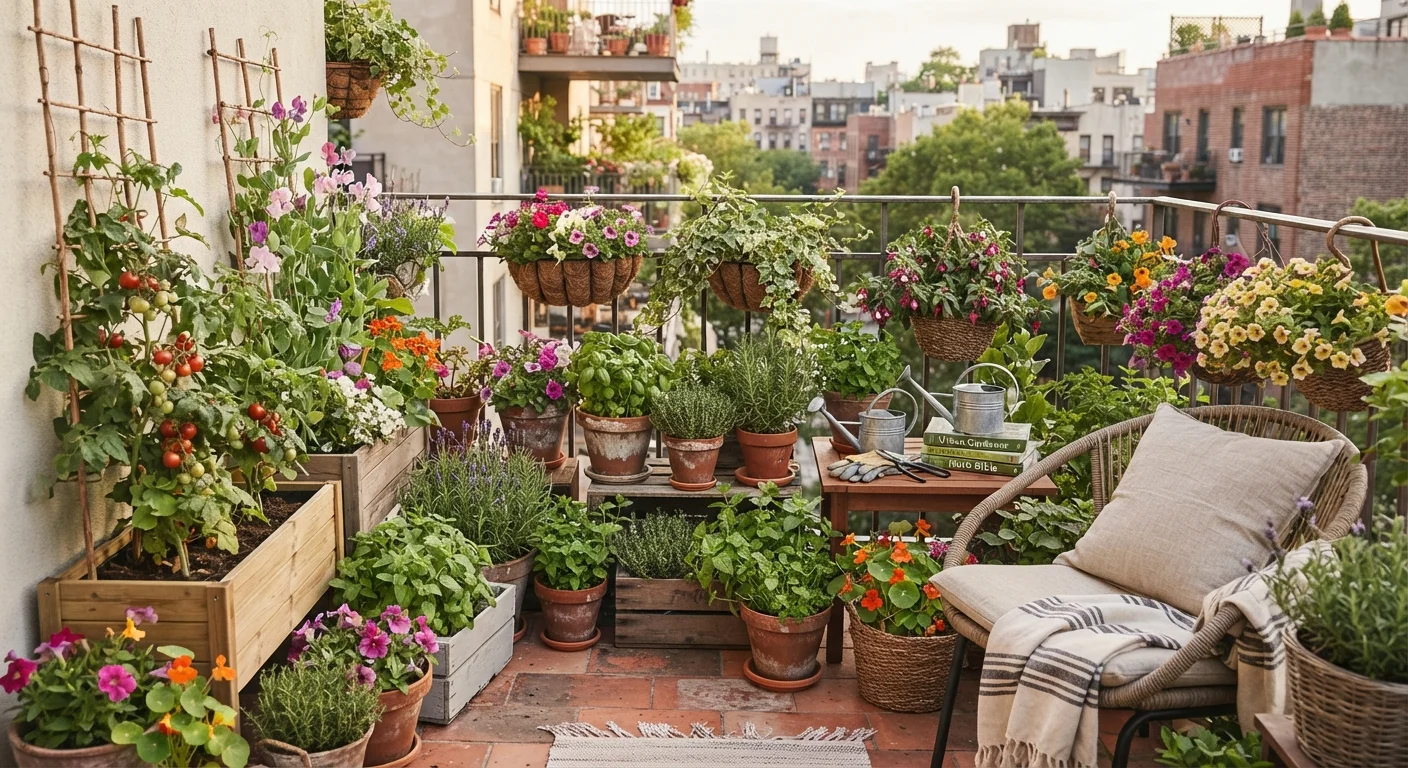
Why Container Gardening Works for Small Spaces
A balcony or small patio is not a limitation - it is a defined canvas. Container gardening lets you grow food, herbs, and ornamentals in spaces that lack any in-ground soil, and it gives you direct control over soil quality, drainage, and plant placement that in-ground growing does not always allow.
Unlike a traditional garden bed, containers are portable. You can move plants to follow sun patterns as seasons shift, protect tender plants by bringing them indoors before frost, and reorganize your layout without any permanent commitment. For renters especially, this flexibility is significant.
If you are also curious about growing food at a larger scale, the beginner's vegetable garden guide covers in-ground approaches worth comparing. And if you want to understand how containers stack up against raised beds specifically, the raised bed pros and cons article offers an honest assessment of each method's trade-offs.
Choosing the Right Containers
Container choice affects root health, moisture retention, weight load on your balcony, and the visual character of your space. The most important factor is drainage: every container you use must have at least one drainage hole at the base. Without it, roots will sit in water and rot within days.
Material matters too. Terracotta is breathable and attractive but heavy and prone to cracking in freezing temperatures. Lightweight resin or fabric grow bags are practical for balconies where weight limits apply - check your building's load specifications if you plan to use many large pots. Glazed ceramic holds moisture longer, which can reduce watering frequency in hot weather but increases rot risk if drainage is poor.
When in doubt, size up your container. A pot that seems oversized at planting will feel exactly right by midsummer when roots are fully established and competing for moisture.
Root-bound plants stop producing and become highly stressed in heat, and the problem is largely irreversible mid-season without significant transplant shock.
Self-watering containers with built-in reservoirs are worth the extra upfront cost for anyone who travels or tends to forget daily watering - they can extend moisture availability by several days.
Consistent soil moisture, rather than the boom-and-bust cycle of irregular watering, is one of the strongest predictors of healthy container plant yield and longevity.
Size your containers generously. Tomatoes, peppers, and zucchini need pots at least 12 inches deep and wide. Herbs like basil, parsley, and chives can thrive in 6- to 8-inch pots. Undersizing a container forces roots into competition and stresses plants faster than almost any other mistake.
Soil, Compost, and Drainage Essentials
Never fill containers with soil dug from the ground. Garden soil compacts under repeated watering, restricts root development, and often carries weed seeds or pathogens. A quality potting mix is formulated to stay loose, drain freely, and support container root structures.
Enriching potting mix with finished compost - roughly one part compost to four parts mix - adds slow-release nutrients and beneficial microbial activity. If you produce your own compost, the home composting guide explains how to produce a reliable, finished product from kitchen and yard waste.
Layer Your Drainage Before Filling
Place a small layer of coarse gravel or a piece of window screen mesh over each drainage hole before adding potting mix. This simple step keeps soil from washing out with every watering while ensuring water can still escape freely. It takes under a minute per pot and significantly extends the life of your potting mix between replenishments.
Place a layer of coarse gravel or broken pot shards over the drainage hole before filling - this prevents the mix from washing out while keeping water flowing freely. Avoid using fine sand, which can actually impede drainage by filling air pockets in the mix.
Selecting Plants for Balconies and Patios
Plant selection should reflect two things: your light conditions and your goals. A south-facing balcony with six or more hours of direct sun can support tomatoes, peppers, eggplant, and most herbs. A shadier north- or east-facing space is better suited to lettuce, spinach, kale, mint, and shade-tolerant ornamentals like impatiens or ferns.
Look specifically for varieties labeled compact, dwarf, or patio-bred. These are developed for restricted root space and produce well in smaller volumes of soil. Bush varieties of beans and cucumbers, for example, outperform their vining relatives in pots. For flowers, the annual vs. perennial plant guide helps you decide whether to plant for a single-season display or invest in perennials that return year after year.
Grouping plants with similar water and light needs in the same pot - a practice called companion planting - makes care easier and can improve growing conditions for each plant involved.
Watering, Feeding, and Ongoing Care
Containers dry out faster than garden beds, especially in summer heat or wind. Check soil moisture daily by pressing a finger an inch into the mix - water when it feels dry at that depth. In peak summer, most containers on a sunny balcony will need watering every one to two days.
Because frequent watering flushes nutrients out of potting mix, regular feeding is essential. A balanced liquid fertilizer applied every two weeks during the growing season replaces what watering removes and sustains plant productivity. Slow-release granular fertilizers incorporated at planting time can supplement this but rarely replace it entirely for heavy-feeding crops.
Deadhead flowering plants regularly to extend bloom time, and pinch back herbs like basil to prevent premature bolting. Remove yellowing or diseased leaves promptly to improve air circulation and reduce the spread of fungal issues.
Maximizing Space with Smart Layouts
Vertical growing is the most effective way to expand your productive area without adding floor space. Wall-mounted planters, tiered shelving, and trellises for climbing plants like beans or small-fruited cucumbers can multiply your growing capacity significantly. Even a single trellis panel leaned against a wall opens a new planting tier.
Think in layers: tall plants in large floor pots, mid-height herbs on shelving, trailing plants like nasturtium or strawberries in hanging baskets. This approach fills the visual volume of your balcony and creates a lush, garden-like atmosphere rather than a row of isolated pots.
The same design logic that makes small indoor spaces feel larger applies outdoors. The small space styling guide covers visual principles - scale, layering, and focal points - that translate directly to balcony garden design. For broader home project context, the Home Improvement hub is a useful starting point for planning any upgrade on a defined budget.
This article provides general gardening information for educational purposes. Results will vary based on your climate, building conditions, and specific plant varieties. Always verify weight load restrictions with your building management before installing multiple large containers on a balcony.