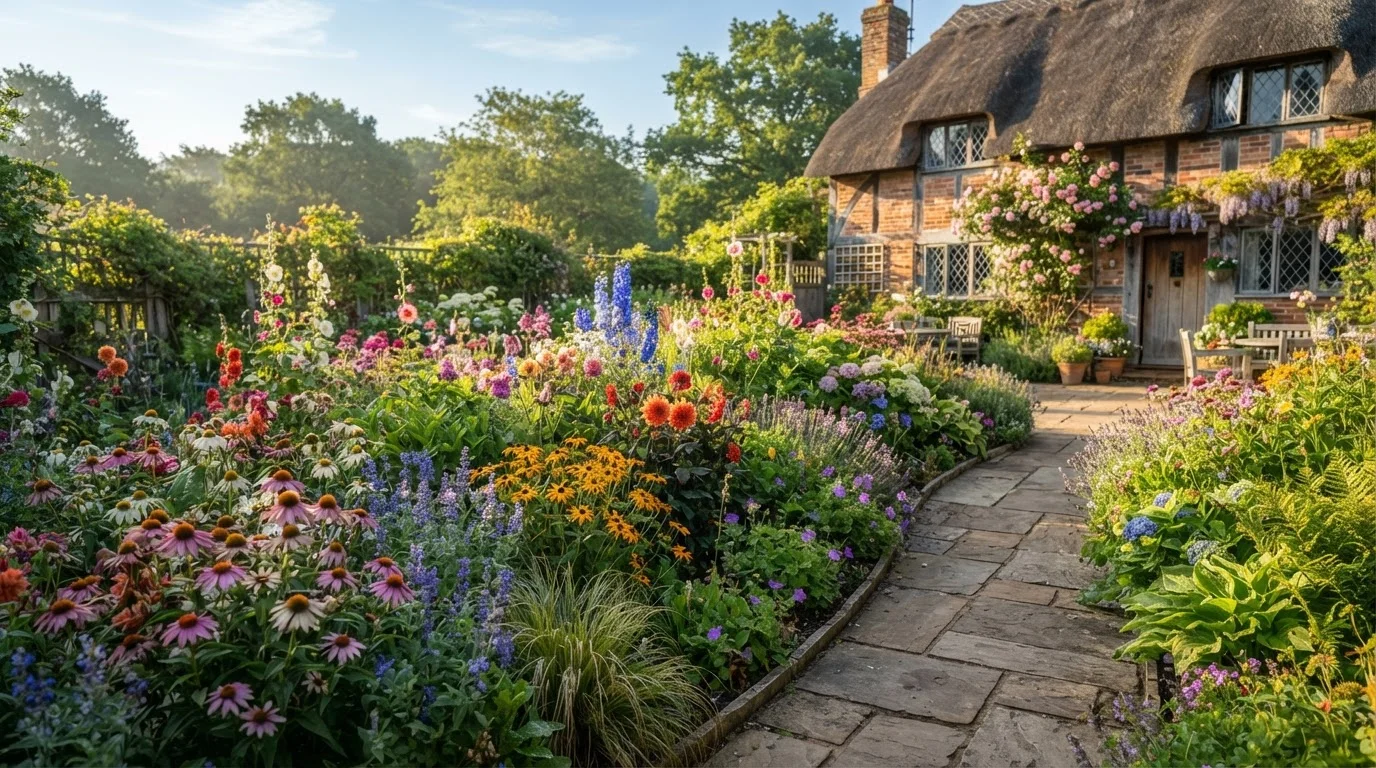
Understanding the Core Difference
The distinction between annuals and perennials comes down to life cycle. Annuals - such as marigolds, zinnias, and petunias - germinate, flower, set seed, and die within a single growing season. Every spring, you start fresh. Perennials - such as coneflowers, black-eyed Susans, and daylilies - die back to the ground in winter but regrow from their root systems each spring, often for many years.
This single biological difference has wide-ranging implications for how you plan, spend, and work in your garden. Neither category is objectively superior; each fills a distinct role depending on your goals, budget, and how much time you want to spend each season.
For gardeners weighing how these plant choices interact with the broader structure of their yard, it's worth considering your overall setup - see our look at raised beds vs. in-ground planting to understand how soil and bed type affects plant performance.
Comparing Annuals and Perennials Side by Side
The table below outlines the key practical differences across criteria that matter most to everyday gardeners.
| Annuals | Perennials | |
|---|---|---|
| Life span | One growing season | Returns for 3+ years |
| Upfront plant cost | Lower per plant | Higher per plant |
| Long-term cost | Higher (replant yearly) | Lower (spread and divide) |
| Bloom duration | Continuous, season-long | Weeks to months, varies by species |
| Establishment time | Immediate color | 2-3 seasons to mature |
| Maintenance level | High (replanting required) | Lower once established |
| Design flexibility | Very high - change yearly | Lower - fixed placement |
| Pollinator value | Moderate | High, especially natives |
Cost is one of the most misunderstood trade-offs. Annuals are cheaper per plant at purchase, but the cumulative cost of replanting every year typically exceeds the upfront investment in perennials within two to three seasons. Perennials also spread and can be divided over time, effectively multiplying your plant count for free.
When Annuals Are the Right Choice
Annuals shine in situations where flexibility and consistency matter most. If you want a specific color palette - or if you simply enjoy refreshing your garden's look each year - annuals give you a blank slate every spring. They bloom prolifically from planting through frost, making them the workhorses of window boxes, porch planters, and front-border displays.
They're also a practical option for gardeners who rent their homes, are new to gardening and still learning what works in their soil and light conditions, or who want to experiment before making longer-term planting commitments. Annuals are well-suited to container gardening on balconies and small patios, where replanting seasonally is already part of the routine.
Stretch Your Annual Budget With Seeds
Starting annuals from seed rather than purchasing transplants can dramatically reduce seasonal planting costs. Many popular annuals - including zinnias, cosmos, and sunflowers - germinate reliably from direct-sown seed and require little equipment. Starting indoors six to eight weeks before your last frost date extends your options even further.
When Perennials Make More Sense
If your goal is a lower-maintenance garden that rewards patience, perennials are the foundation to build on. After an establishment period - generally two full growing seasons - most perennials require significantly less attention than annuals. Many are drought-tolerant once established, and they naturally improve soil structure as their roots deepen year after year.
Perennials also support local ecosystems more consistently. Native perennial species, in particular, provide reliable habitat and food sources for pollinators across multiple seasons. From a budget perspective, a perennial border can deliver years of color and structure without annual replanting costs.
Soil health plays a big role in how quickly perennials establish. Applying mulch around new perennial plantings helps retain moisture and suppress weeds during those critical first seasons - our guide on mulching your garden covers the practical how-to. For gardeners interested in reducing ongoing yard work without sacrificing appearance, low-maintenance landscaping strategies often center heavily on perennial and native plantings.
Building a Garden That Uses Both Effectively
The most productive approach for most home gardeners is a layered planting strategy: use perennials to establish structure, and fill gaps with annuals to maintain color continuity while the perennials mature. A common guideline is to aim for roughly 60-70% perennials and 30-40% annuals once a garden is established, though this ratio should shift based on your specific goals.
Early in a garden's life - particularly in year one or two - annuals do useful work filling empty space that perennials haven't yet grown to cover. As perennials spread and fill in, the need for annuals typically decreases. Some gardeners phase annuals out almost entirely over time; others maintain dedicated annual beds for cut flowers or seasonal accents.
Tracking what works in your specific conditions - sun exposure, soil type, local climate - is more valuable than following any rigid formula. Start with a few reliable perennial anchors, fill in with easy annuals, and adjust each season based on what you observe.