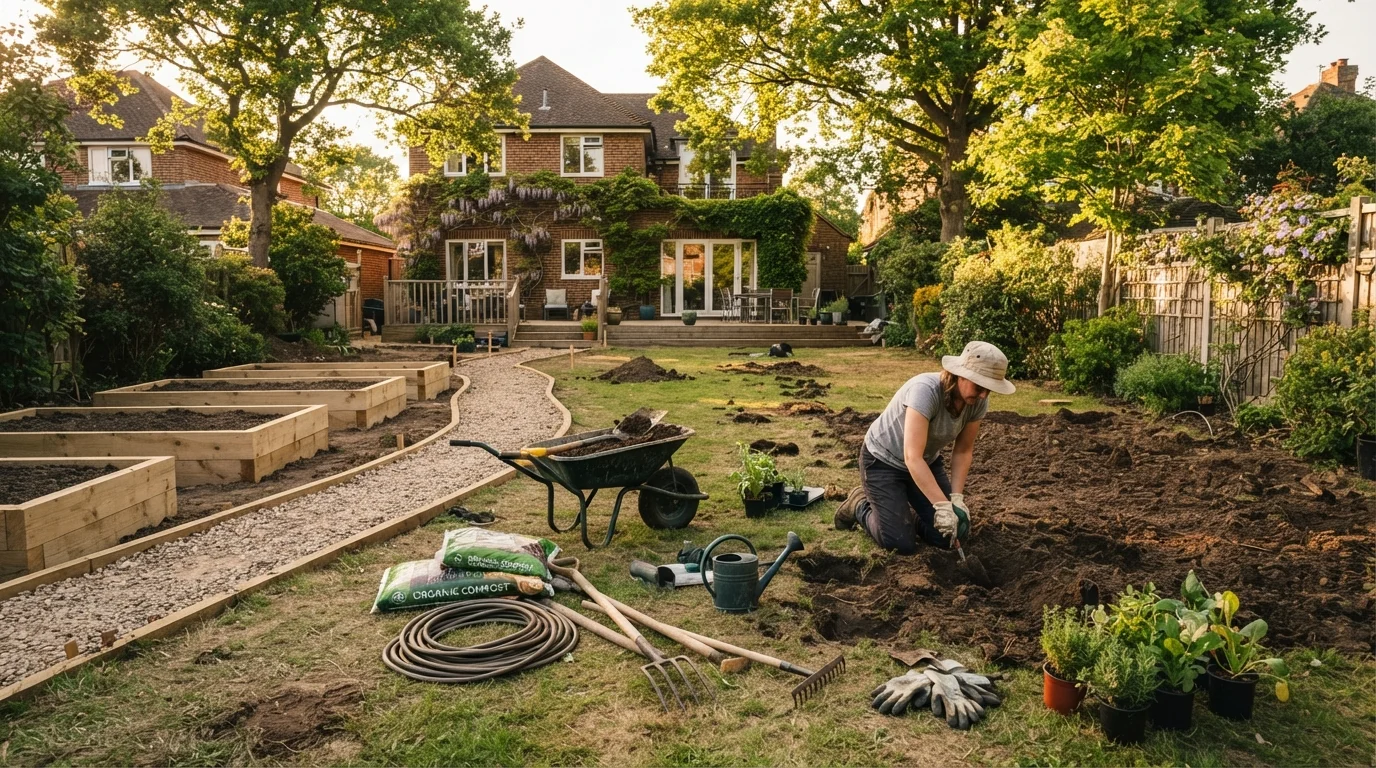
Why Garden Makeover Costs Run Higher Than Expected
A garden renovation rarely costs what it looks like at first glance. What starts as a plan to lay some sod and add a few plants quickly expands once you factor in soil preparation, grading, irrigation, and the occasional discovery of compacted clay or buried debris. Understanding the full cost picture before you break ground is the single most effective way to keep a project on track.
This reference breaks down the main cost categories for a garden makeover in the US, with general ranges to help you build a realistic working budget. Costs vary significantly by region, yard size, existing site conditions, and whether you hire professionals or DIY portions of the work. Treat all figures here as planning benchmarks, not guarantees.
For a broader look at how renovation budgeting principles apply across the home, see practical renovation budget strategies - much of that advice translates directly to outdoor projects.
The Main Cost Categories to Budget For
Site Preparation
Clearing existing vegetation, removing old hardscape, regrading for drainage, and hauling away debris typically represent the largest single cost in a makeover - often ranging from $500 to $3,000+ depending on yard size and complexity. Renting a dumpster, hiring a hauling service, or renting a rototiller all add separate line items. Do not underestimate this phase.
Soil and Amendments
Healthy soil is the foundation of any garden. Topsoil is commonly sold by the cubic yard; amendment materials such as compost, peat, or grit add further cost. A small to medium residential yard might need 5-15 cubic yards of material. Budget roughly $30-$60 per cubic yard for basic topsoil, more for blended mixes. If you are weighing raised beds versus in-ground planting - which affects soil costs substantially - see raised beds vs. in-ground planting for a full trade-off comparison.
Plants, Seed, and Lawn
Plant costs range enormously. Seed for a new lawn averages $0.10-$0.30 per square foot; sod runs $0.50-$2.00 per square foot installed. Shrubs, perennials, and trees each carry their own price points - a single specimen tree can cost $150-$500 or more. Budget conservatively and phase plantings across seasons if needed.
Hardscape and Structures
Patios, pathways, retaining walls, fencing, and raised beds are often the most visible and most expensive elements. Materials range from affordable gravel (around $1-$3 per square foot) to natural stone or pavers ($10-$30+ per square foot installed). Raised bed construction materials add another layer - raised bed costs and trade-offs are explored in detail in our companion article.
Irrigation and Water Features
A basic drip or sprinkler system for a mid-size yard typically runs $1,500-$3,500 installed professionally. DIY irrigation kits are available for a few hundred dollars but require careful planning. Water features - ponds, fountains - add $500-$5,000+ depending on complexity.
Labour
Professional landscaping labour averages $50-$100 per hour in most US markets, though rates vary widely. For large projects, contractors typically bid as a lump sum. Getting three quotes and checking references before hiring is standard practice.
Permits and Inspections
Structural work - retaining walls over a certain height, significant grading, fencing near property lines, or work near utilities - may require local permits. Permit fees vary by municipality but commonly run $50-$500. Always verify requirements with your local planning or building department before starting work that alters drainage or structures.
Grading
The process of reshaping and levelling the ground to direct water flow away from structures and toward drainage points. Poor grading is a leading cause of foundation and garden drainage problems.
Hardscape
Non-living elements of a garden design - patios, walkways, retaining walls, and edging. Hardscape is typically the costliest component of a garden makeover and requires the most precise installation.
Soil Amendment
Any material - compost, grit, peat, sand - mixed into existing soil to improve its structure, drainage, or nutrient content. Amendments are often necessary when native soil is compacted or nutrient-poor.
Contingency Budget
A reserved portion of your total project budget - typically 10-15% - set aside to cover unforeseen costs such as site complications, material price increases, or scope changes.
Cubic Yard
The standard unit for measuring bulk landscape materials such as topsoil, mulch, and gravel. One cubic yard equals 27 cubic feet, roughly enough to cover a 10×10 foot area 3 inches deep.
Drip Irrigation
A low-flow watering system that delivers water directly to plant root zones through small emitters. Drip systems reduce water waste and are often more efficient than overhead sprinklers for garden beds.
Building a Realistic Budget and Phasing Your Project
Once you have identified all cost categories, add a contingency buffer of at least 10-15% for unexpected site conditions, price changes, or scope adjustments. This is not optional padding - it is the most reliable way to avoid a stalled project mid-renovation.
Phasing is a practical tool for larger yards or tighter budgets. Prioritise soil preparation and drainage first, since errors at that stage affect everything else. Plantings and decorative elements can follow in subsequent seasons without any loss of quality. The same approach applies to indoor renovations - our room redecorating planning checklist demonstrates how methodical sequencing prevents costly missteps.
If you are renovating before a home sale, be realistic about returns. Outdoor improvements generally offer moderate resale value, but not every project recoups its cost. Which renovation projects add value before a sale offers a grounded look at where spending tends to pay off and where it does not.
10-15%
Recommended contingency budget for garden projects
Standard practice among renovation planners and landscaping professionals to account for unexpected site conditions.
$50-$100/hr
Average professional landscaping labour rate in the US
Rates vary significantly by region, project complexity, and contractor experience level.
$0.50-$2.00
Per-square-foot cost for sod (installed)
General US market range; seed is considerably cheaper but takes longer to establish.
For a useful parallel in indoor renovation cost planning, the real costs behind a kitchen renovation article covers labour, materials, and hidden expenses with the same methodical approach.