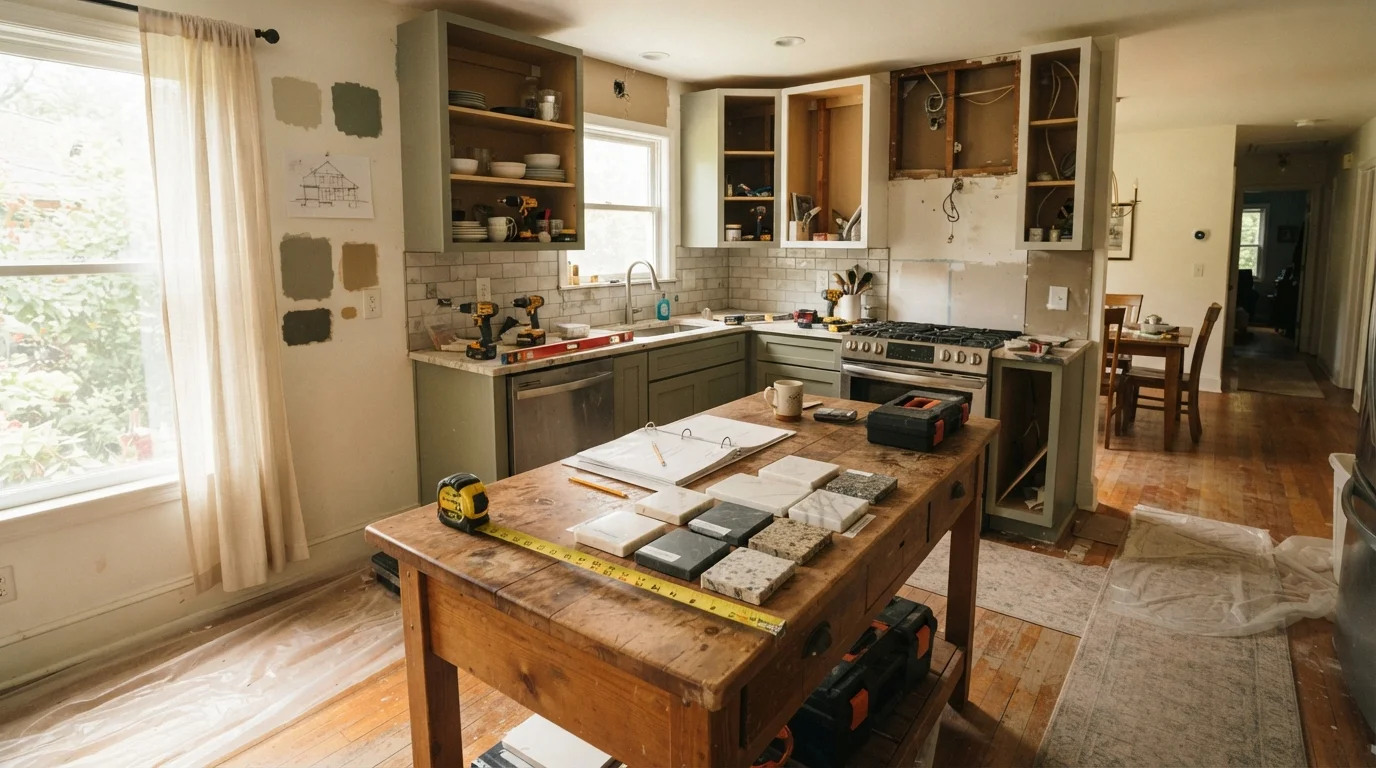
Why Kitchen Costs Are So Variable
Few home projects carry as much financial variability as a kitchen renovation. A simple refresh - new paint, updated hardware, a replaced faucet - might cost under $2,000. A full gut renovation with custom cabinetry, new appliances, and relocated plumbing can run $80,000 or more. Understanding why costs differ so dramatically is the first step toward building an honest budget.
The primary cost drivers are kitchen size, the scope of structural change, finish level (stock vs. custom materials), and local labour rates. Kitchens that require moving walls, relocating plumbing stacks, or upgrading electrical panels cost substantially more than those where the layout stays intact. Labor markets also vary considerably across the US, so a project that costs $40,000 in one region might cost significantly more in a high-cost metro area.
Before contacting a single contractor, it helps to define your project scope clearly. A room planning checklist can help you think through measurements, priorities, and decisions before estimates begin - a step that saves time and reduces scope creep later.
Breaking Down the Major Cost Categories
A realistic kitchen budget should account for five broad categories of expense:
- Cabinets and hardware: Often the largest single line item, cabinets can represent 30-40% of total project cost. Stock cabinets offer the lowest price point; semi-custom and fully custom options increase cost substantially but offer greater flexibility.
- Countertops: Material choice drives cost significantly. Laminate is the most budget-conscious option; quartz, granite, and natural stone sit at higher price points, with installation adding to each.
- Appliances: Standard appliance packages span a wide range. Professional-grade ranges, built-in refrigerators, and integrated dishwashers add considerably to the total.
- Labour: Typically 30-50% of the project budget. This covers general contracting, carpentry, plumbing, electrical, and tile work. Licensed trades are legally required for most mechanical and electrical work.
- Flooring, lighting, and finishes: These are often underestimated. New flooring, recessed lighting, backsplash tile, and plumbing fixtures each add up - and their cost depends heavily on material and square footage.
30-50%
Share of budget typically spent on labour
Industry guidance consistently identifies labour as one of the largest cost components in kitchen renovation projects across the US.
10-20%
Recommended contingency budget reserve
Renovation professionals widely advise homeowners to reserve 10-20% of total project budget for unforeseen costs and change orders.
30-40%
Portion of budget cabinets can represent
Cabinetry is frequently cited as the single largest material expense in a kitchen renovation, according to general contractor and remodeling industry data.
The Hidden Costs That Catch Homeowners Off Guard
Even carefully planned kitchen renovations routinely encounter unexpected expenses. Some of the most common surprises include:
- Permit fees: Required for electrical, plumbing, and structural work in most jurisdictions. Costs vary by municipality but should always be factored in.
- Structural discoveries: Opening walls can reveal outdated wiring, water damage, mold, or inadequate insulation - all of which require remediation before new work proceeds.
- Asbestos and lead testing: Homes built before 1980 may require professional testing and safe removal of hazardous materials, which adds both time and cost.
- Temporary kitchen setup: During a full renovation, you'll need somewhere to prepare food. Costs for a mini-fridge, microwave, and eating out can accumulate over weeks or months.
- Debris disposal: Dumpster rental and haul-away fees are frequently omitted from initial contractor quotes.
Setting aside a contingency fund of 10-20% of your total budget is widely recommended by renovation professionals. This reserve absorbs discoveries and change orders without forcing you to compromise on other decisions mid-project. For additional strategies on managing budget uncertainty, smart renovation budgeting approaches covers phasing, prioritization, and contingency planning in detail.
Get a Detailed Written Scope Before Signing
Before agreeing to any contractor quote, request a written scope of work that itemizes labour, materials, subcontractors, permit costs, and payment schedule separately. Vague contracts are one of the most common sources of unexpected cost increases. Comparing multiple detailed quotes - rather than bottom-line numbers alone - gives you a clearer picture of what's actually included.
How Renovation Scope Affects Long-Term Value
Not every dollar spent on a kitchen renovation returns equal value at resale. Mid-range renovations that modernize a dated kitchen without over-improving for the neighborhood tend to perform reasonably well. However, luxury renovations in modest homes often recover a smaller proportion of their cost when the home sells. Which renovation projects add value at resale is worth reviewing if resale considerations factor into your planning.
For homeowners who plan to stay long-term, livability and functionality matter more than strict ROI. A kitchen that works better for your household has real daily value that financial metrics don't fully capture. The key is aligning your investment with your goals - whether that's equity building, personal enjoyment, or preparing a home for sale - and then budgeting accordingly rather than spending based on what others have done.
This article provides general educational information about renovation costs and is not a substitute for professional estimates, licensed contractor assessments, or advice tailored to your specific property and local building codes.