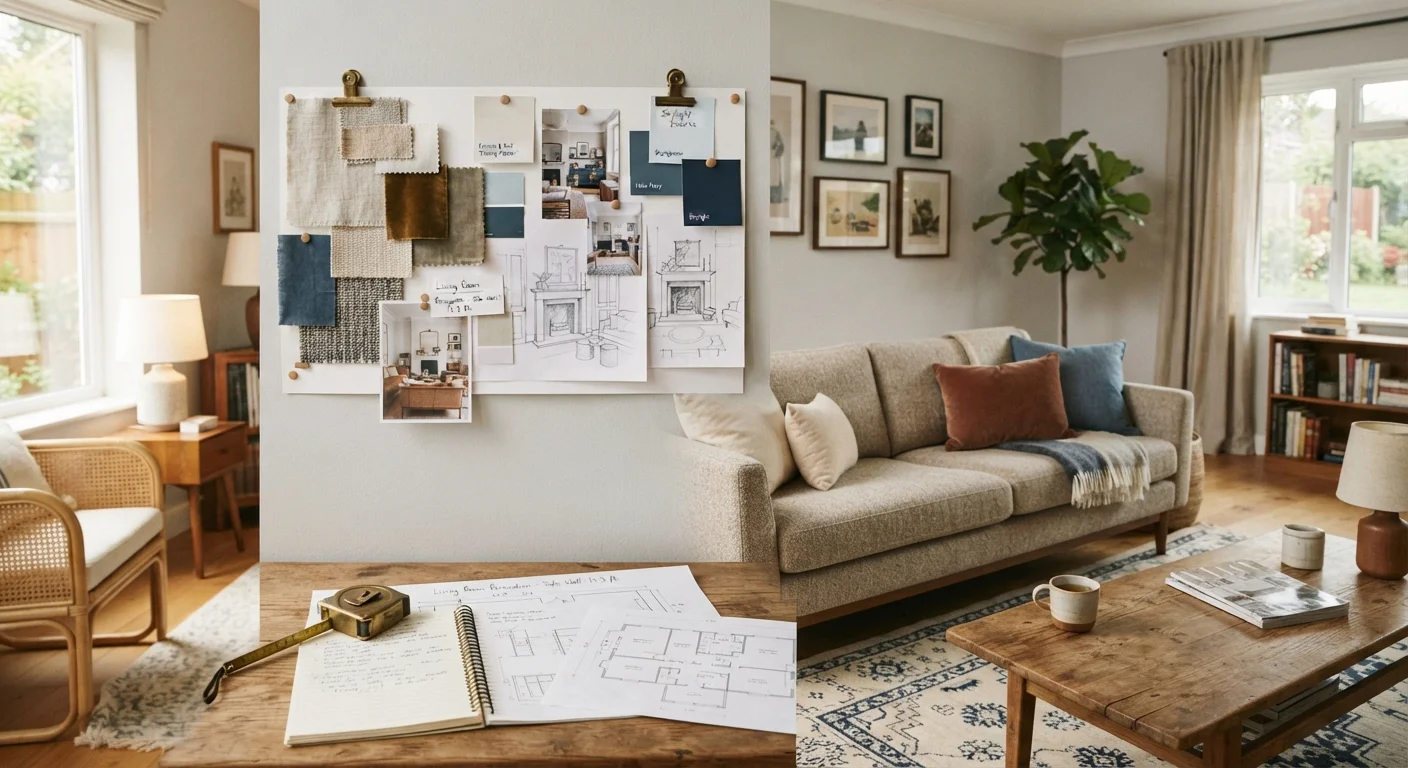
Why a Planning Checklist Changes Everything
Most redecorating regrets share the same root cause: decisions made too quickly, without enough information about the room itself. A sofa that won't fit through the door, a paint colour that looks nothing like the swatch under artificial light, a rug that crowds the space - these are entirely avoidable with a structured planning session before any money changes hands.
This checklist is designed to walk you through the room methodically, covering dimensions, lighting, budget, existing inventory, and style direction. Whether you're refreshing a single bedroom or rethinking an entire living area, working through these steps first gives you a clear picture of what the room actually needs - not just what looks appealing in a catalogue. If you're new to decorating altogether, this room-by-room introduction to home decorating is a helpful starting point before diving in.
Measure and Map the Room
Assess the Lighting
Audit What You Already Have
Define Your Style Direction
Set and Protect Your Budget
Test Before You Commit
Tools You'll Need Before You Begin
This planning process doesn't require expensive equipment, but having the right tools on hand means you won't need to stop and start. Gather everything below before you begin working through the checklist.
Steel measuring tape (25 ft)
Accurately measure room dimensions, doorways, and furniture footprints.
Graph paper or a free room-planning app
Create a scaled floor plan to visualise furniture placement before buying.
Notebook or spreadsheet
Record measurements, budget allocations, and inventory decisions in one place.
Painter's tape
Mark furniture footprints on the floor and border paint swatch areas on walls.
Paint swatches or sample pots
Test colour choices on actual walls under real lighting conditions before committing.
Fabric and material samples
Evaluate how textiles and finishes look in the room alongside existing fixed elements.
Avoiding the Most Common Planning Pitfalls
Even careful planners run into a few predictable trouble spots. The most costly is skipping the lighting assessment - paint colours shift dramatically between daylight and evening artificial light, and a swatch that looks perfect in a paint store may read entirely differently on your north-facing wall. Always test swatches on multiple walls and observe them at different times of day before committing.
Budget drift is the other major pitfall. Redecorating projects almost always surface unexpected needs once you start - a wall that needs patching before it can be painted, a light fixture that needs updating to suit the new scheme. Building a contingency into your budget from the start prevents these discoveries from derailing the whole project. For a deeper look at keeping costs in check, see smart approaches to stretching a renovation budget.
Don't Skip Permits for Structural or Electrical Work
If your redecorating plan involves moving or adding electrical outlets, removing walls, or altering fixed structural elements, these tasks typically require permits and licensed tradespeople under US building codes. Attempting regulated work without the appropriate permits can create safety hazards, complicate home insurance claims, and cause complications when you eventually sell the property. Always verify local requirements with your municipality before proceeding.
It's also worth challenging assumptions you may have about what makes a room work. Some widely held decorating rules - like avoiding dark paint in small rooms - don't hold up as universally as people believe. Decorating myths that are costing you money and space separates persistent misconceptions from evidence-based guidance. And once your refresh is complete, this guide to why a room can still feel off after decorating can help you troubleshoot any lingering dissatisfaction with the result.