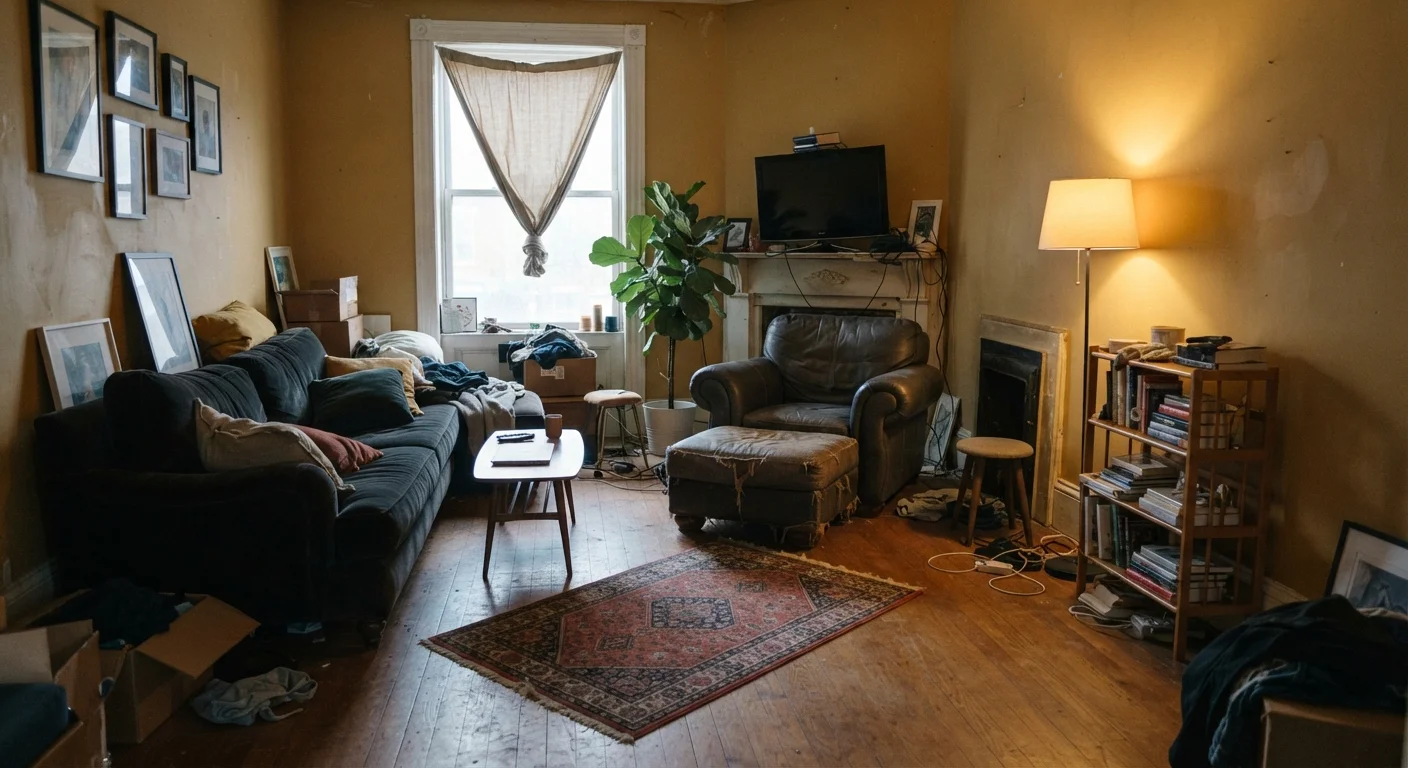
The Gap Between 'Decorated' and 'Done'
You've added furniture, hung artwork, and brought in accessories - yet something still feels wrong. This frustrating experience is more common than most decorators admit, and it rarely comes down to taste or budget. More often, it comes down to a handful of spatial and compositional missteps that are easy to miss when you're shopping piece by piece.
Understanding why a room feels off is the first step toward fixing it without spending more money. If you haven't yet started a room project, our room planning checklist can help you avoid many of these issues before you buy a single item.
Pushing all furniture against the walls.
Why it happens: It feels logical to maximize open floor space, so furniture gets pushed to the perimeter. In practice, this creates a disconnected, waiting-room effect.
Choosing a rug that is too small for the seating area.
Why it happens: Smaller rugs are often less expensive, and it's difficult to visualize scale in a store or online. Many people underestimate the rug size they actually need.
Relying on a single overhead light source.
Why it happens: Most rooms come with a ceiling fixture, so it becomes the default. People underestimate how much overhead-only lighting flattens a room and strips it of warmth.
Decorating without a unifying visual thread.
Why it happens: People often shop item by item as inspiration strikes or sales appear, resulting in a collection of individually appealing pieces that don't communicate with each other.
Overcrowding surfaces and shelves with accessories.
Why it happens: Each individual item seems worth displaying, and editing feels like losing something. Over time, surfaces accumulate objects until they read as clutter rather than curation.
Hanging artwork too high on the wall.
Why it happens: People instinctively hang art at eye level when standing, but this places it too high when you're seated - which is how most time in a living room is spent.
Common Mistakes That Undermine a Living Room
Each of the errors below tends to compound the others. A rug that's too small feels worse when the lighting is flat and the furniture is pushed against the walls - together, they rob a room of cohesion. Work through these systematically rather than grabbing quick fixes.
57-60"
Ideal artwork center height from floor
Gallery curators and interior design professionals commonly center wall art at 57 to 60 inches from the floor to align with average eye level.
3+
Lighting layers recommended per room
Interior designers generally recommend at least three distinct lighting layers - ambient, task, and accent - to create a warm and functional living space.
It's also worth questioning some widely held assumptions about decorating. Many instincts people follow - such as keeping a small room light and furniture-sparse - are actually decorating myths that cost money and space rather than reliable rules.
Pulling the Room Together
Once you've identified the specific issues, the fixes rarely require a full overhaul. Floating your furniture away from the walls, swapping a too-small rug for a correctly sized one, layering in floor and table lamps, and editing down accessory clutter can transform the feel of a room without a major purchase.
The principle of a consistent visual thread - whether that's a repeated color, a material like natural wood, or a recurring geometric shape - is what separates rooms that look assembled from ones that feel designed. You don't need an expensive interior designer to apply it; you just need to make deliberate choices rather than reactive ones.
If your living room challenges are partly about working with limited square footage, many of the same principles apply to other rooms. Our guide on styling a small bedroom covers scale, layout, and visual tricks that translate well to compact living spaces. And if you want to keep the room feeling fresh over time without undoing your work, a seasonal décor refresh using accents and textiles is often all you need.
Don't Redecorate Everything at Once
Making sweeping changes across an entire room simultaneously makes it hard to identify which elements are actually causing problems. Change one major variable at a time - rug size, lighting, furniture arrangement - and assess the result before moving on. This approach also helps you avoid unnecessary spending on items you may not need.