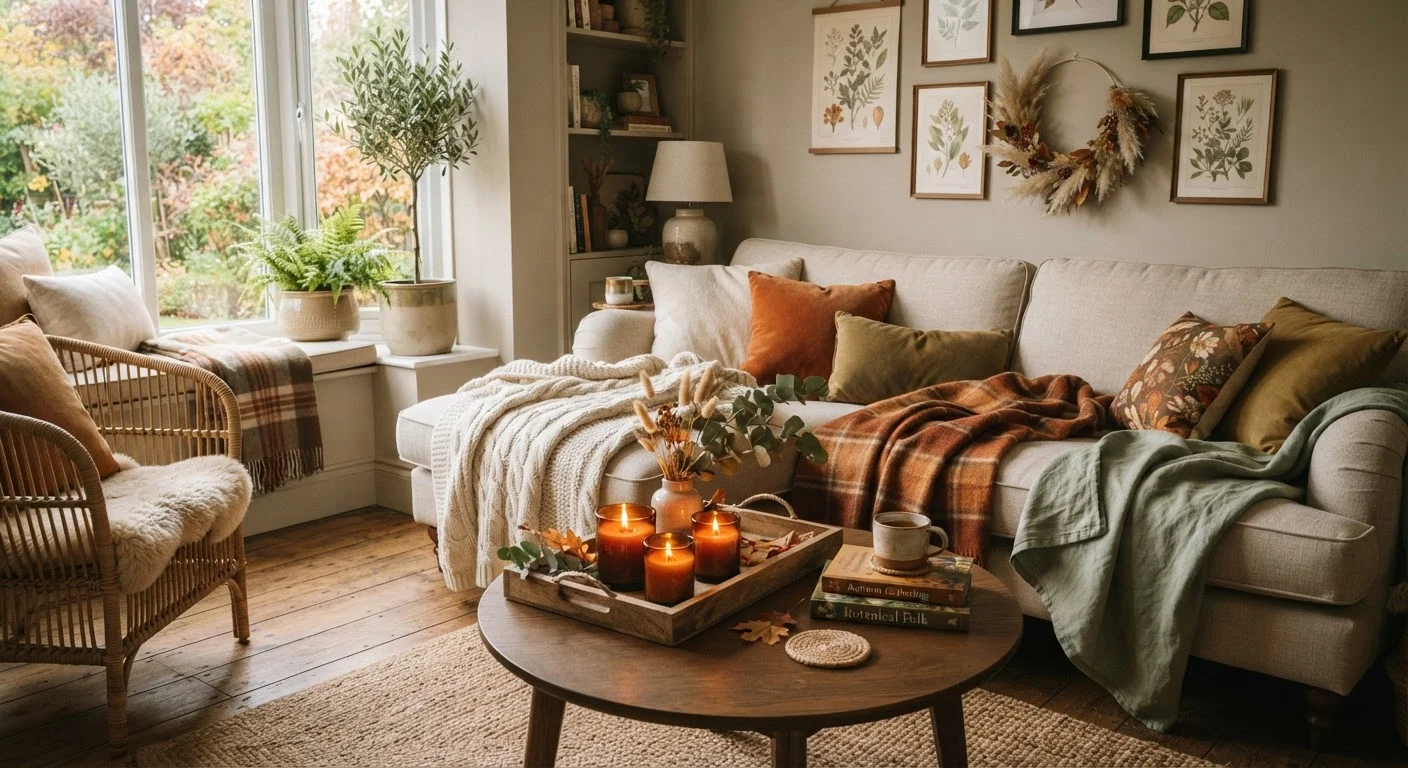
Why You Don't Need a Full Overhaul
The impulse to redecorate every few months is understandable - seasonal shifts genuinely change how a room feels. But wholesale replacement of furnishings is expensive and unnecessary. What actually drives a room's mood isn't the sofa or the dining table; it's the layer of accents, textiles, and light sitting on top of them.
Interior stylists consistently work with a stable foundation - neutral, durable furniture - and rotate the decorative layer around it. This approach is both more cost-effective and more sustainable than cycling through full room setups. If your existing rooms feel permanently stuck, it's worth reading why a room still feels off after decorating before adding anything new - the fix is often about arrangement, not acquisition.
The steps below walk through a systematic, low-cost method for refreshing any room with the changing seasons, using what you already own as the starting point.
What you will need
Step-by-Step: Refreshing Your Space Season by Season
Follow these steps each time the season shifts. Not every step will apply to every room - use judgment about where the effort will have the greatest visual payoff.
Audit what you already have
Before buying anything, pull out every decorative item in storage - throws, vases, candles, small sculptures, picture frames - and group them by color and material. You'll likely find far more variety than you remember. This inventory becomes your seasonal toolkit.
Establish a neutral base in each room
If your furniture and walls are already in neutral tones - off-white, warm gray, tan, or natural wood - seasonal layers will read clearly against them. If your main pieces are heavily patterned or saturated in color, simplify your accent choices to avoid visual conflict. The base should recede; the seasonal layer should pop.
Swap out your textiles first
Replace or add cushion covers, throws, and any table linens. Aim for a coherent palette within the season: warm ochres, rusts, and deep greens for autumn and winter; pale blues, sage, and natural linen for spring and summer. You don't need to swap every piece - changing two or three key items in a room is usually enough.
Adjust your lighting setup
Change bulb color temperature if your fixtures allow it. Add or remove supplementary light sources - bring in a floor lamp for darker months, remove string lights for a cleaner summer look. Group candles or lanterns on trays in autumn and winter to create focal points that feel seasonal without requiring any permanent change.
Introduce natural, seasonal materials
Visit your own yard or a nearby outdoor space before any store. Branches, seed heads, pinecones, citrus fruits, smooth stones, or shells can serve as seasonal focal points in bowls, vases, or trays. Replace these as the season changes - they are inherently temporary and low-cost.
Rotate art and objects between rooms
Move framed prints, sculptures, or decorative objects from one room to another. A print that's become invisible in the hallway may feel fresh and interesting in the bedroom. Rearrange shelf vignettes so that seasonal or thematic pieces are front-facing, and store others until they're relevant again.
Edit before you add
Once your seasonal pieces are in place, remove an equal or greater number of items. A refreshed room should feel intentional, not crowded. Live with the edited version for a day before deciding whether anything additional is actually needed. This step prevents accumulation and keeps future seasonal rotations manageable.
Using Textiles and Lighting as Your Primary Tools
Of all the categories you can shift seasonally, textiles and lighting deliver the most impact per dollar spent. Throws, cushion covers, table runners, and area rugs change the tactile and visual temperature of a room within minutes. In cooler months, layering heavier weaves - wool-blend throws, chunky knits - signals warmth even before a window is closed. In spring and summer, swapping to linen, cotton slub, or open-weave fabrics immediately lightens the mood.
Lighting works on a parallel track. Bulb color temperature matters enormously: warmer tones (around 2700K) feel intimate and autumnal, while cooler daylight bulbs (around 4000K) read as fresh and summery. Beyond bulb choice, the placement and number of light sources - floor lamps pulled in closer, candles grouped on a tray, string lights added to a shelf - changes the way a room reads at dusk. For a deeper look at using light as a decorative element, see how fixture choices shape a room's character.
For a broader framework on layering textiles alongside plants, books, and art, the four layering elements guide is a useful companion read.
Build a small seasonal kit for each transition
Keep a labeled bin for each season containing your go-to textile covers, small objects, and any candles or botanicals you've curated for that time of year. When the season shifts, swap the bins rather than hunting through general storage. This makes the refresh faster and more consistent each year.
Natural Materials and What You Already Own
Seasonal refreshes don't require a shopping trip. A glass vase filled with bare winter branches, a bowl of dried seedpods in autumn, a cluster of stones or shells gathered over summer - these read as intentional décor when grouped with intention. The key is editing rather than accumulating: remove three things and add two, so the room feels considered rather than crowded.
Rotate art between rooms. Move a bold canvas from the bedroom to the living room. Rearrange shelves to bring seasonal books or objects to the front. Consolidate decorative items stored in closets and rediscover pieces that have been invisible for a year. This kind of internal rotation costs nothing and often surfaces combinations you wouldn't have thought to buy. Many decorating myths - including the idea that refreshing a home always means spending money - are worth examining directly; common décor myths that cost you money covers several of the most persistent ones.
This article offers general home decorating guidance for informational purposes. Costs, results, and suitability will vary based on individual circumstances and existing décor.