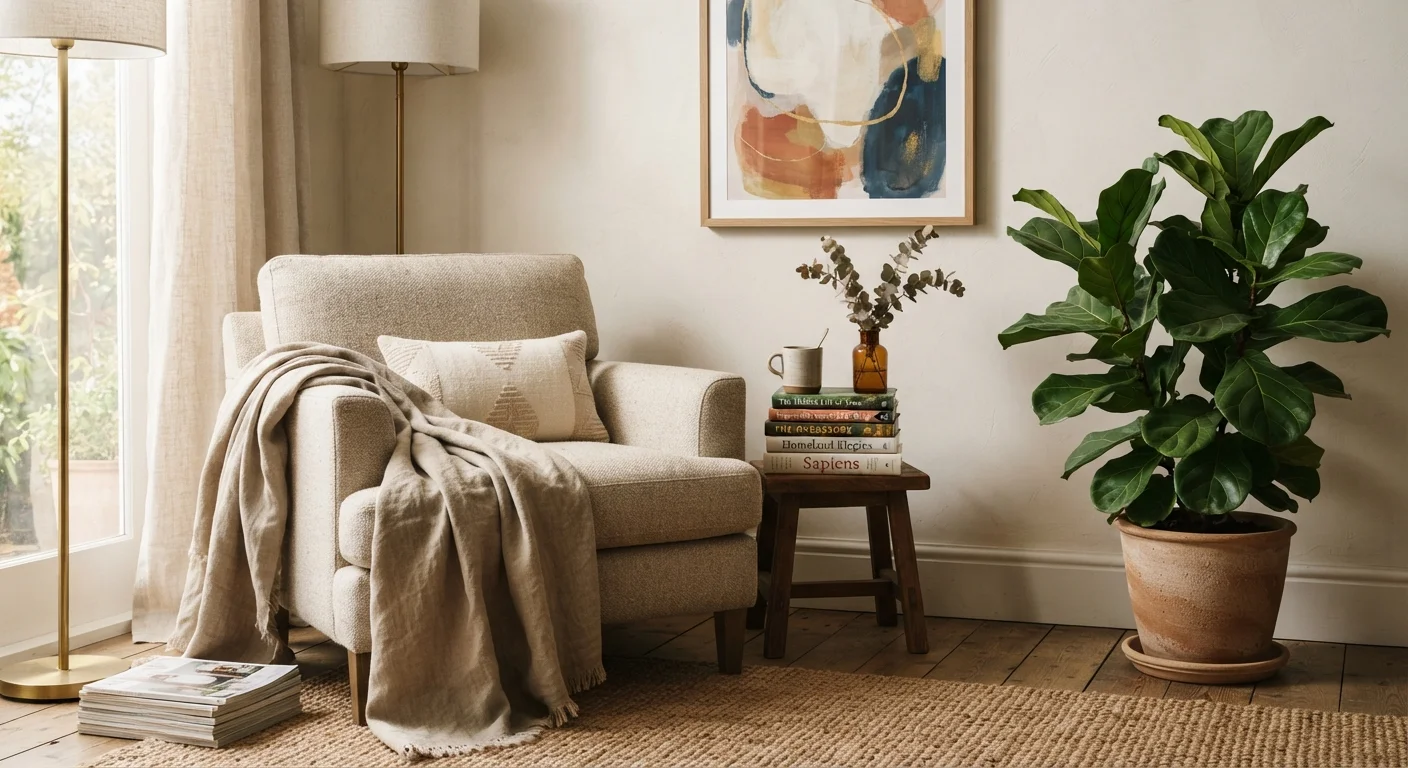
Why Layering Makes a Room Feel Complete
A room furnished with only large pieces - sofa, rug, coffee table - tends to feel finished but flat. Something is missing, even if it is hard to name. What professional interior stylists know is that furniture provides the skeleton of a room, but layering elements give it skin, warmth, and character. The four most accessible and versatile of these elements are textiles, plants, books, and art.
Understanding how each one functions - and how they interact - is the key to making any room feel deliberately styled rather than simply furnished. If you are new to thinking about rooms this way, our guide to core interior design concepts covers foundational principles that pair well with what follows here.
The best part: none of these four elements requires a large budget. They are highly scalable, deeply personal, and - unlike a sofa - easy to rearrange, replace, or refresh. Below, each element gets its own close look.
Textiles: Adding Warmth and Tactile Depth
Textiles are often the first layering element people reach for - and with good reason. A throw blanket, a set of cushions, or a woven table runner instantly communicates comfort and personality. More practically, textiles introduce texture, which is one of the most effective tools for making a room feel visually rich without adding visual clutter.
When layering textiles, vary the weave and weight rather than just the color. Pair a chunky knit cushion against a smooth velvet pillow, or drape a loose-weave throw over a tightly upholstered sofa arm. Mixing at least two or three different fabric types in a single space prevents the arrangement from feeling monotonous. Stick to a cohesive color palette - two to three tones - across your textile choices so the variety in texture reads as intentional rather than mismatched.
Varying weave and weight - not just color - is what makes textile layering feel genuinely intentional.
Plants: Bringing Life and Scale to a Room
Plants do something no other layering element can: they grow and change. That quality alone makes them uniquely animating in a static interior. Beyond their visual appeal, plants introduce an organic, irregular silhouette that contrasts effectively with the straight lines most furniture creates.
Scale matters here as much as species. A single large-leafed floor plant can anchor a corner the way a piece of sculpture would, while a cluster of small potted plants on a shelf creates layered interest at a smaller scale. If natural light in your space is limited, many low-light tolerant varieties - such as pothos, snake plants, and ZZ plants - adapt well without needing direct sun. Even a high-quality faux plant placed thoughtfully can contribute the organic silhouette effect, though living plants also contribute to air quality and humidity in minor but meaningful ways.
A large-leafed floor plant can anchor a corner as effectively as a piece of sculpture.
Books: Creating Intellectual Character and Visual Structure
Books are among the most underestimated decorative tools in a home. Beyond their content, books carry aesthetic weight: spines bring color, typography, and a sense of accumulation that signals a lived-in, thoughtful space. Arranged on shelves, stacked on coffee tables, or propped on a nightstand, books contribute both visual structure and personal narrative.
Styling with books does not mean showing off a collection - it means editing thoughtfully. A curated stack of three to five volumes on a side table, with a small object placed on top, creates an instant vignette. On shelves, alternating between vertical rows and horizontal stacks prevents the arrangement from feeling rigid. Grouping books by color family rather than strictly by subject is a common styling approach that adds visual coherence. Books also work as risers, elevating candles, small plants, or objects to vary the height of a display grouping.
Books styled in stacks and varied arrangements signal a lived-in, thoughtfully curated space.
Art: Providing Visual Focus and Emotional Tone
Art - broadly defined to include framed prints, photography, ceramics, woven wall hangings, and mirrors - is the element most responsible for establishing the emotional tone of a room. It draws the eye, anchors a wall, and communicates something about the aesthetic values of the people who live there.
When hanging art, the most common mistake is placing it too high. A general guideline widely used by designers is to center artwork at approximately eye level, which for most adults falls somewhere between 57 and 60 inches from the floor. Gallery walls work well for renters and those who want flexibility, but even a single large-format piece - whether a framed poster or an original work - can transform a plain wall into a focal point. Art does not have to be expensive: signed prints, vintage finds, or works by emerging local artists can carry as much visual weight as high-end originals.
Centering art at eye level - not too high - is the single most common fix in any styled room.
Putting All Four Elements to Work Together
The power of these elements compounds when you use them in combination. A plant placed next to a framed print creates a visual conversation between organic and composed. A stack of books beside a folded throw softens what might otherwise read as a purely decorative arrangement. When selecting pieces across all four categories, look for a shared thread - a repeated hue, a consistent material tone, or a complementary mood - rather than trying to match everything exactly.
Start with One Element, Then Build
If layering all four elements at once feels overwhelming, begin with the one that feels most natural to you - perhaps a plant or a throw - and add the others gradually. This approach lets you see how each element changes the room before committing to a full arrangement. It also makes it easier to course-correct if something is not working without starting over entirely.
Groupings of three or five items tend to feel more natural than even-numbered arrangements, a principle that applies just as well when mixing elements from different categories. A single plant, two books, and a small framed print on a shelf form a cohesive vignette without requiring any design training to pull off.
These four elements are also ideal for seasonal updates. Swapping a heavy knit throw for a lightweight linen one, rotating in fresh plants, or trading out a framed print costs far less than new furniture. See how that works in practice with our seasonal décor refresh guide. And if you are working with limited square footage, styling a small bedroom shows how these same layering principles scale down beautifully. Finally, consider how lighting as décor can amplify all four elements - the right lamp makes a plant glow, casts interesting shadow behind art, and makes textiles look richer.