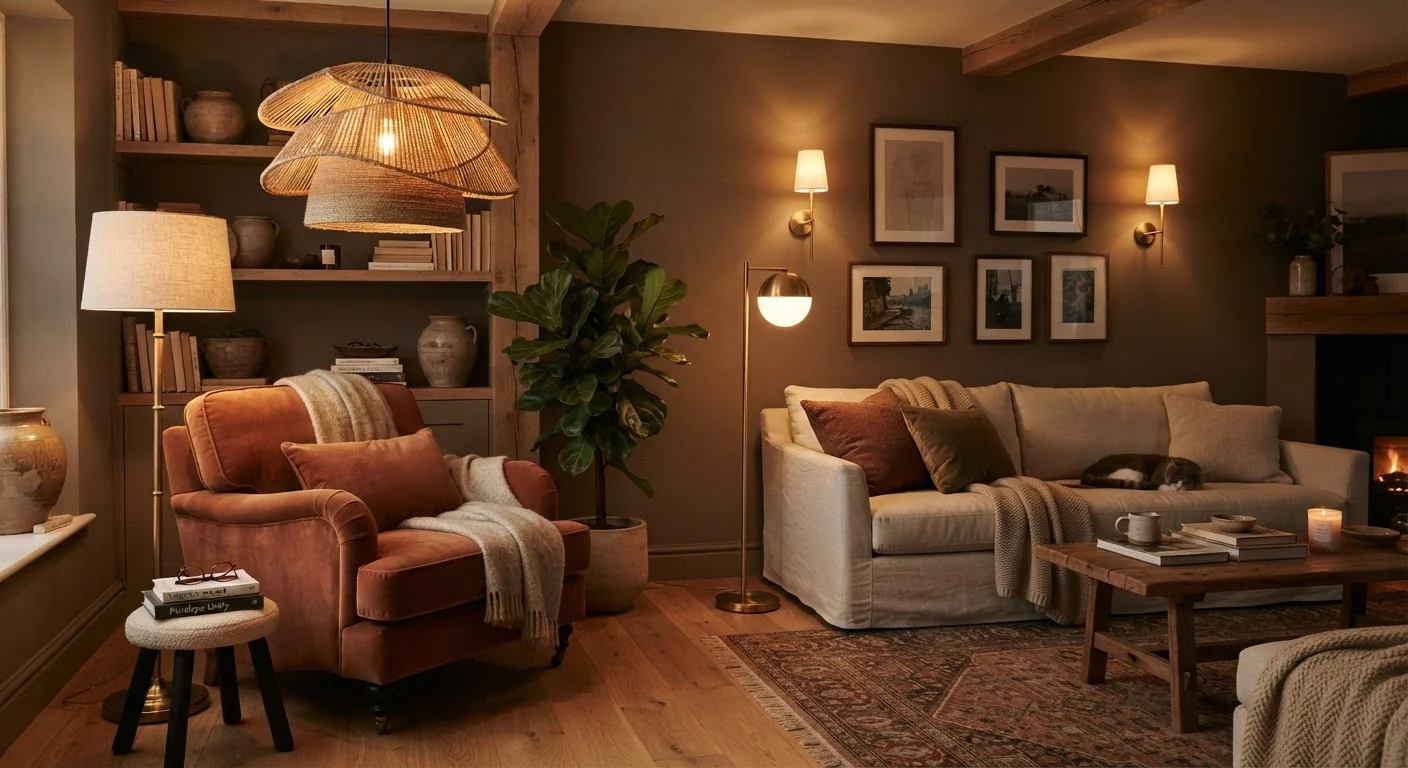
Why Fixtures Are Furniture, Not Just Functions
Most decorating conversations start with paint, furniture, and textiles - and lighting gets added as an afterthought. But a light fixture is present in the room twenty-four hours a day. When it's switched off, it reads as sculpture or object; when it's on, it shapes every other surface, colour, and texture in the space. That dual role - functional tool and decorative anchor - is what makes fixture selection so consequential.
Consider the difference between a generic flush-mount ceiling light and a sculptural rattan pendant in the same bedroom. The dimensions of the room haven't changed. The furniture hasn't moved. But the rattan pendant introduces warmth, organic texture, and a clear design intention that the flush-mount never could. The fixture itself becomes a piece the eye travels to - the same way a well-chosen mirror or piece of art does.
If your room still feels unfinished despite careful furniture choices and colour work, lighting is often the overlooked variable. See why a decorated room can still feel off for a closer look at these subtle gaps.
Start With Bulbs Before Buying Fixtures
Before investing in new fixtures, replace every bulb in the room with a consistent colour temperature - 2700K is a reliable starting point for most living spaces. You may find the existing fixtures perform far better than you thought once the light quality itself is addressed. This is the lowest-cost lighting upgrade available and often the most revealing first step.
The Three Layers - and Why All Three Matter
Interior designers approach lighting in three functional layers, and understanding them helps you make smarter fixture choices at every price point.
- Ambient lighting is the room's base illumination - overhead fixtures, recessed cans, or flush-mounts that provide general visibility. This is where most builder-grade installs stop, and where rooms can feel flat.
- Task lighting targets specific activities: a desk lamp for focused work, a reading lamp beside a chair, under-cabinet strips above a kitchen counter. Task sources are often lower to the surface and directional.
- Accent lighting is decorative by nature - picture lights above artwork, LED strips behind shelving, or a small table lamp that's more about glow than output. These are the sources that create warmth and intimacy.
A room that relies only on ambient light tends to feel like a hotel corridor - bright but personality-free. Layering all three produces depth and allows the mood to shift depending on which sources are active. A dimmer switch extends this flexibility considerably, letting a single fixture serve multiple purposes throughout the day.
3
Recommended minimum light sources per living room
Design professionals commonly suggest at least three distinct sources - ambient, task, and accent - to create a layered, livable room rather than relying on a single overhead fixture.
2700K-3000K
Optimal colour temperature for living and dining spaces
Lighting guidelines from energy and design organisations consistently place warm-white bulbs in this Kelvin range as the standard for residential living areas where comfort and ambiance are priorities.
28-36 in
Recommended pendant clearance above a dining table
Interior design conventions widely used in the US place the bottom of a pendant fixture 28 to 36 inches above the tabletop for optimal light distribution and visual proportion.
Fixture Types and What They Communicate Stylistically
Different fixture forms carry distinct visual weight and stylistic associations - not because of rigid design rules, but because of how shapes, materials, and proportions have been used over time.
Pendants and Chandeliers
Hanging fixtures draw the eye upward and create a sense of occasion. A single large pendant over a dining table anchors the meal around a natural focal point. Clustered pendants at varying heights add dynamism to a kitchen island. The material and silhouette communicate style: an aged-brass cage reads industrial-transitional; a frosted glass globe reads Scandinavian-modern; a beaded or crystal chandelier reads traditional or maximalist. Scale is critical - an undersized pendant in a room with high ceilings loses authority entirely.
Wall Sconces
Sconces mounted on either side of a bed, mirror, or doorway add symmetry and a layer of warm, eye-level light that overhead sources rarely provide. They're among the most effective tools for making a room feel intentionally designed. Plug-in sconces (which don't require new wiring) are a particularly accessible option for renters and those working within a tight budget.
Floor and Table Lamps
Portable fixtures give a room its warmest, most human-scaled light. A tall arc lamp curving over a sofa creates intimacy; a slim tripod lamp in a corner fills dead space with both light and form. Because lamps are moveable and require no installation, they're also the most flexible decorating tool in the lighting category - easy to shift, swap, or take with you when you move.
Lighting pairs naturally with other layering elements like textiles and plants. For a fuller picture of how these elements interact, see our guide on decorating with the four layering elements.
Colour Temperature: The Invisible Decorator
The colour temperature of a bulb - measured in Kelvins - may be the single most underestimated decorating variable. Two identically styled rooms lit with bulbs at 2700K versus 5000K will feel fundamentally different: the first, warm and cosy; the second, clinical and alert.
As a general principle, living spaces, bedrooms, and dining rooms benefit from bulbs in the 2700K-3000K range, which emit the amber warmth associated with incandescent light. Home offices and task-heavy spaces like kitchens often work well in the 3000K-4000K range. Anything above 4000K skews visibly blue and is typically reserved for garages, workshops, or commercial settings.
What makes this especially important for decorating is that colour temperature affects how wall paint, fabric colours, and wood tones read. A warm-white wall painted in a pale greige can look inviting under 2700K light and washed-out under 5000K. For a deeper exploration of this effect, our article on how colour temperature changes the way a room feels covers the science and practical application.
Practical Upgrades That Don't Require Rewiring
Many impactful lighting changes require no electrical work at all. Here are practical starting points for updating your room's light character without a renovation budget.
- Swap bulbs first. Before buying any new fixtures, replace all existing bulbs with a consistent colour temperature in the 2700K-3000K range. This single change can dramatically improve a room's warmth and coherence.
- Add a floor or table lamp. Introducing even one portable lamp at eye level begins to layer the room's light and reduces dependence on harsh overhead sources.
- Install plug-in sconces. These mount to the wall but plug into a standard outlet. Used on either side of a bed or sofa, they provide symmetry and warm eye-level light with no electrician required.
- Use LED strips for accent glow. Adhesive LED strips placed behind shelving or under a cabinet edge create soft, indirect accent lighting that adds depth without any structural change.
- Replace a single overhead fixture. If you're comfortable with basic electrical tasks and your home has a properly installed junction box, swapping a builder-grade ceiling fixture is one of the highest-impact decorating upgrades available. Always turn off power at the breaker and verify local code requirements - or hire a licensed electrician if there's any uncertainty.
Lighting is also one of the most effective seasonal decorating tools. Small swaps - a warmer bulb, a new lamp shade, string lights for winter - can shift a room's feel without dismantling your existing setup. For ideas on that approach, see our guide to seasonal décor refreshes without replacing everything.
Electrical Work and Local Permits
In the US, replacing a light fixture that connects to an existing junction box is generally treated as a straightforward task, but electrical codes and permit requirements vary by municipality. Some jurisdictions require a permit or licensed electrician for any wiring work - even simple fixture swaps. Always verify local requirements before beginning, and when in doubt, hire a licensed electrician. Safety around household wiring is not a place to cut corners.