Before You Buy Anything: Establish Your Decorating Foundation
The most common decorating mistake isn't choosing the wrong color - it's skipping the planning stage entirely. Before you purchase a single item, you need two things: a clear sense of how each room will be used, and a rough understanding of the design principles that make spaces work.
Start by walking through your home with a notepad. For each room, write down its primary function, who uses it, and what it currently lacks - storage, seating, warmth, light. This exercise grounds your decisions in real life rather than in inspiration images that may not suit your actual habits.
Next, familiarize yourself with a few foundational concepts. Terms like scale, proportion, and negative space aren't just designer jargon - they're the reason some rooms feel immediately comfortable and others feel off, even when everything in them looks fine individually. Our guide to interior design vocabulary breaks these down in plain language that directly applies to decorating decisions.
Finally, set a rough budget range - not a line-item spreadsheet, but a general sense of what you're willing to spend per room over what timeframe. Decorating all at once tends to produce impulsive choices; a phased approach lets you refine your taste as you go.
Anchor piece
The dominant, structural item in a room - usually the largest piece of furniture - around which all other elements are arranged. In a living room, this is typically the sofa; in a bedroom, the bed.
Scale
The size of a piece of furniture or decor relative to the room itself. A piece with good scale fits the space without dominating it or looking too small for the setting.
Proportion
The size relationship between individual items in a room. Furniture that is proportional to each other looks balanced and intentional together, even if the pieces differ in style.
Color palette
A limited set of colors chosen to work together throughout a space. Using a consistent palette across rooms creates visual flow and makes the home feel cohesive.
Negative space
The empty or open areas of a room that are deliberately left unfilled. Negative space gives the eye a place to rest and makes the furniture and decor that is present feel more intentional.
Layering
The practice of adding decorative elements in stages - textiles, lighting, plants, and accessories - on top of a functional furniture base to build depth and warmth in a room.
The Living Room: Anchor, Then Layer
The living room is typically the first room guests see and the one that most clearly signals your decorating intentions throughout the house. For that reason, it's also the best place to begin.
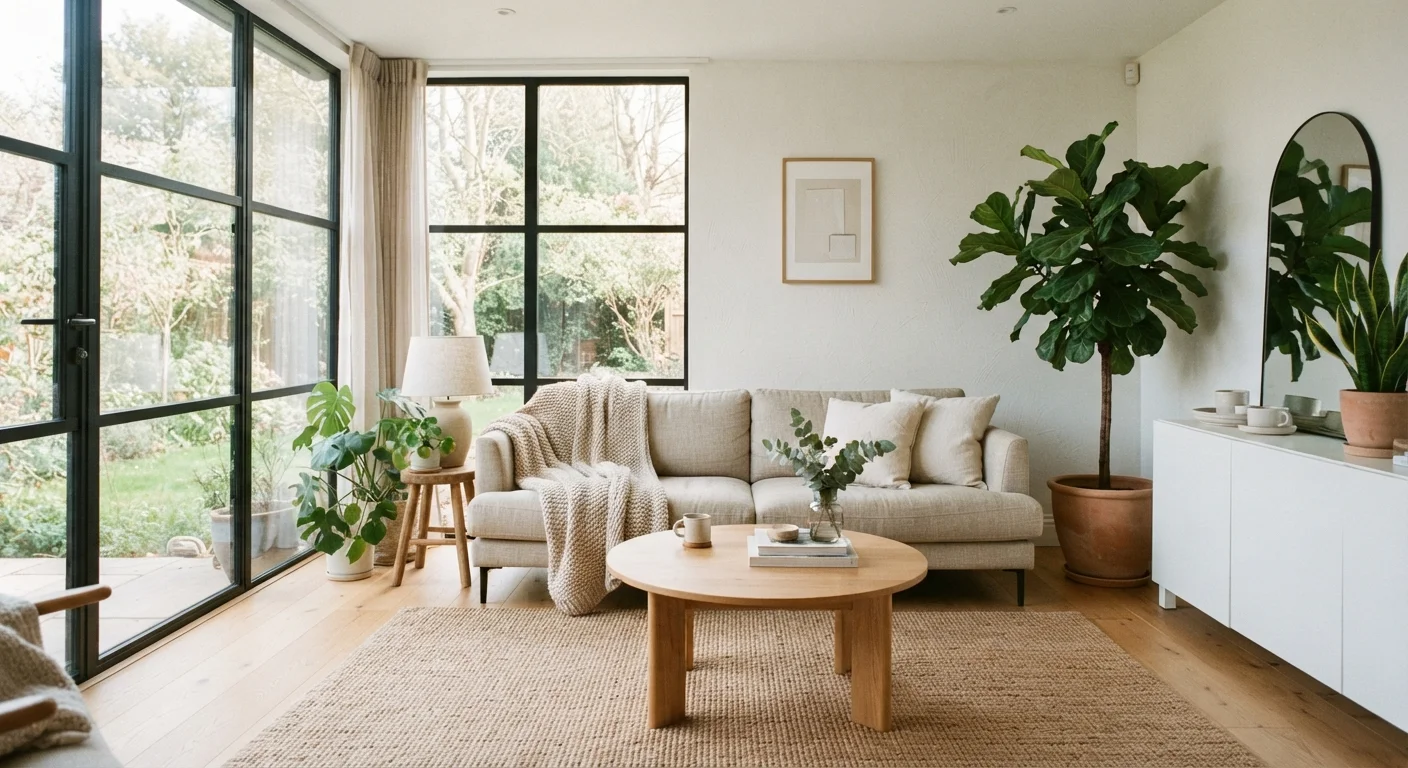
The process here follows a simple sequence: anchor, then layer. Your anchor piece - almost always a sofa - should be chosen first, because everything else will respond to it. Select a size and shape that genuinely fits your floor plan. Measure the room, then sketch a rough layout before you shop. A sofa that's too large will make the room feel cramped; one that's too small will look unmoored.
Once the sofa is placed, build outward. A coffee table at the right height, a rug that defines the seating zone (a common guideline is that at least the front legs of all seating should rest on the rug), and adequate lighting - at least one table or floor lamp in addition to overhead light - complete the functional layer. Decorative accessories like throw pillows, artwork, and plants come last, not first.
Choose Paint Color Last, Not First
Most beginners select wall paint before buying furniture, which creates an unnecessary constraint. It's far easier to match paint to a sofa or rug you love than to find upholstery that fits a paint color you're already committed to. Test paint swatches in the actual room with natural and artificial light before committing.
Paint color is often treated as a first decision, but it's actually easier to choose after your major furniture is selected. Matching paint to upholstery and rugs is more forgiving than the reverse. When you're ready to tackle walls, our overview of paint finishes explains which sheens suit which surfaces.
The Bedroom: Comfort and Calm First
In the bedroom, function is straightforward: rest. That clarity should guide every decision. The bed is the anchor, and its scale relative to the room matters enormously. A king-size frame in a small room leaves no visual breathing room; a full in a large room looks like furniture that got lost.
Layer bedding in a way that allows for temperature adjustment - a base sheet, a mid-weight duvet or comforter, and a throw or quilt at the foot of the bed gives flexibility and visual texture. Stick to a palette of two to three colors that you genuinely find calming, independent of trends.
Storage directly affects how calm a bedroom feels. A cluttered room is harder to rest in, regardless of how well-decorated it otherwise is. Before adding any decorative elements, make sure you have adequate, accessible storage for everyday items - clothing, bedside essentials, and anything else that typically ends up on the floor.
Window treatments in a bedroom serve a real function: light control. Sheer curtains alone rarely provide enough darkness for quality sleep. Layering with blackout liners or a heavier drape gives you both light management and a more finished look.
Kitchen and Dining Areas: Function Shapes Form
Kitchens present a unique challenge: most of their major elements - cabinetry, countertops, appliances - are fixed and expensive to change. Decorating a kitchen, for most people, means working within those constraints rather than around them.
Focus first on what you can change with moderate effort: lighting, hardware, textiles, and open shelving. Swapping out cabinet hardware is one of the lower-cost, higher-impact updates available. Better under-cabinet or pendant lighting transforms how a kitchen looks and feels to work in.
In the dining area, the table and its relationship to the room are paramount. A dining table should allow comfortable movement around all sides - a general rule of thumb is 36 inches of clearance between the table edge and any wall or obstruction. Lighting above the table, ideally on a dimmer, dramatically improves the atmosphere for meals.
Hard Surfaces Benefit From Soft Additions
Kitchens and dining areas are often dominated by tile, stone, wood, and metal - materials that look clean but can feel cold or acoustically harsh. Adding soft elements like fabric placemats, a woven rug, or linen curtains absorbs sound and introduces warmth without requiring any structural changes. These are among the most reversible and affordable updates you can make.
Textiles - a runner on the table, curtains, or even a small rug in front of the sink - add warmth to spaces that are otherwise dominated by hard surfaces. These are also among the most affordable items to update as your taste evolves.
Putting It All Together Without Overspending
Decorating room by room in a deliberate order - living room, bedroom, then kitchen and dining - prevents the scattered feeling that comes from trying to do everything at once. As you move through each space, you'll naturally develop a clearer sense of what you like, what you can live without, and how your choices in one room inform the next.
Carry a common thread through the home. This doesn't mean every room needs to match - it means repeating one or two elements (a metal finish, a specific shade of green, a texture like linen or wood) that make the overall space feel designed rather than assembled.
If budget management feels unfamiliar territory, our introduction to personal budgeting offers a practical framework for tracking what you spend across a multi-room project. And if you're also tackling structural improvements alongside decorating, the first-time homeowner's maintenance roadmap helps you sequence those priorities sensibly.
Decorating from scratch is rarely a single project with a finish line - it's an ongoing process of observation, adjustment, and gradual refinement. Starting with a solid foundation in each room gives you the flexibility to evolve without constantly undoing earlier decisions.