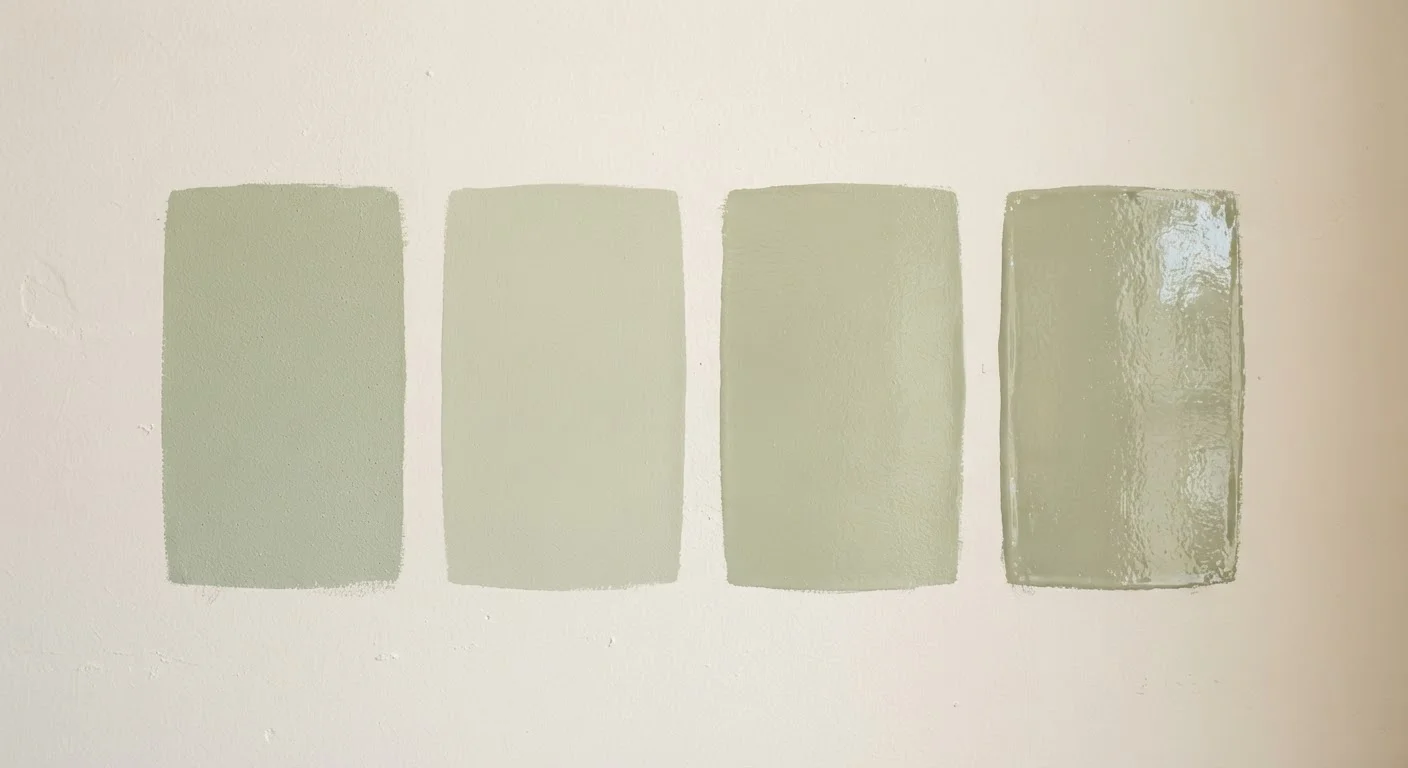
Why Paint Finish Matters
When choosing wall color, most homeowners focus almost entirely on the color itself - but the finish, or sheen level, is equally important. A finish determines how much light a painted surface reflects, how durable it is, and how easy it is to clean. The wrong finish can make a flawlessly chosen color look muddy, reveal every surface imperfection, or fail under daily wear.
Paint finishes are defined by their level of sheen, which runs from completely flat to mirror-like. Each point on that spectrum has practical strengths and trade-offs that make it more or less appropriate depending on the room, the surface condition, and the level of traffic the space receives. This guide breaks down the four most common residential finishes - matte, eggshell, satin, and gloss - so you can match the right finish to every surface in your home.
Before applying any finish, surface preparation makes a significant difference in the final result. See our full interior painting preparation guide for the steps that set a clean, lasting foundation.
| Finish types covered | Matte, Eggshell, Satin, Semi-Gloss, Gloss |
| Best finish for ceilings | Matte / Flat |
| Best finish for kitchens & bathrooms | Satin or Semi-Gloss |
| Best finish for trim & doors | Semi-Gloss or Gloss |
| Most forgiving of surface imperfections | Matte (Flat) |
| Most washable finish | Gloss / Semi-Gloss |
The Four Main Finishes Explained
Matte (Flat)
Matte finishes contain no reflective particles, so they absorb light rather than bouncing it back. This produces a uniform, velvety appearance that hides surface imperfections - drywall patches, minor dings, and uneven texture all become far less noticeable under a flat coat. That makes matte a practical default for ceilings and for bedroom or living room walls that aren't exposed to moisture or heavy contact.
The trade-off is cleanability. Scrubbing a matte wall to remove scuffs or fingerprints often removes paint along with the dirt. In high-traffic areas, this limits its usefulness considerably.
Eggshell
Eggshell offers a barely perceptible low sheen - just enough to make the surface slightly more washable than matte while still looking soft and understated. It's a widely used finish for living rooms, dining rooms, and bedrooms because it splits the difference between the flattering quality of matte and the durability needed for everyday living.
Eggshell does show surface imperfections more than flat paint, so walls should be properly patched and primed before application.
Satin
Satin has a noticeable but not dramatic sheen - often described as a soft pearl-like gloss. It reflects enough light to make colors look richer and stands up well to wiping and cleaning, which is why it's frequently used in kitchens, bathrooms, hallways, and children's rooms. It also performs well on trim and doors that see regular hand contact.
Because it reflects light, satin draws attention to surface flaws, so wall prep becomes more important when using this finish. Pairing finish choices with a broader decorating plan is useful - see our room-by-room decorating introduction for context on how surfaces interact with light and space.
Gloss (and Semi-Gloss)
Gloss finishes reflect the most light and create a hard, smooth surface that is easy to wipe down thoroughly. Semi-gloss sits just below full gloss and is the more common choice for residential use - it's typically applied to trim, baseboards, window frames, cabinet doors, and bathroom walls. Full gloss is durable but unforgiving of any surface irregularity, so it's used most often on smooth, pre-finished surfaces.
Sheen
The degree of light reflectivity in a dried paint film. Higher sheen means more light is reflected off the surface, which affects both appearance and durability.
Matte (Flat) Finish
A paint finish with no reflective quality, producing a soft, uniform appearance. It hides surface imperfections well but is the least washable of the common finishes.
Eggshell Finish
A low-sheen finish with a slight glow, similar to the surface of an eggshell. More cleanable than matte and commonly used in living spaces.
Satin Finish
A medium-sheen finish with a soft pearl-like quality. It is durable and easy to wipe clean, making it suitable for kitchens, bathrooms, and hallways.
Semi-Gloss Finish
A high-sheen finish that reflects significant light. Highly washable and moisture-resistant, it is the standard choice for trim, doors, and cabinetry.
Gloss Finish
The highest-sheen category, producing a hard, mirror-like surface. Very durable and easy to clean, but highlights every surface flaw - typically used on pre-finished, smooth surfaces.
Matching Finish to Room and Surface
A practical way to think about finish selection is to pair it with the demands of the space. Rooms that stay dry and see low contact - primary bedrooms, formal living rooms, and ceilings throughout - suit matte or eggshell well. Spaces with moisture, steam, or frequent cleaning needs - bathrooms, kitchens, laundry rooms - call for satin or semi-gloss on walls and gloss on trim.
Children's rooms and playrooms are a common exception: even though they're not moisture-heavy, they see significant wall contact and mess, making eggshell or satin a more practical choice than matte despite the aesthetic preference for softer walls.
For feature or accent walls, the finish also contributes to visual impact. A high-gloss paint on a single accent wall creates a dramatic, almost lacquered effect. For other wall treatment comparisons, our statement wall treatments guide covers paint alongside wallpaper, panelling, and tile.
Finish and Primer Are Not Interchangeable
Some paints are marketed as paint-and-primer combinations, but these products do not eliminate the need for proper surface prep on new drywall or heavily patched walls. A dedicated primer coat seals the surface, improves adhesion, and prevents the finish coat from absorbing unevenly - which is especially visible with higher-sheen finishes like satin or semi-gloss. Always follow the paint manufacturer's guidance for your specific surface type.
One surface that is often overlooked is interior doors. Many homeowners apply the same wall finish to their doors, but doors take significant hand contact at edges and around hardware - semi-gloss or satin holds up far better and stays cleanable over years of use.