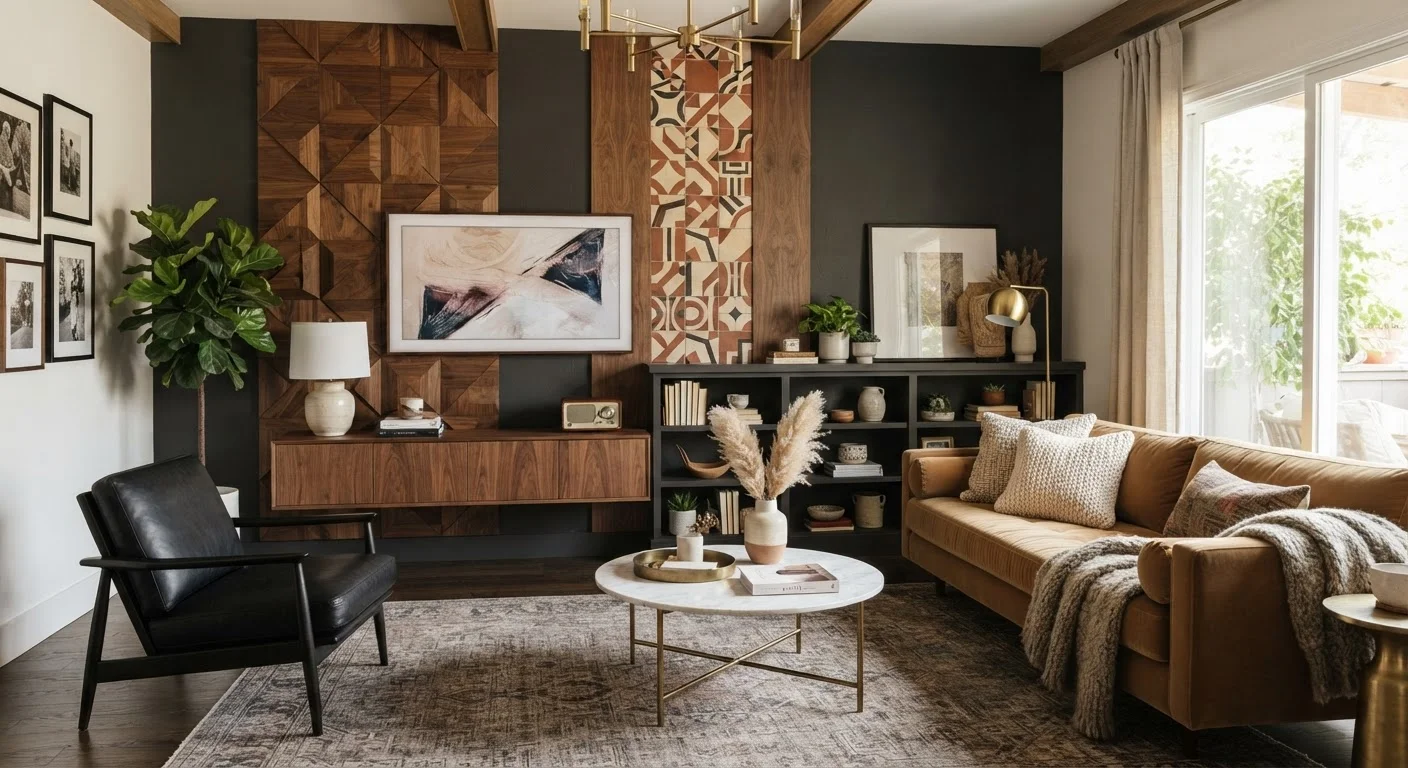
What Makes a Statement Wall Work
A statement wall - sometimes called a feature wall or accent wall - is a single surface treated differently from the rest of the room to create a focal point. Done well, it adds depth, personality, and a sense of intentional design without requiring a full room overhaul. Done poorly, it can feel disconnected or overwhelming.
The four most common treatments are paint, wallpaper, wood panelling, and decorative tile. Each brings a distinct combination of cost, installation difficulty, durability, and visual effect. Understanding those differences before you commit saves both money and frustration. For rooms where you're building a scheme around a hero element, our guide on decorating around a single hero piece offers useful context on how feature walls fit into a broader design approach.
| Paint | Wallpaper | Wood Panelling | Decorative Tile | |
|---|---|---|---|---|
| Typical material cost (per sq ft) | $0.10-$0.25 | $1-$8 | $1-$15 | $2-$30+ |
| DIY difficulty | Low | Moderate | Moderate-High | High |
| Visual impact | Moderate | High | High | High |
| Durability | 3-10 years | 5-15 years | 15-30+ years | 20-50+ years |
| Reversibility | Easy | Moderate (peel-and-stick) / Hard | Difficult | Very difficult |
| Moisture resistance | Low-Moderate | Low | Low (untreated) | High |
| Renter-friendly | Yes | Sometimes | No | No |
Paint: Low Risk, High Flexibility
Paint remains the most accessible statement wall treatment for good reason. A single accent wall in a bold or contrasting color can redefine a room's atmosphere in a weekend. Costs typically range from $30 to $80 per gallon for quality interior paint, and a single wall rarely requires more than one gallon.
The real investment is in preparation. Surface imperfections - cracks, nail holes, uneven texture - show through paint more than any other treatment, especially in flat or matte finishes. Our detailed walkthrough on painting interior walls explains why prep work accounts for most of the quality difference between a professional-looking result and a patchy one.
Paint is also the most reversible option, which matters for renters and those who like to refresh their spaces frequently. The tradeoff is longevity - high-traffic walls benefit from a more washable finish. See our reference on paint finishes to match sheen level to room conditions.
Wallpaper: Maximum Impact, Moderate Complexity
Peel-and-stick and traditional paste wallpapers can deliver dramatic pattern, texture, and depth that paint simply cannot replicate. A single papered wall in a bedroom or dining room creates an immediate focal point, and the range of available designs - botanical prints, geometric patterns, textured grasscloth - is far broader than any paint palette.
Cost varies considerably. Peel-and-stick options run roughly $1-$4 per square foot and are genuinely removable, making them a practical choice for renters. For rental-friendly wallpaper tips more broadly, the decorating a rented home without losing your deposit guide is worth reading before you start. Traditional paste wallpaper typically costs $2-$8 per square foot plus adhesive, and installation requires careful pattern matching and smoothing - skill that takes practice.
Test Before You Commit
Before papering an entire wall, order a sample and live with it for a few days in the actual room lighting - both natural and artificial. Patterns and colors can look very different on a small screen versus a full wall. For peel-and-stick papers, test a small section in an inconspicuous corner to check adhesion and removability on your specific wall surface before applying full panels.
Surface preparation is critical: wallpaper applied to unpainted drywall or uneven surfaces will bubble, peel, or tear on removal. Prime and skim-coat first for best results.
Wood Panelling: Texture and Architectural Character
Wood panelling - whether shiplap, board-and-batten, wainscoting, or slat panels - adds a three-dimensional quality that painted or papered walls cannot match. It works particularly well in living rooms, home offices, and bedrooms where warmth and texture are priorities.
Material costs range widely: MDF (medium-density fiberboard) panels designed for paint are typically $1-$3 per square foot; real wood options can run $5-$15 per square foot or more. Installation involves fastening panels to studs or directly to drywall, which means this treatment is not straightforwardly reversible. If you're considering structural changes to accommodate built-in panelling elements, it's worth understanding what makes a wall load-bearing before drilling or cutting.
Painted panelling hides imperfections well and can look crisp and modern. Natural-finish wood panelling brings warmth but requires more careful finishing. Moisture-prone rooms are generally not ideal for wood panelling unless specifically moisture-resistant materials are used.
Decorative Tile: Permanent, Durable, and Distinctive
Decorative tile on an accent wall - zellige, subway, terracotta, or large-format stone-look tile - delivers unmatched durability and a finish that genuinely improves with time. It's the go-to treatment for kitchen backsplashes, bathroom feature walls, and shower niches, where moisture resistance is non-negotiable.
Tile is also the most expensive and labor-intensive option. Materials alone can range from $2 per square foot for basic ceramic to $30 or more for handmade or specialty tiles, and installation - particularly grout work, leveling, and waterproofing - requires meaningful skill. Mistakes in tiling are costly to fix. Our article on why bathroom tile projects go wrong covers the most common failure points in detail.
For non-wet areas, peel-and-stick tile panels have improved considerably in quality and offer a lower-stakes way to test the aesthetic. However, they do not replicate the longevity or tactile quality of grouted ceramic or stone tile. This treatment is best treated as permanent - budget and plan accordingly. For a broader view of how durable surface materials compare in other contexts, see our flooring materials comparison.
This article provides general home decorating information for educational purposes. Costs and material availability vary by region and supplier. Always verify local building codes and consult a qualified professional before undertaking any structural, electrical, or plumbing-adjacent work.