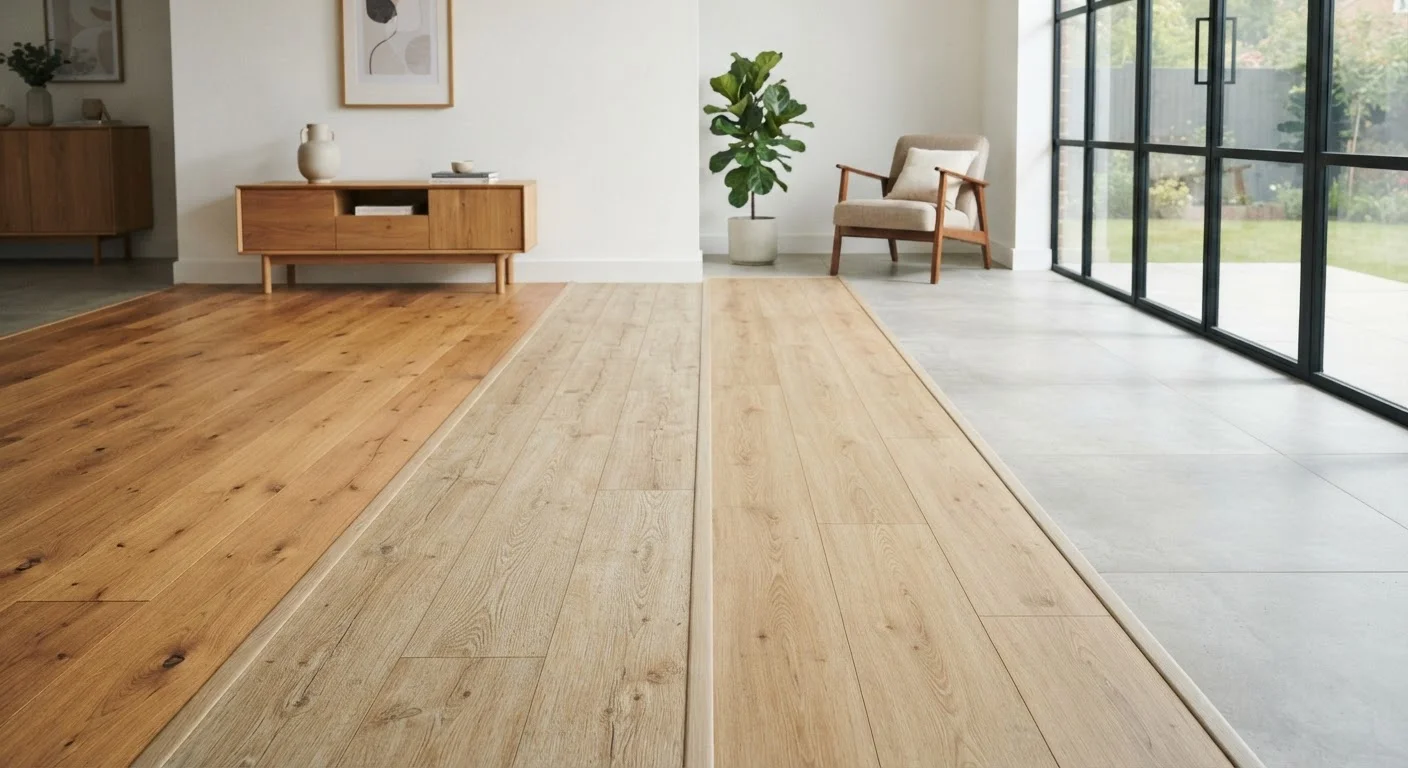
What Sets These Four Flooring Materials Apart
Choosing the right flooring comes down to matching material properties - durability, moisture resistance, comfort, and cost - to the specific demands of each room. This comparison covers four of the most widely used residential flooring options: solid or engineered hardwood, laminate, luxury vinyl tile (LVT), and ceramic or porcelain tile.
Each material has a distinct construction that shapes how it performs over time. Hardwood is milled from solid timber or layered with a real wood veneer (engineered hardwood). Laminate uses a photographic layer over a high-density fiberboard (HDF) core. LVT is built from polyvinyl chloride layers with a printed design film and a protective wear layer. Tile is fired clay or porcelain, set with adhesive and grout.
| Hardwood | Laminate | LVT | Tile | |
|---|---|---|---|---|
| Water Resistance | Low - avoid wet areas | Low - swells with moisture | High - fully waterproof | Very high - grout needs sealing |
| Durability | High; can be refinished | Moderate; not refinishable | High; wear layer protects | Very high; can last decades |
| DIY-Friendly Installation | Moderate to difficult | Moderate (click-lock) | Easy to moderate (click-lock) | Difficult; mortar and grout required |
| Comfort Underfoot | Warm and firm | Firm; can feel hollow | Slightly cushioned | Hard and cold without rugs |
| Typical Relative Cost | Higher | Lower | Low to moderate | Moderate to higher with labor |
| Best Room Fit | Living rooms, bedrooms | Bedrooms, dry living areas | Kitchens, baths, basements | Bathrooms, entryways, kitchens |
| Refinishable | Yes (solid); limited (engineered) | No | No | No (but grout can be resealed) |
Durability and Moisture Resistance
Hardwood is durable but expands and contracts with humidity changes, making it a poor choice for bathrooms, basements, or areas with frequent moisture exposure. Engineered hardwood handles moderate humidity better than solid hardwood but still shouldn't get wet regularly.
Laminate is scratch-resistant for everyday use but its HDF core is highly vulnerable to water. Even small amounts of standing water can cause swelling and warping at seams. Most laminate carries a limited warranty against everyday wear, not water damage.
LVT is 100% waterproof throughout its core, making it genuinely suited for kitchens and bathrooms. Its wear layer - measured in mils (thousandths of an inch) - determines scratch and dent resistance; residential-grade LVT typically starts at 12 mil, while heavier-duty options reach 20 mil or more.
Tile is impervious to water and, if properly sealed at the grout lines, is the most moisture-resistant option available. It handles heavy foot traffic without wearing down and can last decades with basic upkeep.
Check the Wear Layer Before You Buy LVT
For LVT in high-traffic areas like kitchens or hallways, look for a wear layer of at least 12 mil for residential use - 20 mil or above if you have pets or expect heavy foot traffic. A thicker wear layer extends the functional life of the floor and better resists scratching and gouging. This specification is usually listed clearly on product packaging or spec sheets.
Installation, Maintenance, and Long-Term Cost
Installation complexity varies significantly. LVT and laminate typically use click-lock floating systems that many experienced DIYers can handle. Hardwood can be nailed or glued down - engineered planks are more DIY-friendly than solid strips. Tile installation involves mortar, precise cutting, and grout work, which generally warrants professional installation to avoid cracking or uneven joints.
Maintenance requirements differ just as much. Hardwood needs periodic refinishing (typically every 7-10 years with normal traffic) and is sensitive to humidity fluctuations. Laminate requires only sweeping and occasional damp mopping - but damage is usually permanent. LVT is similarly easy to maintain and individual planks or tiles can often be replaced without disturbing surrounding material. Tile is low-maintenance once installed, though grout lines benefit from periodic sealing.
Installed cost estimates vary by region, product quality, and labor market conditions, but hardwood typically carries the highest combined material and labor cost, followed by tile. LVT and laminate tend to come in at a lower overall cost, though premium LVT can approach mid-range hardwood pricing. Pairing your flooring choice with the right interior finishes can amplify the result - see our guide to paint finishes for complementary wall treatment advice.
Room-by-Room Recommendations
Not every material suits every room. Below are general guidance principles based on typical household conditions:
- Living rooms and dining rooms: Hardwood, engineered hardwood, or high-quality LVT. All handle regular foot traffic; hardwood adds resale appeal.
- Bedrooms: Hardwood, laminate, or LVT all work well. Laminate is a cost-effective option in lower-traffic sleeping areas.
- Kitchens: LVT or tile. Both handle spills and heavy use; LVT adds more underfoot comfort during long cooking sessions.
- Bathrooms: Tile is the standard for good reason - it handles moisture, steam, and repeated cleaning without degrading. LVT is a close alternative in half-baths or powder rooms.
- Basements: LVT is the preferred choice given typical moisture levels. Tile also works, though it can feel cold. Avoid solid hardwood and laminate below grade.
- Entryways and mudrooms: Tile or LVT; both stand up to tracked-in dirt, water, and grit.
For a full room refresh that pairs new flooring with a feature wall, comparing wall treatment options can help you coordinate materials and budget across surfaces.