Before You Hang a Single Thing
The single most protective step any renter can take happens before decorating begins: a thorough walkthrough with a camera. Photograph every scuff, nail hole, and stain in good lighting, and store these images somewhere date-stamped and retrievable - cloud storage works well. This record is your clearest defense if a landlord later disputes the pre-existing condition of the property.
Next, read your lease. Many tenancy agreements explicitly prohibit painting, drilling, or affixing anything with adhesives stronger than a specified grade. Others are more permissive. Knowing exactly what your agreement allows prevents costly surprises at move-out and may actually open doors you assumed were closed.
What you will need
If you're still building your overall decorating instincts, the room-by-room introduction to home decorating is a strong foundation before you adapt those ideas to a rental context.
Wall Treatments That Leave No Trace
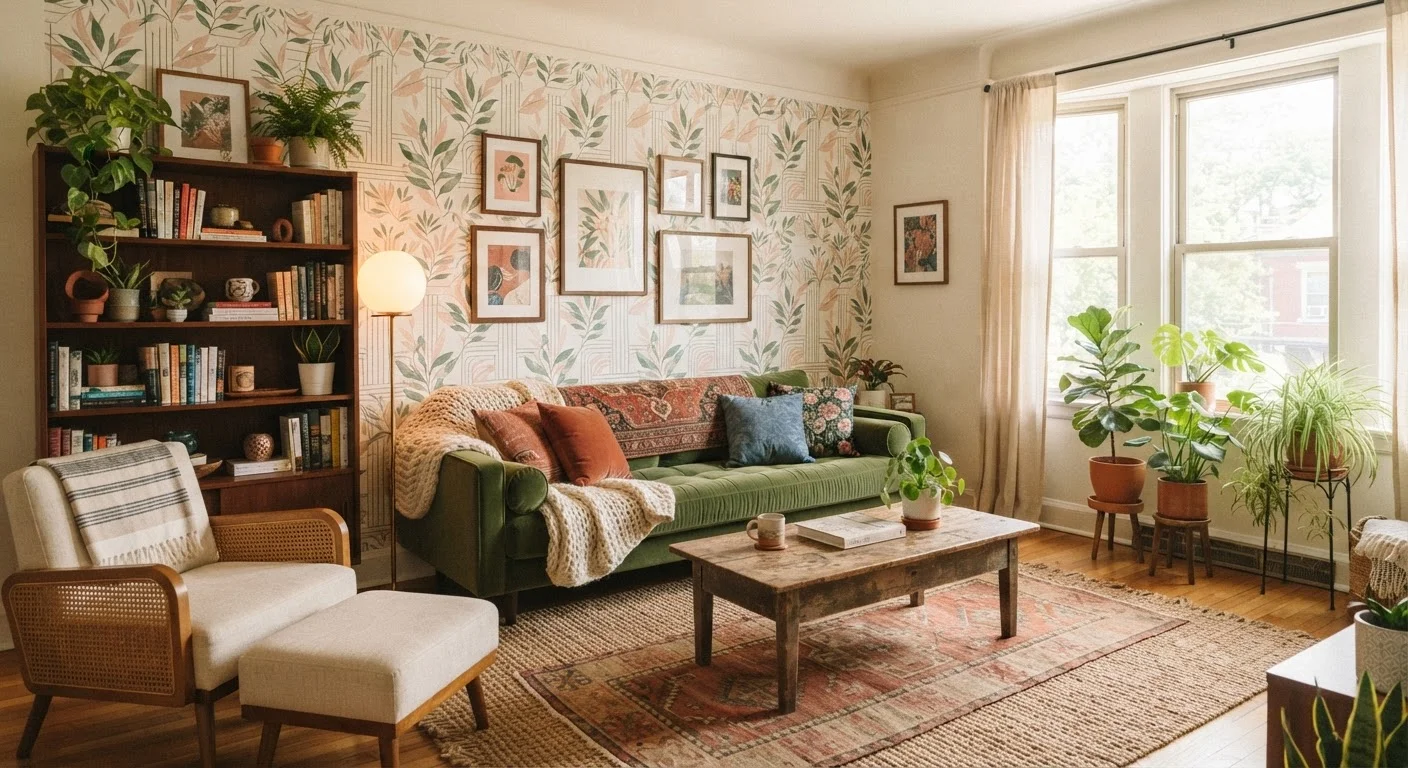
Walls are where most renters feel most constrained - and where removable products have improved most dramatically in recent years. Peel-and-stick wallpaper, available in an extensive range of patterns and textures, applies directly to a smooth painted surface and peels away cleanly provided you follow the manufacturer's removal instructions (usually pulling at a low angle, slowly). One accent wall can shift the entire mood of a room without a single nail.
For artwork and mirrors, damage-free adhesive strips are a practical alternative to drilling, as long as you stay within the stated weight limits printed on the packaging. Exceeding those limits is where damage - and deposit deductions - typically occur. Gallery ledges that rest on existing picture rails (common in older rental properties) are another option that requires no new fixings at all.
Curious how these approaches compare to permanent options? The statement wall treatments comparison lays out the trade-offs across paint, wallpaper, panelling, and tile in detail.
Test Before You Commit to a Full Wall
Before applying peel-and-stick wallpaper across an entire wall, apply a small test section in a corner and leave it for 24-48 hours. When you peel it back, check for any paint lifting. If the paint surface beneath is well-adhered and the backing comes away cleanly, you can proceed with confidence. If paint lifts, the wall's finish may be too old or fragile for removable wallpaper.
Furniture and Storage Without a Single Drill
Freestanding solutions are the renter's most reliable tool. Modular shelving systems - the kind assembled from uprights, brackets, and shelves - can be configured to fill an alcove, line an entire wall, or create a room divider, then disassembled and taken with you when you leave. They add significant storage without touching the structure of the property.
Floor-to-ceiling tension pole shelves use spring pressure against ceiling and floor rather than fixings, making them genuinely installation-free. Ladder shelves lean against the wall and support surprising amounts of weight when loaded carefully from the bottom up.
Peel-and-stick wallpaper
Creates a feature wall or accent surface without permanent adhesive or painting.
Damage-free adhesive hanging strips
Holds artwork, mirrors, and lightweight shelves to walls without drilling or nails.
Modular shelving system
Provides customisable, freestanding storage that can be reconfigured or removed without wall fixings.
Tension curtain rod
Supports curtain panels inside a window recess without drilling into walls or frames.
Large area rug
Anchors a room visually, covers uninspiring flooring, and is fully portable at move-out.
Floor or table lamp
Adds layered, adjustable lighting without any electrical installation or modification.
For compact spaces, styling a small bedroom covers multi-functional furniture choices that work equally well in rentals with limited square footage.
Textiles, Lighting, and the Details That Do the Heavy Lifting
A large area rug laid over an uninspiring rental floor redefines the visual anchor of any room. Rugs define zones, add warmth underfoot, and are entirely portable. Layer a smaller rug on top for depth - a technique that also protects the lower rug and extends the life of both.
Lighting is frequently overlooked by renters who assume they're stuck with overhead fittings. Floor lamps, table lamps, and clip-on or clamp-style task lights all plug into standard outlets and transform the ambiance of a space without any electrical work. Swapping rental light shades for your own (and keeping the originals in a bag) is another quick, reversible upgrade many landlords don't prohibit.
Curtains hung from a tension rod inside the window recess avoid wall fixings entirely. Longer curtain panels puddled slightly on the floor create the illusion of higher ceilings - a trick that works especially well in rooms that feel a little low. If the room still doesn't feel quite right after all these changes, the subtle styling missteps that keep rooms from feeling complete may point to what's missing.
Finally, plants bring life and color without any permanence. A collection of varying heights - a floor-level fiddle-leaf or snake plant alongside tabletop succulents - creates visual rhythm that no amount of wall decor can fully replicate. For a low-commitment refresh as seasons change, updating your space with accents and textiles shows how to keep things feeling current without dismantling what's working.