What a Budget Actually Is
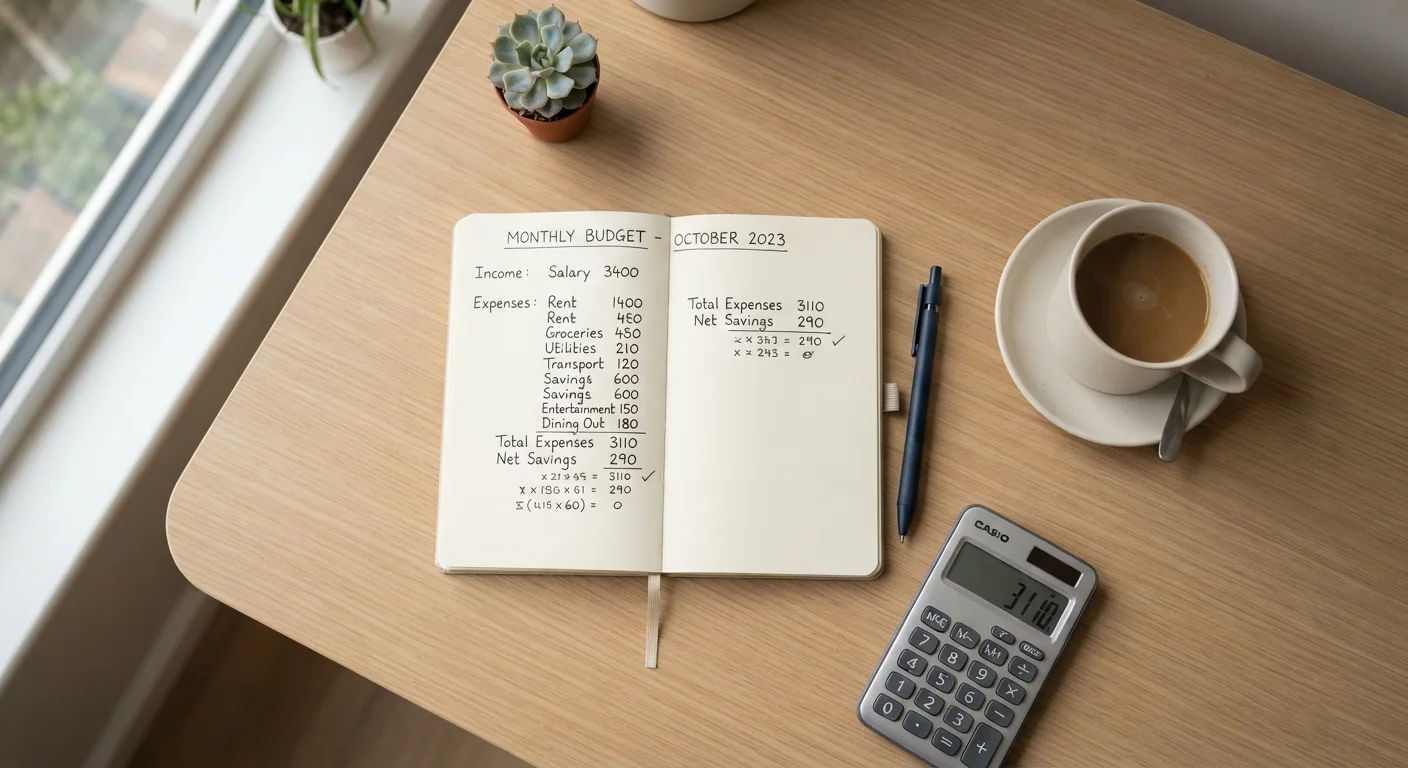
Strip away any anxiety attached to the word, and a budget is simply a written spending plan. It lists your expected income for a period - usually a month - and maps every dollar to a category: rent, groceries, transportation, savings, and so on. The goal is not restriction for its own sake; it's clarity. Without a plan, spending decisions are made in the moment using incomplete information. With one, you make those decisions in advance when you're thinking rationally rather than reactively.
Budget
A written plan that maps your expected income to specific spending categories for a set period, usually a month.
Fixed expenses
Costs that stay the same each month regardless of behavior - rent, car payment, and insurance premiums are common examples.
Variable expenses
Costs that change from month to month based on choices or usage, such as groceries, dining out, and utilities.
Discretionary spending
Money spent on non-essential items and experiences - things you want but don't strictly need to live.
Net income
The amount you actually take home after taxes and any payroll deductions - the figure to use as your budget's starting point.
Emergency fund
A dedicated pool of savings set aside to cover unexpected expenses without disrupting your regular budget or adding debt.
A budget is not a punishment, a sign of financial failure, or something only people in debt need. High earners who budget typically build wealth faster than high earners who don't, because income alone doesn't determine financial outcomes - allocation does. The same principle applies at every income level.
Why Budgeting Comes Before Everything Else
Before you can save effectively, pay down debt strategically, or invest with confidence, you need to know two things: how much money comes in each month and how much goes out. A budget answers both questions at once. Without that baseline, savings targets are guesses and debt payoff timelines are wishful thinking.
Budgeting also surfaces the gap between perceived and actual spending. Most people significantly underestimate discretionary spending - particularly on subscriptions, dining, and convenience purchases - until they see the numbers in writing. That gap is where financial progress is often hiding. Once you see it, you can direct it intentionally toward goals that matter to you, whether that's an emergency fund, a debt payoff, or a longer-term objective.
Start with your actual bank statements
Before building your first budget, pull three months of bank and credit card statements. Calculate the average you spent in each major category. Using real past data - rather than estimates - gives your budget an accurate baseline from day one and prevents the common mistake of underbudgeting variable expenses.
For a broader look at where budgeting fits in your overall financial picture, the Saving & Deals hub covers practical strategies that layer on top of a solid spending plan.
Core Budgeting Frameworks to Know
There is no single correct budgeting method. The right one is the one you'll actually maintain. Three frameworks cover most beginner situations:
- 50/30/20: Allocate approximately 50% of after-tax income to needs (housing, utilities, food), 30% to wants (entertainment, dining out), and 20% to savings and debt repayment. It's an accessible starting point and easy to recalibrate.
- Zero-based budgeting: Every dollar of income receives an assigned purpose so that income minus all allocations equals zero. This method demands more detail but provides precise control. See our guide to zero-based budgeting for a full walkthrough.
- Pay-yourself-first: Automatically transfer a set amount to savings or debt payoff the moment income arrives, then live on what remains. This approach removes willpower from the equation and works well for people who find detailed tracking tedious.
If you want a side-by-side comparison of formats and the tradeoffs of each, the complete guide to building a spending plan covers the full range of methods in detail.
Building Habits That Last
A budget written once and never revisited is not a budget - it's a document. The habit that makes budgeting work is the monthly review: comparing what you planned to spend against what you actually spent, identifying categories that drifted, and adjusting allocations for the following month. This review doesn't need to be long. Fifteen to twenty minutes is enough to catch most issues before they compound.
Two practical principles help beginners stick with it. First, automate wherever possible - automatic transfers to savings accounts remove the temptation to spend before saving. Second, allow for imperfection. A month where you overspend in one category is useful data, not a failure. The response is an adjustment, not abandonment of the plan.
If you're building your first budget from scratch, our seven-step monthly budget guide walks through the process with specific instructions. And as your financial picture evolves, understanding how credit and debt interact with your budget becomes the logical next skill to develop.
Where to Go from Here
Budgeting is a skill, and skills improve with repetition. After two or three monthly cycles, the review process becomes fast and intuitive, and you'll likely spot patterns in your spending that genuinely surprise you.
Your immediate next step: write down your monthly take-home income, then list every regular expense you can recall. That draft - however rough - is your first budget. Refine it over the coming weeks as you gather more accurate numbers. For a plain-language reference to terms you'll encounter along the way, the personal finance glossary is a useful companion. As your confidence grows, the Credit & Debt section is the natural next area to explore.
This article is for general informational and educational purposes only and does not constitute personalised financial advice. Consult a qualified financial professional for guidance specific to your situation.