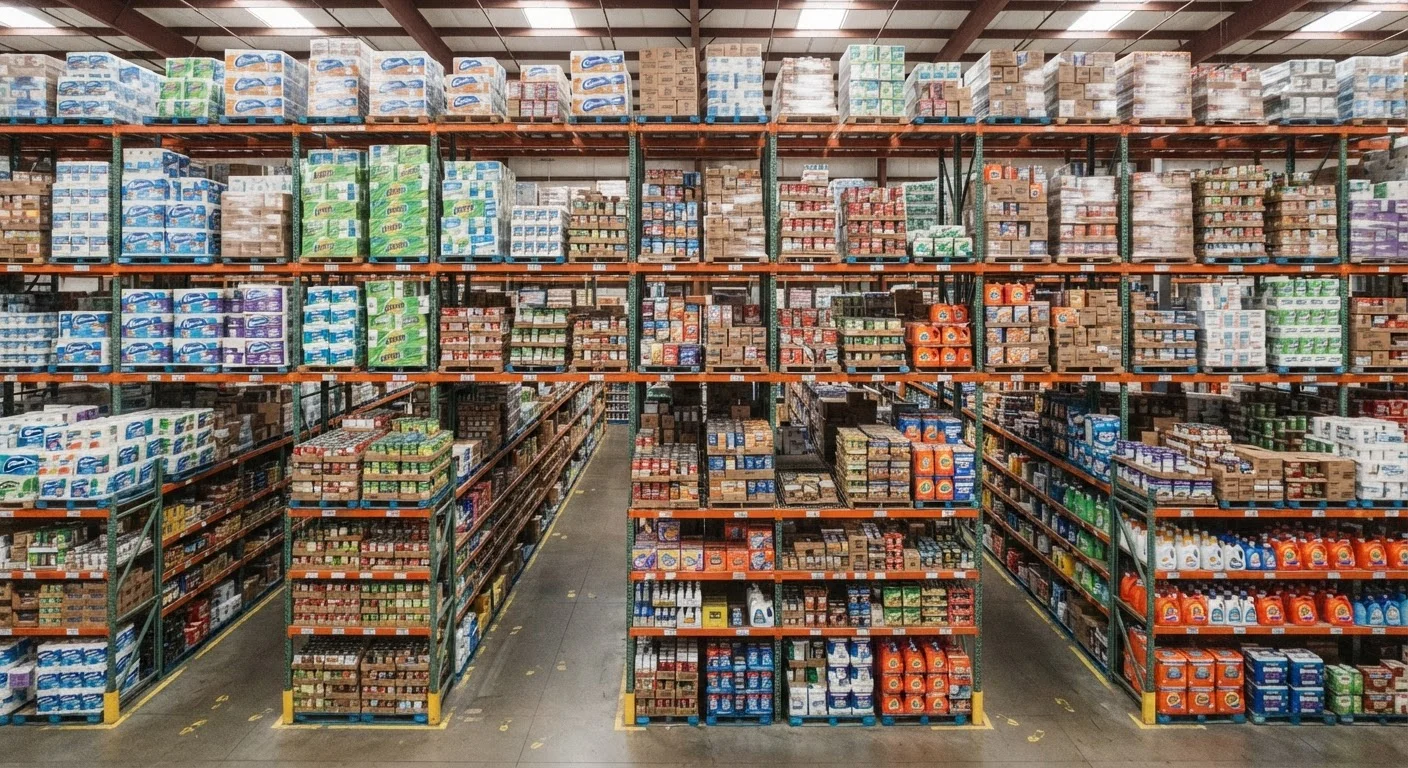
What Bulk Buying Actually Means for Your Budget
Bulk buying - purchasing items in larger quantities at a lower per-unit price - is one of the most frequently cited personal finance strategies. Warehouse clubs, multi-pack grocery options, and online volume pricing all promise the same basic deal: buy more now, pay less per unit.
The logic is sound in principle. A 48-roll pack of toilet paper at $0.28 per roll costs less than a 12-roll pack at $0.41 per roll. That spread, applied to a dozen staple categories over a year, can represent meaningful savings. But the gross math misses several real-world costs that determine whether a bulk purchase actually benefits your finances or quietly works against them.
Before assuming a larger package is automatically a better deal, it helps to run through a short checklist. Our price comparison checklist outlines the key questions to ask before committing to any purchase - bulk or otherwise.
Lower cost per unit on non-perishable staples
For items like laundry detergent, canned goods, and paper products, the per-unit savings from bulk formats are well-documented and consistent. Over a full year, these savings can meaningfully reduce a household's grocery and household supply budget.
Fewer shopping trips and time savings
Stocking up on staples reduces the frequency of routine shopping runs. This saves both time and the incidental spending that tends to accompany each store visit.
Protection against short-term price increases
Buying ahead locks in a current price for items whose cost may rise due to supply disruptions or inflation. This benefit is most relevant for shelf-stable goods with long lead times.
Reduced packaging waste over time
Larger formats typically use less packaging per unit than individually wrapped or smaller-quantity alternatives, which can align with environmental goals alongside financial ones.
When Bulk Purchases Genuinely Work Against You
The hidden costs of bulk buying rarely show up on the shelf tag. Spoilage is the most obvious: a 10-pound bag of potatoes at a 40% per-pound discount delivers zero savings if a third of them go bad before use. The same dynamic applies to bulk spices, oils, cereals, and anything with a meaningful expiration date.
Membership fees are a second real cost. Warehouse clubs charge annual fees that can range from roughly $65 to over $130 depending on the tier. If your actual bulk purchases don't generate savings that exceed that fee, the membership is a net loss - and many households never run the numbers to confirm either way.
There's also an impulse-buying effect. Studies on warehouse retail behavior consistently find that shoppers spend more per visit than intended, partly because large format packaging creates a perception of value that encourages adding more items. Inflated reference prices and bundled extras can amplify this effect, making a bulk deal appear stronger than it is.
Spoilage and waste erode savings on perishables
Any item that expires or degrades before use converts apparent savings into real losses. This is especially common with fresh foods, dairy, and products with shorter shelf lives.
Large upfront cost strains short-term cash flow
Bulk purchases require spending more money at once, which can create cash-flow tension for households operating on tight monthly budgets, even when the long-run math favors the purchase.
Membership fees must be recovered through savings
Warehouse club memberships add a fixed annual cost that only produces a net benefit if aggregate savings from bulk purchases exceed the fee - a calculation many households don't verify.
Storage requirements aren't always practical
Bulk quantities of paper goods, beverages, or canned foods require significant dedicated storage space. Households without a pantry, basement, or garage may have no practical place to put bulk purchases.
Impulse purchasing inflates total spend
Warehouse and bulk retail environments are designed to encourage high-volume, multi-category purchasing. Shoppers often leave with items they didn't intend to buy, offsetting per-unit savings elsewhere.
A Practical Framework for Deciding
The most reliable filter for bulk buying decisions is a three-question test:
- Will we use all of it before it expires or degrades? If the honest answer is uncertain, the risk of waste likely offsets the per-unit savings.
- Do we have somewhere to store it without disruption? Renting storage, cramming a pantry, or keeping bulk paper goods in a bedroom are real costs - financial and practical.
- Can we absorb the upfront cash outlay without affecting other priorities? Spending $120 on a bulk pantry run when that cash was earmarked for a utility bill is a cash-flow problem even if the per-unit math is favorable.
Items that reliably pass all three tests include toilet paper, paper towels, canned goods with multi-year shelf lives, laundry detergent, dish soap, and certain dry goods like pasta, rice, and dried beans. Items that routinely fail include fresh produce, dairy, bakery products, medications approaching expiration, and any item you're trying for the first time.
~30%
Average food waste in US households
The USDA estimates that American households waste roughly 30-40% of the food supply, a figure that directly limits bulk grocery savings when purchases exceed consumption.
$65-$130+
Annual warehouse club membership cost range
Membership fees vary by retailer and tier; this cost must be offset by actual bulk savings to make a membership financially worthwhile on net.
It's also worth noting that bulk pricing isn't always the lowest available price. Hidden fees and format differences can make a smaller package at a sale price cheaper than a bulk format at standard pricing. Comparing price per unit - not price per package - is the only reliable method.
For readers evaluating broader spending habits, it's worth remembering that optimizing small recurring purchases tends to matter less than addressing larger fixed costs - bulk buying sits in the middle ground, where the savings are real but finite.
Unit Price Labels Are Your Best Tool
Most US grocery stores are required to display unit price labels on shelf tags, showing the cost per ounce, per count, or per fluid ounce. Always compare the unit price - not the package price - when evaluating bulk options against standard sizes. A bulk format is not always cheaper per unit, particularly when smaller packages are on sale. If unit price labels aren't visible, use a calculator or your phone to divide the total price by the quantity.