Why the First Number Matters So Much
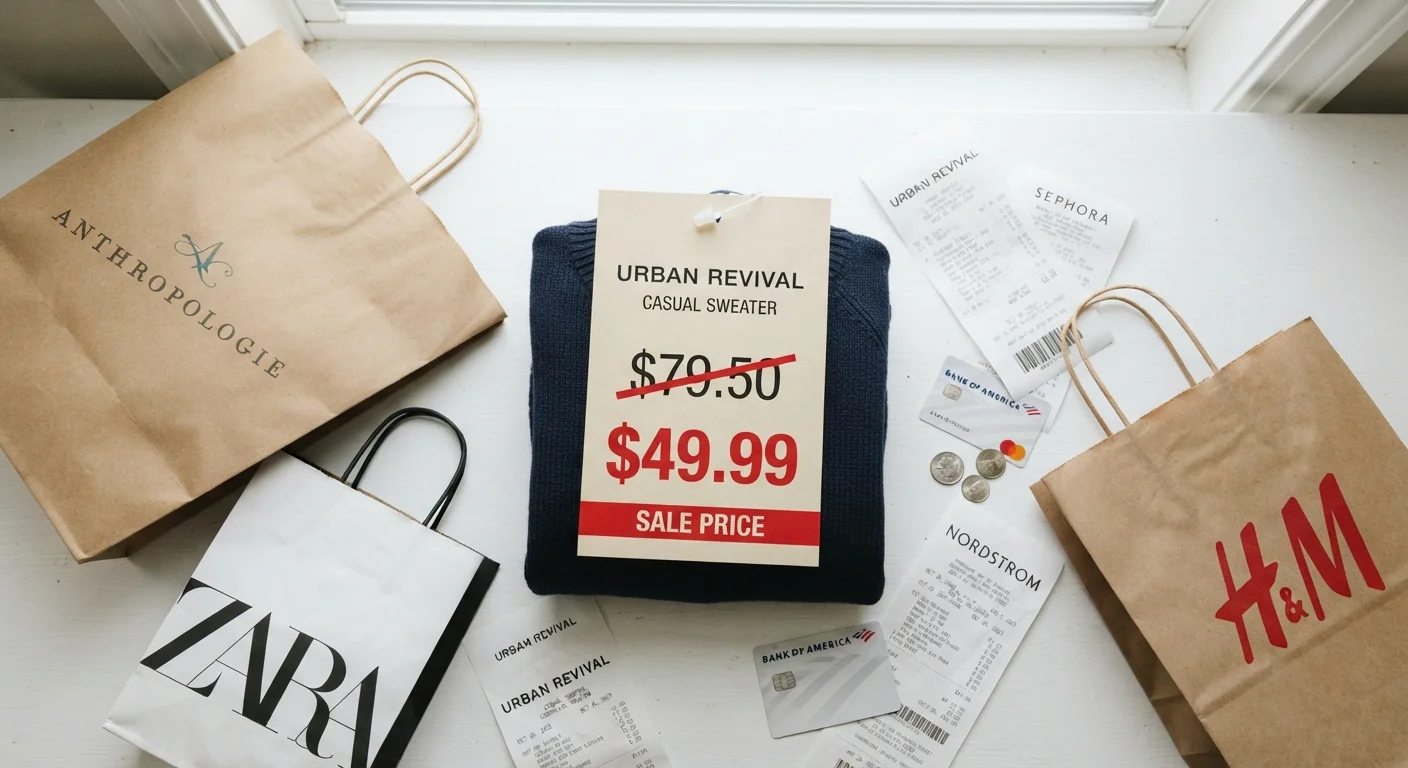
Walk into any retail environment and one of the first things you'll notice is numbers presented in pairs: $199.99 crossed out, $129.99 highlighted below. That strikethrough is doing specific psychological work. The higher figure becomes an anchor - a cognitive reference point your brain uses to assess whether the lower number represents value.
The mechanism is rooted in how human cognition processes numerical comparisons. Rather than evaluating a price against an objective standard (what is this item actually worth?), most people instinctively evaluate it relative to the first number they encountered. This is not a character flaw or a sign of financial naivety - it's a well-documented feature of human decision-making that applies broadly, regardless of financial literacy.
What makes anchoring so durable is that it operates even when people know it's happening. Skepticism about a sale price doesn't eliminate the anchor's pull; it just adds a layer of conscious deliberation on top of an already-formed intuition. That's why understanding the mechanics matters less than building habits that bypass the anchor entirely.
“The problem with a sale is not the discount - it's that the discount is measured against a number the seller chose. To evaluate a deal, you need a reference price you chose.”
— Richard Thaler, Nobel Prize-winning economist and co-author of 'Nudge'; researcher on consumer decision-making and mental accounting
How Retailers Set Anchor Prices
Not all anchor prices are created equal. Some reflect a genuine prior selling price - the item was sold at that price for a meaningful period before the markdown. Others are constructed through a few common retail pricing practices worth understanding:
- Manufacturer's Suggested Retail Price (MSRP): Retailers sometimes display MSRP as the 'original' price even if the item was never routinely sold at that level locally. MSRP functions as a ceiling, not a typical transaction price.
- Promotional pricing cycles: Some categories - particularly mattresses, furniture, and consumer electronics - operate on near-permanent promotional pricing. The 'regular' price may exist largely to frame the sale price.
- Tiered markups: Items are occasionally marked up to a higher price specifically so they can be marked back down, creating the appearance of a discount without a genuine price reduction.
The FTC's guidance on deceptive pricing addresses some of these practices, but enforcement is uneven and consumers bear significant responsibility for their own evaluation. Our article on price comparison myths covers several related misconceptions that compound this problem.
~60%
Shoppers who say sale prices drive purchasing decisions
Consumer surveys consistently find that a majority of US shoppers report sale or promotional pricing as a primary driver of unplanned purchases, underscoring the practical impact of anchor-based displays.
40%+
Average markup in some furniture and bedding categories
Industry analyses of furniture and bedding retail suggest typical markups often exceed 40%, meaning 'original' reference prices on sale tags may bear little relation to production or wholesale cost.
Practical Habits That Override the Anchor Effect
Since awareness alone doesn't neutralize anchoring, the more useful approach is to change the information you use to judge a price. A few concrete habits make a meaningful difference:
- Check price history before, not after, you decide you want something. Browser-based price tracking tools show how a product's price has moved over time. If the 'original' price rarely or never appeared in the historical data, the anchor is likely artificial.
- Set a budget for a category before browsing. Deciding in advance what you're willing to pay for, say, a winter coat - before you see any price tags - gives you an independent reference point the anchor can't override as easily.
- Compare across channels. In-store and online prices for the same item often diverge for structural reasons. Understanding that gap, rather than taking any single channel's pricing as the baseline, puts you in a stronger position. Our explainer on why in-store and online prices differ walks through the key drivers.
- Ask what the item is worth to you - not what it's discounted from. Reframing the question shifts your anchor from the retailer's reference price to your own utility-based judgment.
For a deeper foundation on pricing terminology - including how anchor prices relate to concepts like RRP and dynamic pricing - the price comparison glossary is a useful reference. And if you want to understand how retailers establish baseline prices in the first place, price benchmarking explains the mechanics clearly.
This article provides general consumer education about retail pricing practices. It does not constitute financial or legal advice. For questions about specific pricing disputes or consumer protection rights, consult a qualified professional or your state's consumer protection office.